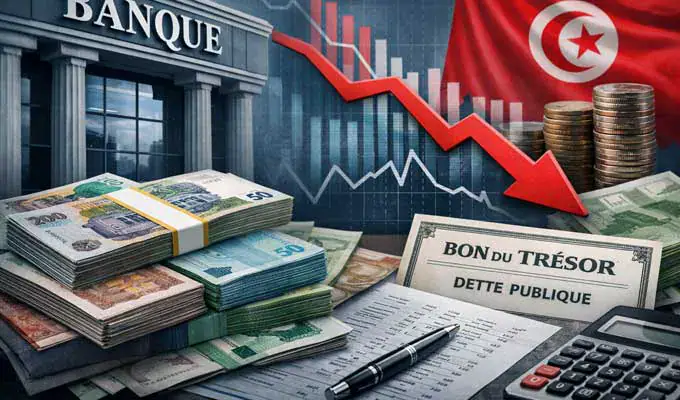
The Tunisian government has forecast that its public debt service will decrease to 21.275 billion dinars in 2027, down from 22.982 billion dinars expected in 2026. This represents a decline of 7.4%, or 1.707 billion dinars, in the annual service of the country's debt. The reduction is attributed to a decrease in interest payments on external debt, which is expected to offset an increase in interest payments on domestic debt.
According to data from the TAP agency, the public debt service is expected to account for 10.66% of Tunisia's GDP in 2027, down from 12.44% in 2026. The service of the debt includes 13.307 billion dinars for principal repayments and 7.968 billion dinars for interest payments. The principal repayments will be split between 6.823 billion dinars of domestic debt and 6.484 billion dinars of external debt.
The decrease in the public debt service does not necessarily mean a reduction in the overall debt burden. The principal repayments reduce the outstanding debt, while interest payments represent the cost of financing. The decline in the annual service may result from the timing of debt repayments, rather than a decrease in the total debt.
In 2027, Tunisia will face significant external debt repayments, including to the International Monetary Fund (IMF), the European Union, Afreximbank, and Saudi Arabia. The country will also make repayments of 30 billion Japanese yen in August and 150 million dollars on international financial markets in September. These external payments are exposed to fluctuations in exchange rates.
The projections are based on assumptions of relative stability in interest rates and the dinar. Any adverse variation could affect the actual debt service burden on the Treasury. The forecasted decline in the public debt service is therefore an improvement in the financial calendar, but not a guarantee of debt reduction.
The Tunisian government's ability to honor its debt obligations while mobilizing resources to finance its deficit remains a challenge. The country's budget for 2027 faces significant financing needs, and the reduction in the public debt service will depend on various factors, including interest rates and exchange rates.
The Tunisian Ministry of Finance has announced that the country's public debt service will decline by 7.4% in 2027, according to the budget projections. The decrease is attributed to a decline in interest payments on external debt and a reduction in the overall debt burden. However, the country's debt challenges persist, and the government must continue to implement measures to stabilize its finances.
Key points
- The Tunisian government forecasts a 7.4% decline in its public debt service for 2027, to 21.275 billion dinars.
- The decrease in the public debt service is attributed to a decline in interest payments on external debt.
- The country's debt challenges persist, and the government must continue to implement measures to stabilize its finances.