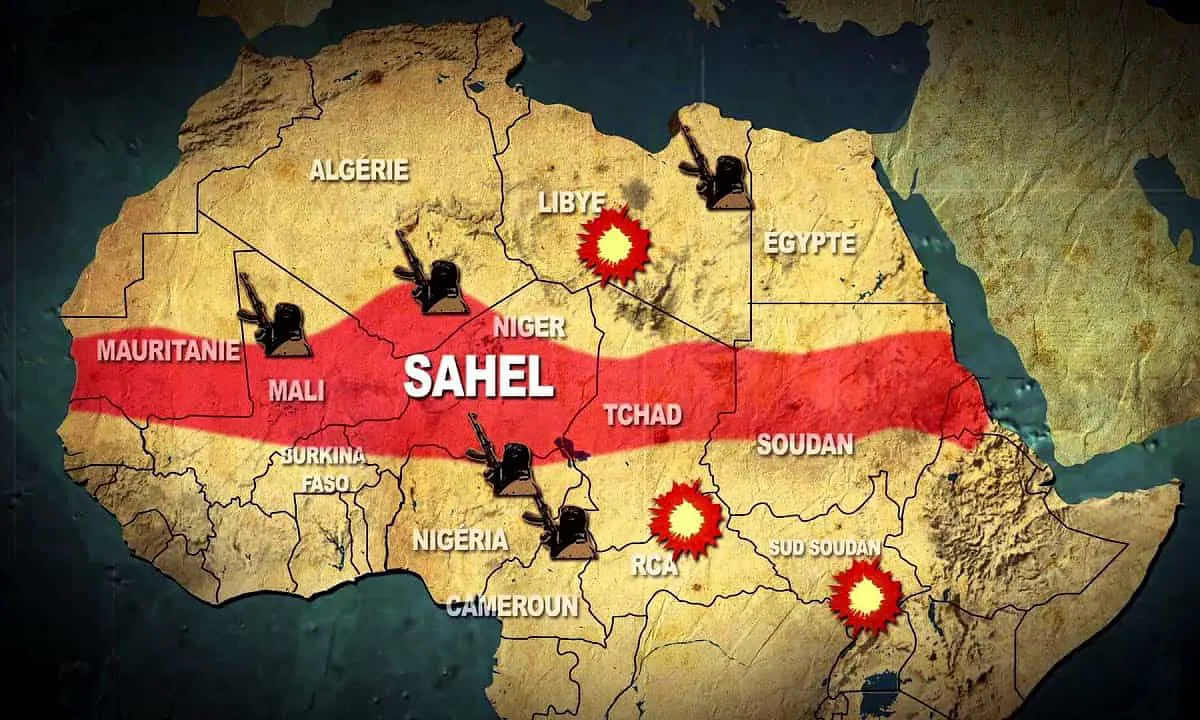
The crisis in the Sahel region has evolved into a systemic degradation of security, governance, humanitarian conditions, and geo-economics, affecting not only local countries but also neighboring nations, including Tunisia. The Sahel central, particularly Mali, Burkina Faso, and Niger, has experienced the expansion of jihadist groups linked to Al-Qaeda and the Islamic State, weakening of civil administrations, and an increase in military coups and regimes. This situation has led to a severe humanitarian crisis, with approximately 3.48 million people displaced in the Sahel central and Liptako-Gourma region as of February 2026.
The instability in the Sahel has significant implications for Tunisia, primarily due to its geographical proximity and existing migration routes. The country may become a destination or transit point for migrants and refugees from West Africa, the Sahel, Sudan, and the Horn of Africa. Data indicates that over 50% of travelers heading to Tunisia pass through Algeria and Libya, with 70% spending at least a year on the route and 93% reporting severe abuse or violations. This situation poses a considerable challenge for Tunisia, not only in terms of managing migration flows but also in addressing the humanitarian needs of vulnerable populations.
The migration crisis is likely to exacerbate existing social and economic issues in Tunisia, including polarization of the public debate around Sub-Saharan migrants, pressure on housing, healthcare, and informal employment, as well as tensions with humanitarian organizations and European partners. The international community has expressed concerns about Tunisia's handling of migration, which could impact its global image if not managed effectively. It is essential to distinguish between migration, criminality, and terrorism, as migrants themselves do not pose a security threat, but the collapse of protections on migration routes can facilitate organized crime.
The Libyan connection is a critical factor in Tunisia's exposure to the Sahel crisis. The southern region of Libya serves as a strategic hub, linking routes from Niger, Chad, and Sudan to coastal cities, passage points towards Europe, and the Tunisian border. A further destabilization of Libya could lead to an increase in arms trafficking, human smuggling, and other illicit activities, ultimately affecting Tunisia's security and stability. The situation in Libya is a pressing concern for Tunisia, given the complex and often blurred lines between migration, crime, and terrorism.
Algeria, as a neighboring country, plays a crucial role in mitigating the effects of the Sahel crisis on Tunisia. Algeria's southern border with Mali, Niger, and Libya is a significant security concern, with armed groups historically using these porous borders for movement and regrouping. The 2026 Global Terrorism Index report highlights the threat posed by jihadist groups, including JNIM, which continues to exert pressure on Mali's economy. Any increase in pressure on Algeria could have indirect consequences for Tunisia, including a potential shift in Algeria's security priorities.
The crisis in the Sahel has far-reaching implications for Tunisia's economy, security, and international relations. The country's reliance on European funding for migration management could increase, potentially leading to a greater dependence on external assistance. Furthermore, the strain on Tunisia's resources and infrastructure could exacerbate existing social tensions, making it challenging for the government to maintain stability and security. The international community must remain engaged in addressing the root causes of the Sahel crisis to prevent further destabilization of the region.
To mitigate the effects of the Sahel crisis, Tunisia must adopt a comprehensive approach that addresses migration, security, and economic concerns. This includes strengthening cooperation with regional partners, enhancing border management, and investing in humanitarian assistance for vulnerable populations. The international community must also provide support to Tunisia and other affected countries to address the humanitarian and security implications of the Sahel crisis.
Key points
- The Sahel crisis poses significant security, migration, and economic challenges for Tunisia.
- The crisis has led to a severe humanitarian situation, with 3.48 million people displaced in the Sahel central and Liptako-Gourma region.
- Tunisia's geographical proximity to the Sahel and existing migration routes make it vulnerable to the crisis's repercussions.