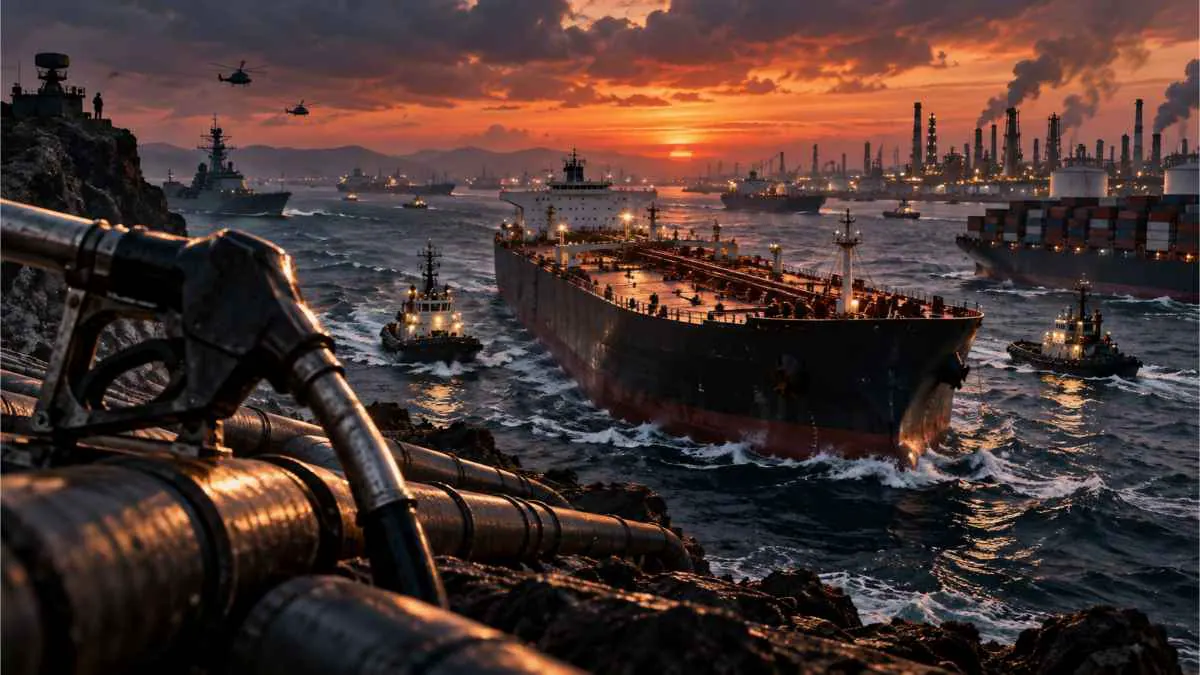
The global energy crisis is evolving, with refined fuel availability becoming a major concern. Tunisia, heavily reliant on imports for its energy needs, must urgently reassess its strategy. The country's energy balance is largely dependent on imports, making it vulnerable to changes in the Mediterranean region and among its neighbors. The presence of more Russian ships in Tunisian ports indicates a changing energy geography.
The Libyan situation serves as a warning to the region. Despite having significant oil reserves, Libya struggles with chronic shortages of refined fuels and recurring power system disruptions. This highlights the importance of not only having natural resources but also robust refining capacities, storage infrastructure, and reliable energy networks. For Maghreb countries, this lesson is crucial to avoid structural vulnerabilities.
In response to the uncertain context, Tunisia must take action on multiple fronts. Diversifying suppliers is a priority to reduce dependence on a single source or region. Building strategic stocks to cushion supply shocks and disruptions is also essential. Furthermore, regional cooperation is vital, particularly with Libya and Algeria, while remaining open to other import circuits with economic advantages and secure legal frameworks.
The Skhira project, which involves building a refinery with a capacity of 120,000 to 150,000 barrels per day at an estimated investment of nearly $2 billion, deserves reconsideration. This infrastructure could serve as a hub for a petrochemical complex generating high-value-added activities. The current regional and international context lends new relevance to the project, which could be relaunched in a Tunisian-Libyan-Algerian partnership with international investors and operators.
A complementary approach appears evident, with Libya having abundant oil resources and seeking refining capacities, Tunisia offering a strategic site, port, and storage capacities, and Algeria representing a regional energy power with recognized expertise. The challenges facing the region exceed national borders, necessitating a move beyond fragmented approaches to constructing an integrated Maghrebi energy chain.
Building an integrated Maghrebi energy chain, from crude oil to refining, storage, petrochemistry, power generation, and export, would enhance regional energy security and create industrial and logistical synergies to increase competitiveness in an increasingly unstable global environment. Energy sovereignty is not solely measured by hydrocarbon reserves but also by the capacity to refine, transform, store, transport, and secure energy flows when global markets become unstable.
If the diesel crisis persists, reviving the Skhira project will shift from an industrial ambition to a pillar of Tunisia's energy and economic security, potentially becoming the first link in a new Maghrebi energy integration. According to Abdelbasset Sammari, this integrated approach can ensure a more stable energy future for Tunisia and the region.
Key points
- Tunisia must diversify its energy suppliers and build strategic stocks to mitigate the risks associated with the global energy crisis.
- The Skhira project could be a key component of Tunisia's energy security strategy, particularly if relaunched in a regional partnership.
- An integrated Maghrebi energy chain could enhance regional energy security and competitiveness.