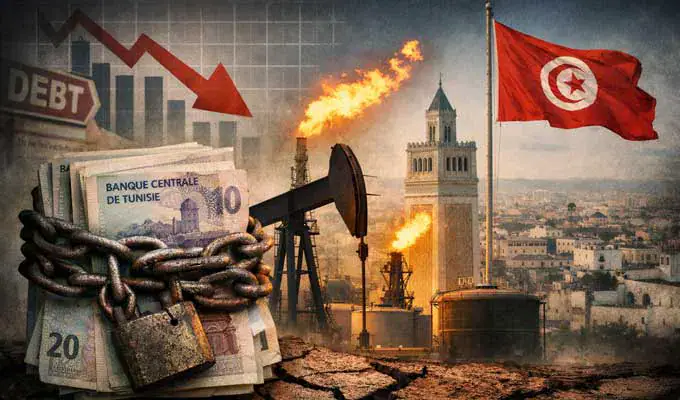
Tunisia is facing a critical juncture in its economic development, with a growing trade deficit and increasing financial pressures threatening to undermine its growth prospects. The country's trade deficit reached 23.547 billion dinars as of October 2026, a 27.6% increase from the same period in the previous year. This is largely driven by a surge in imports, which continue to outpace exports, resulting in a coverage ratio of 70.5%. The energy sector alone accounts for a significant portion of the deficit, with a bill of 12.026 billion dinars.
The country's finances are under strain, with the government facing tough choices to balance its budget. The 2026 budget law was based on an oil price assumption of $63.3 per barrel, but if the average annual price reaches $100 per barrel, the country could face an additional cost of around 6 billion dinars. Furthermore, a stronger US dollar is expected to increase the cost of imports and debt servicing, adding to the financial burden. These factors are putting pressure on the government's finances, making it challenging to maintain economic stability.
The tourism and remittance sectors are providing vital support to the economy, with receipts from these sources reaching 14.828 billion dinars. However, this highlights the country's reliance on external resources to compensate for its economic imbalances. The government must carefully manage its finances to avoid undermining the country's long-term growth prospects. Reducing investment in key sectors could have far-reaching consequences, including delayed job creation and reduced economic output.
The investment sector is often used as a variable of adjustment during times of economic stress, but this can have significant long-term costs. Delaying or canceling projects may provide temporary relief to the budget, but it can lead to lost opportunities, reduced economic growth, and decreased government revenue. The country's growth prospects are fragile, with an estimated annual growth rate of around 2%, and a budget deficit that could exceed 16 billion dinars.
The country's debt levels are also a concern, with public debt expected to exceed 160 billion dinars by the end of 2026. The government must prioritize transparency and prudent financial management to maintain economic stability and ensure that investments in key sectors are preserved. This includes publishing regular updates on budget execution, expenditure, and investment levels.
To mitigate these risks, the government must adopt a transparent and prioritized approach to budgeting. This includes preserving projects that can increase national production, enhance energy independence, and create sustainable employment opportunities. Effective financial management is critical to ensuring that the country's growth prospects are not undermined.
The author, Abdelbasset Sammari, emphasizes that delaying development projects may seem like a cost-saving measure, but it ultimately leads to higher costs in the long run. The government's ability to manage its finances effectively will be crucial in determining the country's economic trajectory. Key stakeholders, including policymakers and investors, will be closely watching the situation to assess the country's prospects for sustainable economic growth.
Key points
- The country's growing trade deficit and rising energy costs pose significant risks to its economic growth and development prospects.
- The government must prioritize transparency and prudent financial management to maintain economic stability and ensure that investments in key sectors are preserved.
- Delaying development projects may have long-term costs, including lost opportunities, reduced economic growth, and decreased government revenue.