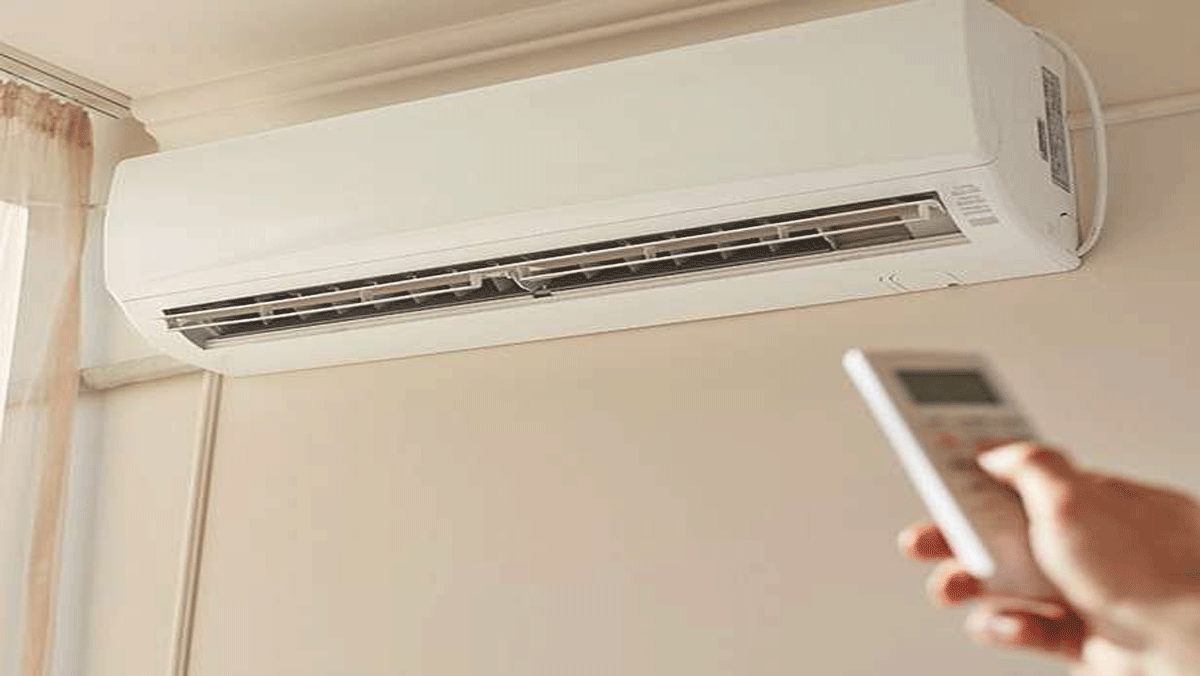
The number of air conditioners in Tunisia has reached at least 4 million, according to a recent statement by the Minister of Environment. This figure highlights the growing demand for cooling solutions in the country. The widespread use of air conditioners puts a strain on the electrical grid, particularly during the hot summer months. The government is planning to introduce new, more energy-efficient air conditioners that use less polluting gases by 2030.
However, there is a discrepancy in the estimated number of air conditioners in use. The National Agency for Energy Management (ANME) previously reported that there were around 2.5 to 2.7 million air conditioners in the country. The difference in numbers could be due to different methodologies used or varying parameters, but this remains to be verified. The lack of accurate data makes it challenging to create a comprehensive plan to manage the strain on the electrical grid.
The 2024 General Population and Housing Census (RGPH) provides some insight into the regional distribution of air conditioners. According to the census, 46% of households in Tunisia have air conditioning, either local or central. There is a significant difference in the rate of air conditioning between urban (58%) and rural areas (21%). While this data does not provide a direct calculation of the number of air conditioners per governorate, it allows for the creation of a preliminary regional map of air conditioning usage.
To create a more accurate map, further data is needed, including information on summer temperatures, electricity consumption, and peak demand by governorate or STEG district. By combining these factors, authorities can identify areas where high temperatures, widespread air conditioning, and strain on the electrical grid coincide. This information will be crucial in determining where the use of air conditioners has the most significant impact on the electrical grid during the summer.
The government aims to introduce new generations of air conditioners that are more energy-efficient and use less polluting gases by 2030. The expected energy savings from these new air conditioners are equivalent to the energy consumption of around 600,000 current air conditioners. This move is part of a broader plan to reduce the country's energy consumption and mitigate the strain on the electrical grid.
The widespread adoption of air conditioners in Tunisia has significant implications for the country's energy policy. As the demand for cooling solutions continues to grow, the government must develop strategies to manage the strain on the electrical grid. By creating a detailed map of air conditioner usage and its impact on the grid, authorities can make informed decisions about energy policy and infrastructure development.
The development of a comprehensive plan to manage air conditioner usage and its impact on the electrical grid is crucial for Tunisia's energy security. The government must work to resolve the discrepancies in air conditioner numbers and create a detailed map of air conditioner usage and its impact on the grid. This will enable the development of targeted strategies to reduce energy consumption and mitigate the strain on the electrical grid.
Key points
- The number of air conditioners in Tunisia has reached at least 4 million, posing a challenge to the electrical grid.
- There is a discrepancy in the estimated number of air conditioners in use, with the ANME reporting 2.5 to 2.7 million air conditioners.
- The government aims to introduce new, more energy-efficient air conditioners by 2030, with expected energy savings equivalent to the energy consumption of around 600,000 current air conditioners.