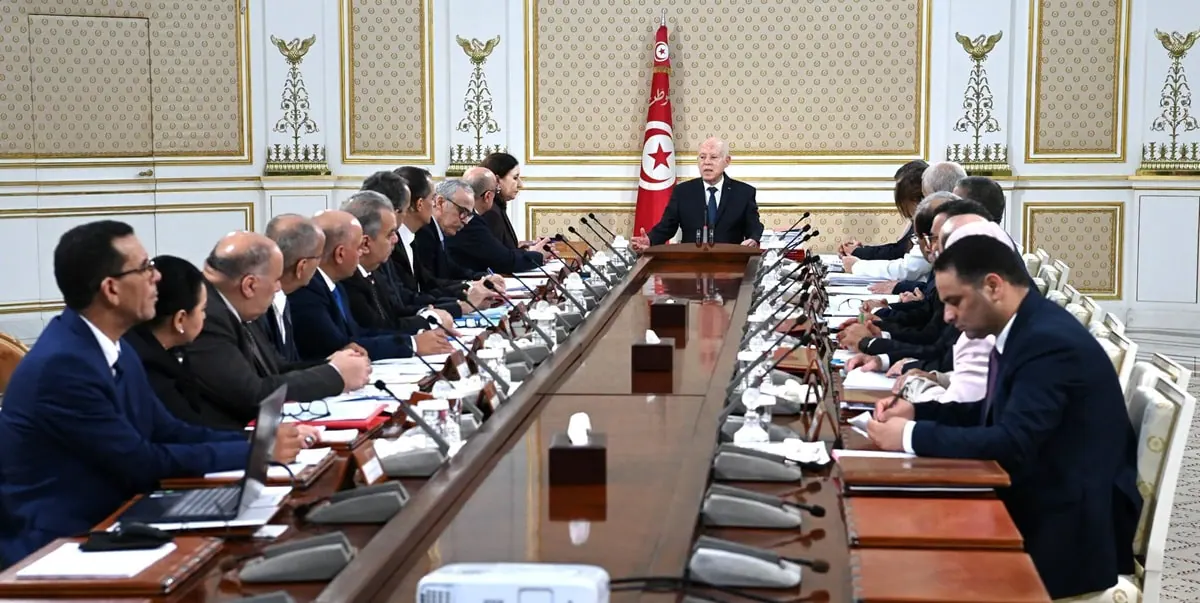
Tunisia's Council of Ministers, led by President Kaïs Saïed, convened on September 29 to discuss several proposed projects, including modifications to Decree-Law 54 of 2022. This decree-law regulates offenses related to information and communication systems. Although the Council examined the proposals, details about the specific changes remain scarce. The meeting also covered projects related to penal reconciliation, the Independent Higher Instance for Elections (ISIE), and municipal councils.
Decree-Law 54, adopted in September 2022, currently in force as decree-law n°2022-54, outlines infractions committed using information and communication systems. The proposed changes aim to modify this existing decree-law, but specifics are yet to be disclosed. The Council's review does not necessarily imply that the modifications have been finalized or are in effect. The lack of detailed information has sparked interest, particularly given the ongoing debate surrounding Decree-Law 54's application and impact.
The proposed modifications to Decree-Law 54 and other projects have generated significant attention. The Independent Higher Instance for Elections (ISIE) and municipal councils will likely be affected by the changes. However, without detailed information on the proposed articles and changes, it is challenging to assess the full implications. The review of these projects highlights the government's focus on refining existing regulations.
The penal reconciliation project and its proposed changes are also under consideration. This project may have far-reaching consequences for Tunisia's justice system. As the government continues to examine these proposals, stakeholders eagerly await further details. A clearer understanding of the modifications will emerge once the projects or their final texts are published.
The examination of these projects, including the proposed changes to Decree-Law 54, demonstrates the government's commitment to revising and refining existing laws. The changes may address concerns and criticisms surrounding the current decree-law. As the process unfolds, it is essential to monitor developments and assess the impact on various stakeholders.
The Council of Ministers' review of these projects is a crucial step in the legislative process. While specifics about the proposed changes remain limited, the government's focus on refining existing regulations is evident. The publication of the projects or their final texts will provide valuable insights into the scope of the changes and their potential effects.
The proposed modifications to Decree-Law 54 and other projects will likely have significant implications for Tunisia's information and communication systems, electoral processes, and justice system. As the government continues to refine these regulations, stakeholders must remain informed about developments and assess the potential consequences of these changes.
Key points
- The Tunisian government is reviewing proposed changes to Decree-Law 54, which regulates offenses related to information and communication systems.
- The proposed modifications aim to refine existing regulations, but specifics remain scarce.
- The changes may have significant implications for Tunisia's information and communication systems, electoral processes, and justice system.