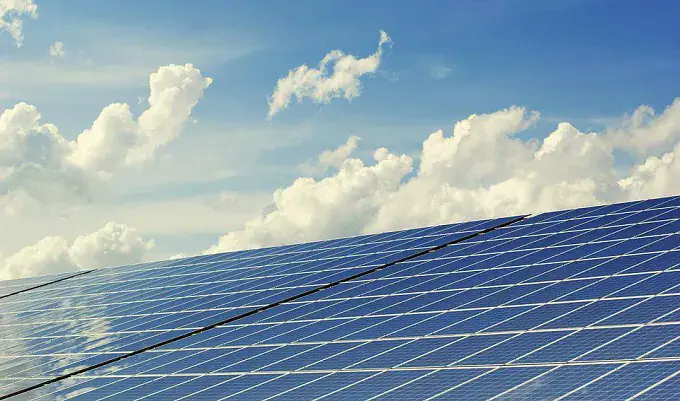
The Tunisian government's 2027 finance bill proposes reducing tariffs on imported solar panels to 10%. This move aims to boost the adoption of renewable energy in the country. According to the bill, the government also plans to expand the interventions of the Energy Transition Fund to finance environmental upgrading operations for companies. The announcement was made by Prime Minister Sarra Zaâfrani Zenzri during a plenary session of the Assembly of People's Representatives and the National Council of Regions and Districts.
The country's national hydrocarbon production is expected to rebound in 2027, after several years of decline. This resurgence is attributed to the upcoming production from the "Cosmos" offshore oil and gas field, located in the Gulf of Hammamet. The field is expected to contribute significantly to the country's energy production. Additionally, three solar projects with a combined capacity of 200 MW began operations in the first half of 2026.
The government is accelerating the development of photovoltaic power plants in several regions, including Sidi Bouzid, Gafsa, and Gabès. These projects have a total capacity of nearly 600 MW and are being implemented through concessions. A new call for projects under the authorization regime has been launched, with a total capacity of 455 MW. The program also includes the Bezma solar power plant in Kébili Governorate, with a capacity of 300 MW.
Tunisia is committed to several major energy projects, including the South2 hydrogen corridor and the ELMED electrical interconnection project with Italy. To address peak consumption, the first unit of the Borj El Amri power plant, with a capacity of 312 MW, was restarted in September. The plant will be reinforced with the installation of a third gas turbine with a capacity of 300 MW.
The national strategy also involves improving the performance of existing power plants through air cooling systems, acquiring gas engines, and installing battery electricity storage systems. The national smart grid project is ongoing, with plans to generalize the use of smart meters. These initiatives aim to enhance the efficiency and reliability of Tunisia's energy supply.
On the environmental front, 2027 will mark the beginning of programs included in the Nationally Determined Contribution, the National Adaptation Plan, and the Climate Investment Plan. These programs will focus on strengthening cleaning actions, supporting recycling and waste valorization, extending the sanitation network to new areas, and protecting the coastline from marine erosion and cities from floods.
The 2027 finance bill also includes measures to support economic growth and reduce the budget deficit. The government is counting on exports and tourism to drive growth, with a projected acceleration to 3.1% in 2027. Additionally, the bill provides for 32,557 new public sector recruitments. The government has announced an administrative revolution and structural reforms to support economic development.
Key points
- The Tunisian government has reduced tariffs on imported solar panels to 10% under the 2027 finance bill to promote renewable energy adoption.
- The country's national hydrocarbon production is expected to rebound in 2027, driven by the upcoming production from the "Cosmos" offshore oil and gas field.
- Tunisia is committed to several major energy projects, including the South2 hydrogen corridor and the ELMED electrical interconnection project with Italy.