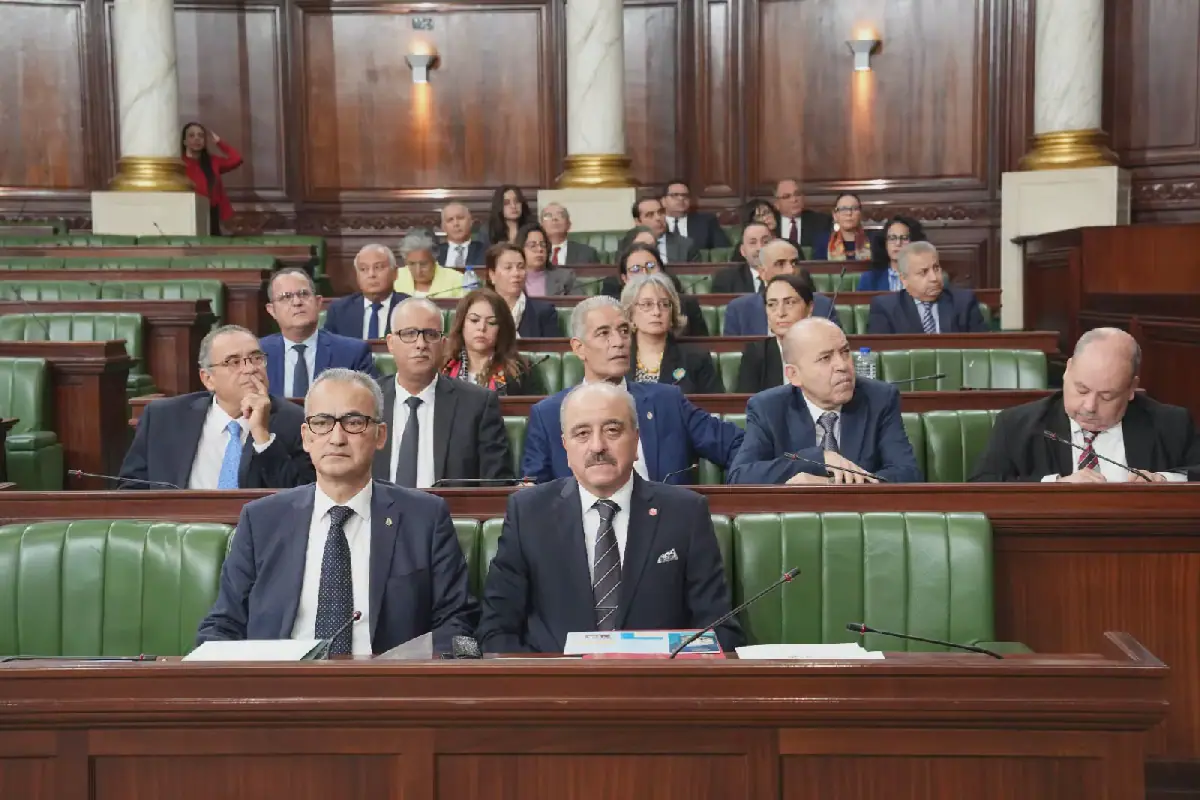
Tunisia's Minister of Foreign Affairs, Migration, and Tunisians Abroad, Mohamed Ali Nafti, announced that 40 diplomatic and consular representations have been connected to the E-Consulat platform. This move is part of the ministry's efforts to modernize consular services, improve interconnection between public administrations, and expand the network of representations abroad. The E-Consulat platform aims to enhance services for Tunisians living abroad, a community estimated to be nearly two million people, mostly residing in European countries.
The Tunisian consular network currently comprises 27 consults, including 12 consulates general and 15 consulats, as well as four consular agencies in France and consular services under embassies in countries without direct representation. By the end of October 2026, consular services had issued 180,658 passports, with representations equipped with production units ensuring same-day delivery, particularly for nationals from distant regions. Additionally, services have covered 461,000 civil status operations, 150,789 signature legalizations, and 1,821 laissez-passer.
The ministry is working to expand the range of services accessible remotely, including the extraction of judicial records and documents related to military service exemption or postponement. To reduce congestion and waiting times, especially during peak summer seasons, nearly 100 consular displacements have been organized in countries of accreditation, mainly in Europe. Furthermore, 11 new passport production units have been installed, and 17 campaigns have been conducted for the delivery, renewal, and replacement of national identity cards.
The minister outlined a strategy based on three axes, including the development of digital services. The E-Consulat platform, which currently connects 47% of the concerned network, will be used to integrate passport issuance, with a pilot phase underway before its gradual deployment in consular posts in 2027. The appointment booking service has recorded 13,310 reservations in 2026, and the minister encouraged Tunisians abroad to use this service to streamline reception and limit congestion in consulates.
The ministry is also working on interconnection with public administrations to avoid requiring citizens to provide documents already held by state institutions, reducing processing times for requests. Several projects are underway with the National Center for Computing and various ministerial departments, including electronic border crossing documents and a common database with the Ministry of National Defense regarding military service exemption or postponement attestations.
The third axis of the strategy focuses on simplifying procedures, revising regulatory frameworks, and introducing electronic payment of consular services in several representations, with a view to gradual generalization. The minister emphasized that consular action also encompasses protecting the rights and interests of Tunisians abroad, as well as supporting them in difficult humanitarian and social situations.
In a humanitarian context, the minister announced that Tunisian services, in coordination with concerned ministries and organizations, have facilitated the return of approximately 600 nationals and family members from several Middle Eastern countries, following recent security developments. The minister also praised the action of Tunisian diplomatic and consular representations in Saudi Arabia in supporting pilgrims and sports teams during their trips abroad.
Key points
- 40 diplomatic and consular representations connected to the E-Consulat platform.
- The platform aims to modernize consular services and improve support for Tunisians abroad.
- The ministry has also facilitated the return of approximately 600 nationals from Middle Eastern countries.