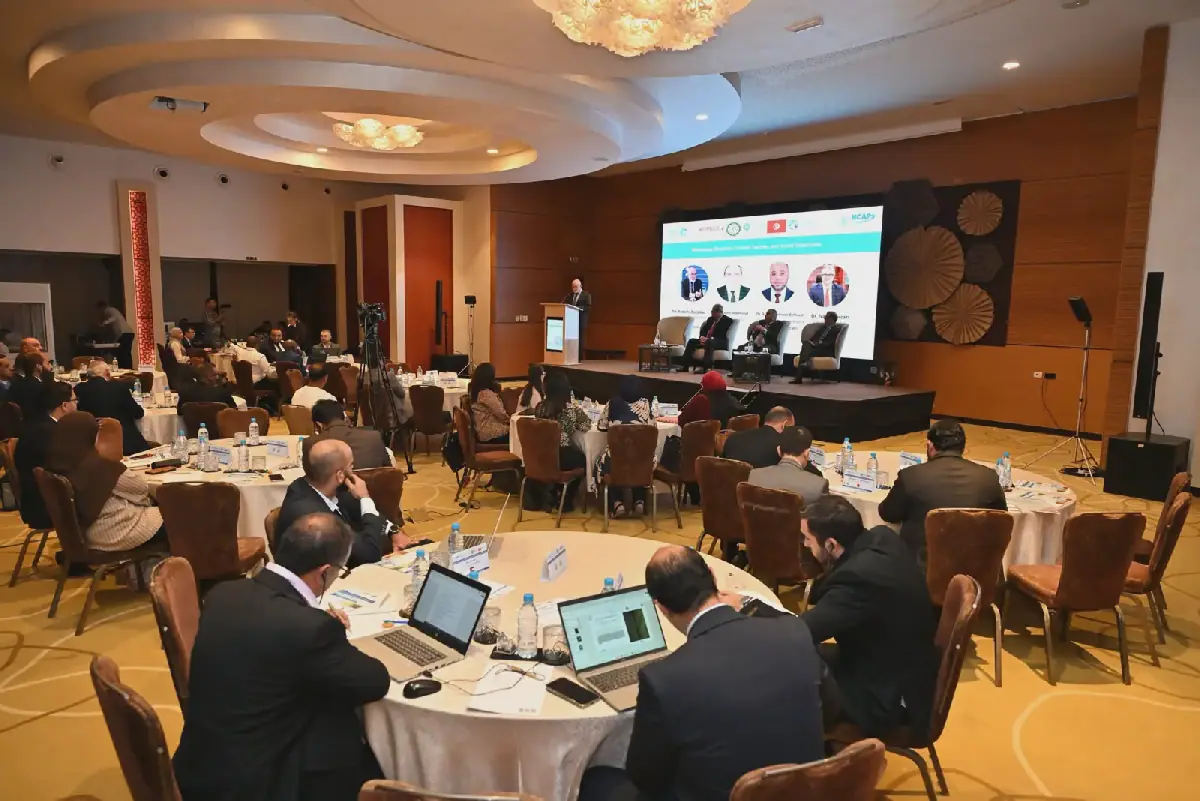
Tunisia is hosting a two-day regional workshop on national cooling plans for the Middle East and North Africa, which began on October 28, 2026. The event has brought together high-level participants from international and regional partners, including the United Nations Environment Programme, the Regional Centre for Renewable Energy and Energy Efficiency, and the Arab League. The workshop aims to support regional efforts in sustainable cooling and energy efficiency.
The Director-General of the National Energy Control Agency, Nafeh Bekkari, emphasized that cooling is no longer just a matter of luxury, but a sovereign pillar linked to energy security, public health, social justice, and climate change adaptation. He cited the exceptional heatwaves recently experienced in Tunisia and the region, which saw the air conditioning sector accounting for around 60% of the required capacity on the electricity grid during peak hours.
Bekkari highlighted Tunisia's proactive leadership in energy efficiency and sustainable cooling, making it a model to follow in the region. He reviewed the country's achievements and future steps, including mandatory energy labelling for air conditioners and refrigerators, thermal insulation for buildings, and programs for insulating roofs and improving energy efficiency in public buildings.
The National Energy Control Agency has successfully implemented a pioneering industrial experiment in Tunisia in the field of cold storage technology, launched in 2021 in a beverage factory in the country's interior. The experiment has demonstrated high economic and energy efficiency. Additionally, the agency has launched an ambitious program for 2026-2027 to certify and accredit motors used in industrial refrigeration compressors.
Bekkari announced a new project to be launched in 2027, in collaboration with the United Nations Development Programme and funded by the Global Environment Facility, to reduce energy consumption for cooling along the entire food value chain. The agency is also working on preparing a cahier des charges for cooling facilities to frame energy audits in the industrial sector and facilitate access to support from the Energy Transition Fund.
Tunisia is not only developing strategic plans but also turning them into concrete, financeable projects. The country is making its accumulated expertise available to Arab countries to enhance regional cooperation and address common climate challenges. The workshop provides a platform for sharing experiences and expertise in sustainable cooling and energy efficiency.
The regional workshop on national cooling plans is a significant step towards achieving sustainable cooling and energy efficiency in the Middle East and North Africa. Tunisia's leadership in this field is expected to inspire other countries in the region to follow suit. The country's efforts to address climate change and promote sustainable development are crucial in the face of growing environmental challenges.
Key points
- Tunisia is hosting a regional workshop on national cooling plans for the Middle East and North Africa.
- The country has launched several initiatives to promote energy efficiency and sustainable cooling, including a pioneering industrial experiment in cold storage technology.
- Tunisia aims to reduce energy consumption for cooling along the entire food value chain through a new project to be launched in 2027.