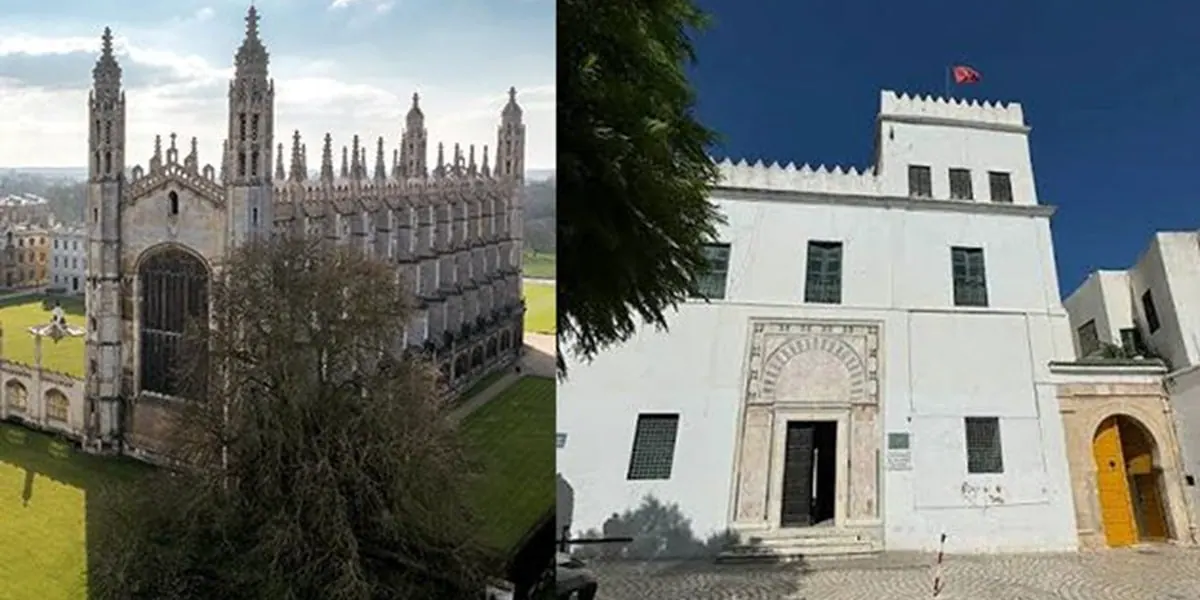
The Tunisian National Heritage Institute (INP) has embarked on an archaeological research project in collaboration with the University of Cambridge. The project focuses on the basins of Oued Zeroud in Kairouan and Oued Tessa in El Kef. The goal is to gain a deeper understanding of human communities in Tunisia between the third millennium and the beginning of the first millennium BC. This period is still poorly documented, and researchers aim to shed light on the lives of early agricultural societies.
The research seeks to determine how the first agricultural communities settled, exploited natural resources, and adapted to their environment. Scientists also aim to establish a more accurate chronology of archaeological remains. The period in question is marked by a scarcity of sites with well-preserved archaeological layers and limited carbon-14 dating. By studying this era, researchers hope to understand the evolution of funeral practices and territorial occupation in ancient Tunisia.
The study compares two different environments: the semi-arid steppe zone of the Oued Zeroud basin and the semi-humid tell region of the Medjerda basin. This approach will help identify similarities and differences in habitat patterns, territorial exploitation, and natural resource utilization. The first phase of the project focuses on the lower course of Oued Zeroud and Oued Kheneg El Afras, between the regions of Zouarine and Sers.
Researchers are particularly interested in several archaeological remains, including funeral monuments previously attributed to the Numidian period. However, absolute dating has not confirmed this classification. The researchers aim to verify whether these remains belong to the attributed period or if they should be reclassified. Accurate dating will enable a better understanding of the evolution of funeral practices and territorial occupation patterns in ancient Tunisia.
To conduct these investigations, the teams employ several techniques, including systematic archaeological surveys, topographic surveys using differential GPS, 3D photographic documentation with drones, geomorphological studies, analysis of ancient plant remains, and carbon-14 dating. These methods will not only identify remains but also contribute to understanding the stages of settlement and transformations of ancient societies in Tunisia.
The project may revise historical chronology by providing more accurate information on the lives of early agricultural societies. The research will also enrich knowledge of the relationships between human communities, environmental conditions, and available resources. By studying the adaptations and practices of early agricultural communities, researchers can gain insights into the development of human societies in Tunisia.
The collaboration between the INP and the University of Cambridge aims to provide a more comprehensive understanding of Tunisia's ancient past. The research has the potential to uncover new information and challenge existing theories about the country's early agricultural societies. Key findings from the project may provide a more nuanced understanding of the complex relationships between human communities and their environment.
Key points
- The research project aims to establish a more accurate chronology of archaeological remains in Tunisia.
- The study compares two different environments to understand the adaptations of early agricultural communities.
- The project employs several techniques, including archaeological surveys, topographic surveys, and carbon-14 dating.