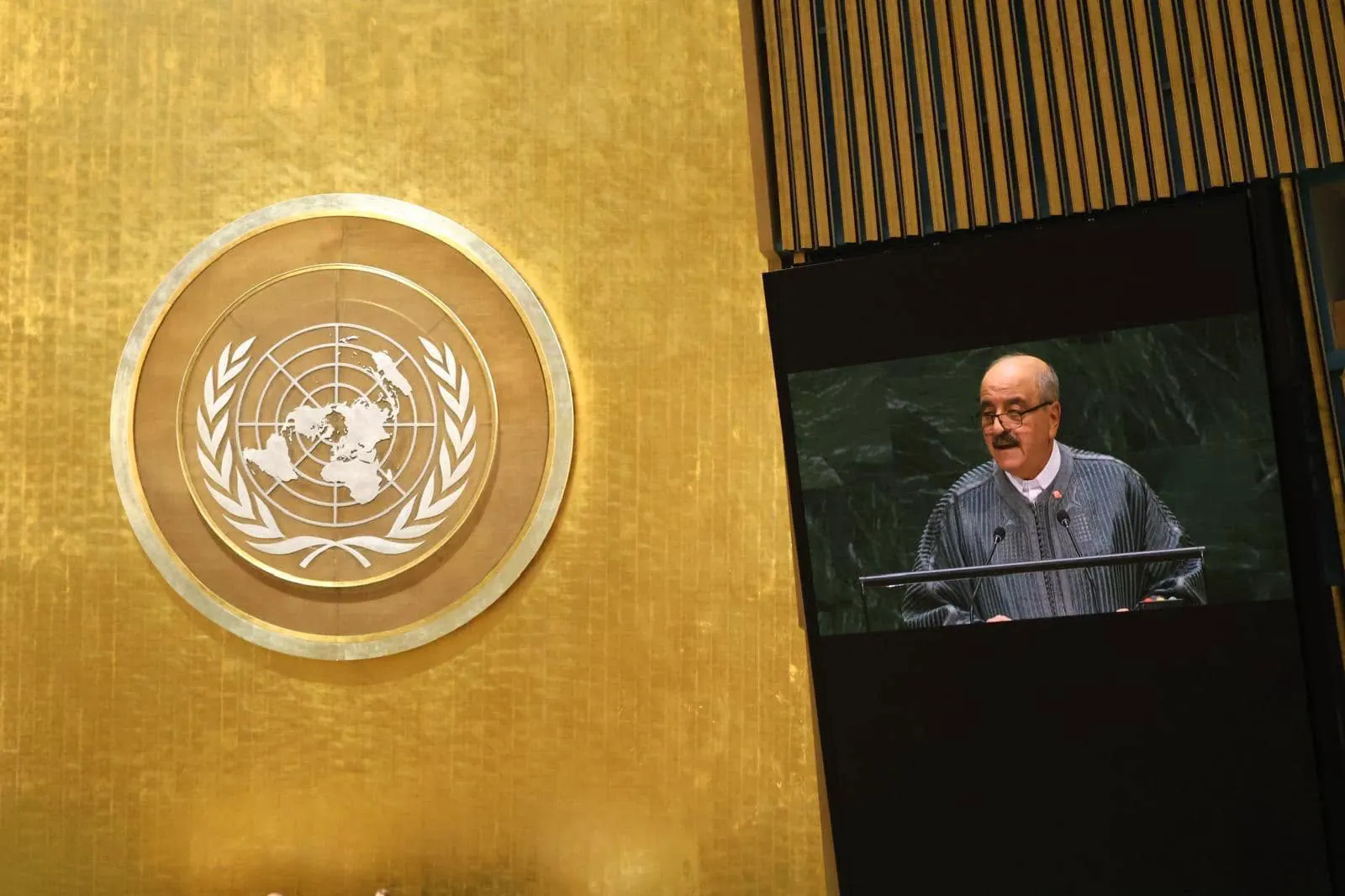
Tunisia has denounced the continued Israeli settlement policies in the West Bank and the blockade of Gaza, warning of a worsening situation in the Middle East. The condemnation came from Minister of Foreign Affairs, Migration and Tunisians Abroad, Mohamed Ali Nafti, during a speech at the United Nations General Assembly in New York. He expressed concern over the humanitarian crisis in Gaza and called for the international community to take responsibility for resolving the longstanding issue.
Nafti emphasized that Tunisia rejects all unilateral measures aimed at changing the historical, legal, and demographic reality of Jerusalem, including forced displacement, home demolitions, and repeated attacks on Islamic and Christian holy sites. He also highlighted the dire humanitarian situation in Gaza, stressing the need for safe, urgent, and sustained access to humanitarian aid and enabling the United Nations and its specialized agencies to carry out their tasks.
The Tunisian minister noted that any attempt to dismantle the United Nations Relief and Works Agency for Palestine Refugees in the Near East (UNRWA) or undermine its mandate would be a desperate attempt to undermine the right of return and resolve the Palestinian issue entirely. He reaffirmed Tunisia's commitment to supporting the Palestinian people's legitimate rights, including their right to establish an independent state with full sovereignty over all Palestinian territory, with Jerusalem as its capital.
Nafti also expressed concern over the escalating situation in the Middle East, warning that continued violence would have catastrophic consequences for the region and the world. He called for an immediate ceasefire, urging parties to return to dialogue and negotiation, while emphasizing the importance of maritime security and freedom of navigation.
Regarding the Arab region, Nafti stated that Tunisia supports any genuine Libyan effort and sincere UN endeavor aimed at resolving the crisis through a Libyan-led solution based on dialogue and consensus among parties. He also expressed Tunisia's solidarity with Lebanon and its support for the Lebanese people, while condemning repeated Israeli attacks on Syrian territory and its people's resources.
The minister further expressed concern over the ongoing war in Sudan, calling on the UN to support efforts to achieve an immediate and lasting ceasefire. He also looked forward to Yemeni parties reaching a comprehensive and lasting political settlement that would restore security, stability, and territorial unity to the Yemeni people.
Tunisia's stance on the Palestinian issue and the Middle East situation reflects its commitment to upholding international law and promoting a peaceful resolution to conflicts in the region. The country's diplomatic efforts aim to bring attention to the humanitarian crises and advocate for a just and lasting solution to the Palestinian question.
Key points
- Tunisia condemns Israel's continued settlement policies and warns of escalating Middle East situation
- Tunisia supports a two-state solution to the Palestinian issue, with Jerusalem as the capital of an independent Palestinian state
- The international community must take responsibility for resolving the longstanding Palestinian issue and ensuring humanitarian aid reaches those in need.