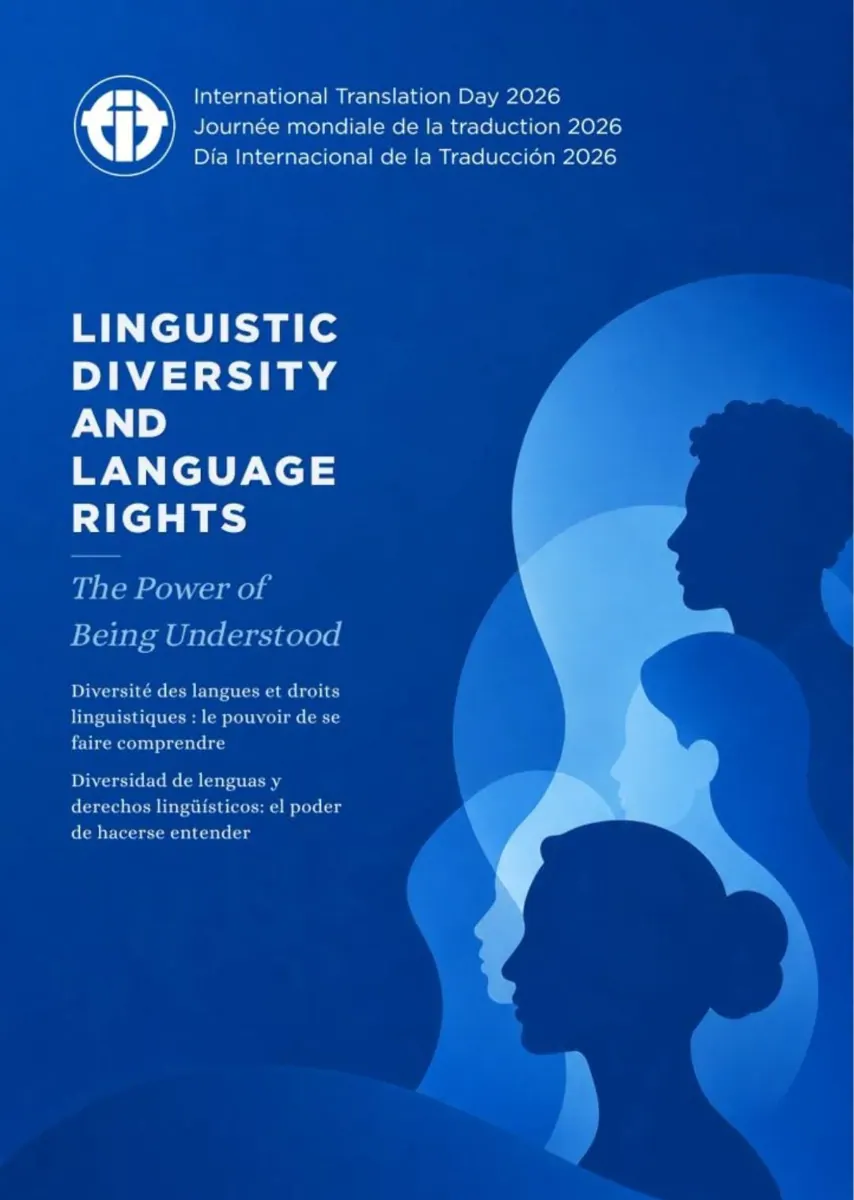
Tunisia is celebrating World Translation Day, which falls on September 30th every year. The International Federation of Translators has chosen the theme "Linguistic Diversity and Language Rights: The Power of Being Understood" for this year. This theme emphasizes the significance of understanding and being understood in a multilingual world.
In today's societies, monolingualism is a rare phenomenon, as most communities are characterized by linguistic diversity, with speakers often mastering multiple languages alongside their native tongue. This linguistic diversity creates cultural richness, essential for nations to break cultural isolation and foster cultural exchange. Since gaining independence, Tunisia has promoted linguistic diversity, starting from schools, without compromising its native language.
Tunisia's cultural movement has benefited from its creators' openness to diverse cultural experiences, expressed in various global languages. The country has attempted to leverage these experiences to build a national, modern, and culturally rich identity. Tunisia believes that people have the right to learn about world languages, particularly those that produce knowledge and enrich local and national culture.
The country has a unique cultural coexistence between its local dialect, Arabic, and various foreign languages. The Tunisian culture has utilized linguistic rights, allowing dialects to interact and Arabic to communicate with world languages. This is evident in preserving its poetic heritage and encouraging literature in Arabic and foreign languages.
Effective communication among people speaking different languages represents a strength that goes beyond mere understanding within a single linguistic circle. This strength lies in the ability to comprehend two or more cultures and switch between multiple linguistic shores, enriching the local language with productions from other languages.
In a society aspiring to creative knowledge and renewable science, accessing global scientific and cultural production requires navigating multiple linguistic rivers. Translation is the means of bridging cultures, transferring national fingerprints beyond narrow borders. Therefore, translators are the navigators who lead language from one shore to another, carrying knowledge, ideas, and experiences from one culture to another.
On World Translation Day, Tunisia honors the efforts of translators, valuing their contributions to enriching cultural and scientific life and enhancing communication between languages and civilizations. This makes linguistic diversity a source of wealth and translation a permanent bridge for human dialogue and rapprochement.
Key points
- Tunisia celebrates World Translation Day, emphasizing linguistic diversity and language rights.
- The country promotes cultural exchange and understanding through translation.
- Translators play a vital role in bridging cultures and fostering global communication.