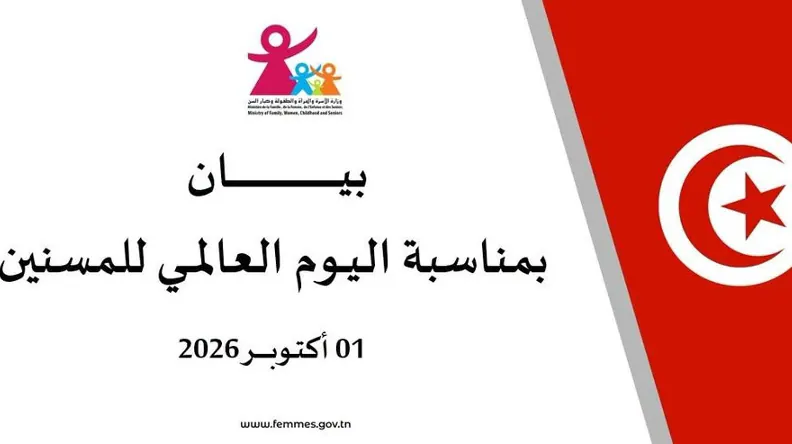
Tunisia joins the rest of the world in celebrating World Elderly Day on October 1st. This annual event is an opportunity to recognize the significant contributions of elderly individuals to the country's development and to promote solidarity and intergenerational connections. The Ministry of Family, Women, Childhood, and Elderly Affairs has reaffirmed its commitment to supporting families in caring for their elderly members.
The Ministry emphasized that the family remains the most natural and ideal environment for caring for elderly individuals. The Ministry has pledged to support and assist families in providing care and support to their elderly members, while also providing alternative care arrangements when necessary. This approach aims to ensure that elderly individuals can live in a safe and dignified environment, preserving their independence, privacy, and family and social ties.
The Ministry highlighted the importance of considering the impact of demographic changes on the needs of elderly individuals. This includes not only providing care and protection but also empowering elderly individuals to participate fully in society, leveraging their experiences and skills, and promoting initiatives that support their well-being. The Ministry stressed that World Elderly Day is an opportunity to reaffirm Tunisia's commitment to implementing its international and national obligations to protect the rights and promote the well-being of elderly individuals.
Tunisia is committed to implementing the National Multi-Sectoral Strategy for Elderly Individuals by 2030, which provides a framework for national action in this area. The country is also contributing to the implementation of the Arab Strategy for Elderly Individuals and related international commitments. This reflects the priority given to the issues affecting elderly individuals in Tunisia's social and development policies.
The Ministry of Family, Women, Childhood, and Elderly Affairs is working to develop a comprehensive system for caring for elderly individuals, focusing on supporting family care, promoting home care services, and developing institutional care for those without family or financial support. The Ministry is also promoting the social, cultural, and economic participation of elderly individuals and leveraging their experiences.
The Ministry is continuing to support and develop mobile teams that provide social and health services to elderly individuals at home, while also strengthening mechanisms for family placement and alternative care. The Ministry is also working to improve the quality of services provided in care institutions, ensuring that the dignity and rights of beneficiaries are respected and their quality of life is enhanced.
Tunisia is working to establish a participatory and multi-sectoral approach that brings together various stakeholders, including public institutions, civil society, and social and professional partners. This approach aims to integrate the social, health, economic, cultural, and rights dimensions of issues affecting elderly individuals, making active and inclusive aging a national priority that responds to the changes taking place in Tunisian society.
Key points
- The Ministry of Family, Women, Childhood, and Elderly Affairs reaffirms its commitment to supporting families in caring for elderly individuals.
- Tunisia is committed to implementing its international and national obligations to protect the rights and promote the well-being of elderly individuals.
- The country is working to establish a participatory and multi-sectoral approach to address the issues affecting elderly individuals.