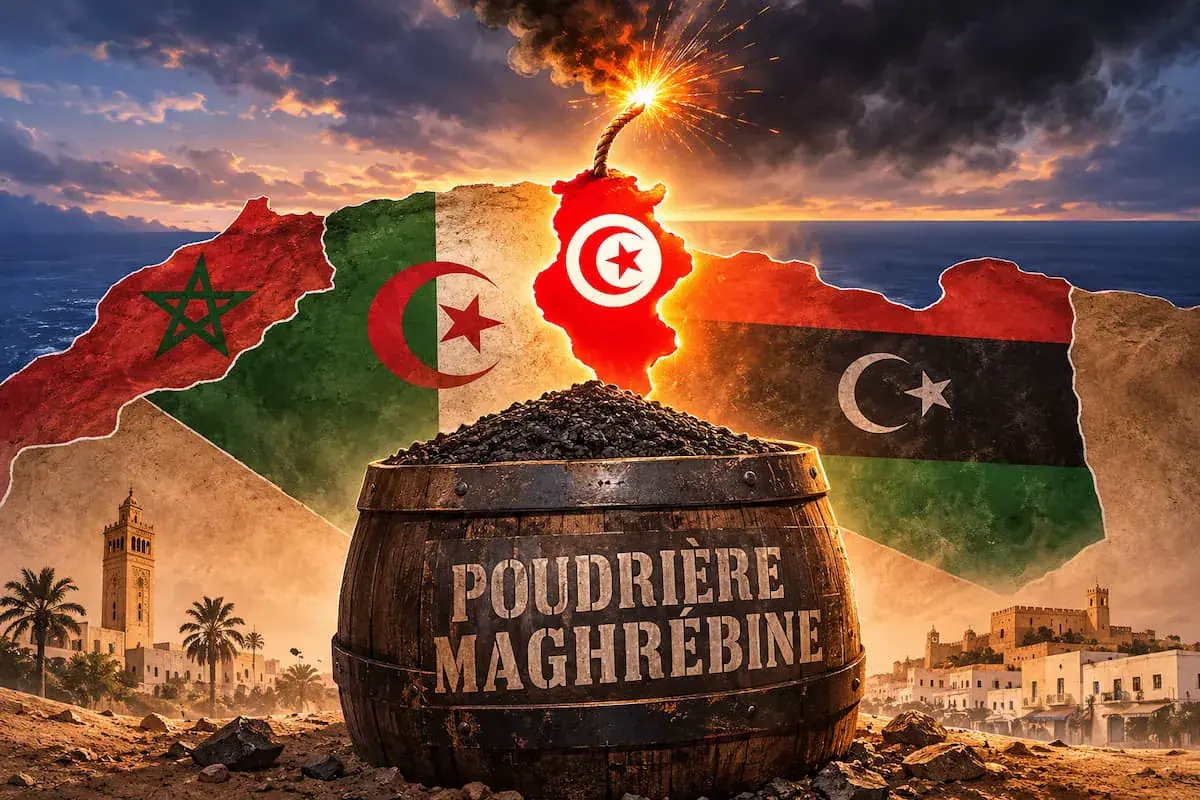
The Maghreb region is increasingly resembling a powder keg, with rising tensions between Algeria and Morocco threatening to boil over into conflict. Algerian President Abdelmadjid Tebboune's recent statements have heightened concerns, as he lifted a decades-old ban on Algerian military operations outside its borders. This move has significant implications for the region, particularly in the disputed territory of Western Sahara. Algeria's military expansion into sub-Saharan Africa has been ongoing, but now it's happening with official sanction.
The Western Sahara conflict has long been a point of contention between Algeria and Morocco, with Algeria supporting the Polisario Front, a separatist group fighting for independence. The conflict has taken on a new dimension with the involvement of global powers, including the United States, China, and Russia. The US has shown a sudden interest in the region, driven in part by China's decision to ban phosphate exports, a key resource found in Western Sahara. The region's rich natural resources, including phosphate and oil, have made it a strategic location for global powers.
Tunisia, which shares cultural, historical, and geographical ties with both Algeria and Morocco, has traditionally maintained a neutral stance in the conflict. However, this neutrality has often put the country's diplomacy in an awkward position, as both Algeria and Morocco have made competing demands. During the Algerian revolution, Tunisia provided significant support, but since then, the country's diplomacy has struggled to navigate the complex web of alliances and rivalries in the region. The conflict has also highlighted the challenges of maintaining good relations with both countries.
The recent veto by Russia on a US proposal to recognize Moroccan sovereignty over Western Sahara has further complicated the situation. The veto has effectively ended the UN's peacekeeping mission in the region, which had maintained a fragile stability. With the region's resources, including phosphate and oil, becoming increasingly important, the stakes are high for global powers. The conflict has also raised concerns about the potential for direct conflict between Algeria and Morocco, which could have far-reaching consequences for the region.
Tunisia's diplomatic efforts have been focused on maintaining good relations with both Algeria and Morocco, while also strengthening its military cooperation with the US. The country's defense ministry has been working to enhance its military capabilities, particularly in terms of defending its borders. However, the country's position on the Western Sahara conflict remains unclear, with some analysts suggesting that Tunisia may be leaning towards a more pro-Algerian stance. The country's leadership has emphasized the need for vigilance and strategic planning to address the growing tensions in the region.
The conflict in Western Sahara has significant implications for the region, with many countries having competing interests and alliances. The region's resources, including phosphate and oil, have made it a strategic location for global powers. The involvement of external powers, including the US, China, and Russia, has added a new layer of complexity to the conflict. As tensions continue to escalate, Tunisia's ability to maintain its neutrality will be increasingly tested.
The situation in the Maghreb region remains volatile, with many uncertainties about the future. The conflict in Western Sahara is likely to continue, with Algeria and Morocco dug in on their respective positions. Tunisia's diplomacy will face significant challenges in navigating this complex landscape, and the country's leadership will need to carefully consider its next steps to maintain stability and security in the region. The international community will be watching closely, as the region's stability has significant implications for global security and economic interests.
Key points
- Algeria and Morocco are on opposite sides of the Western Sahara conflict, with Algeria supporting the Polisario Front and Morocco claiming sovereignty over the territory.
Reporting sources
- La Tunisie et la poudrière maghrébine · L'Économiste maghrébin