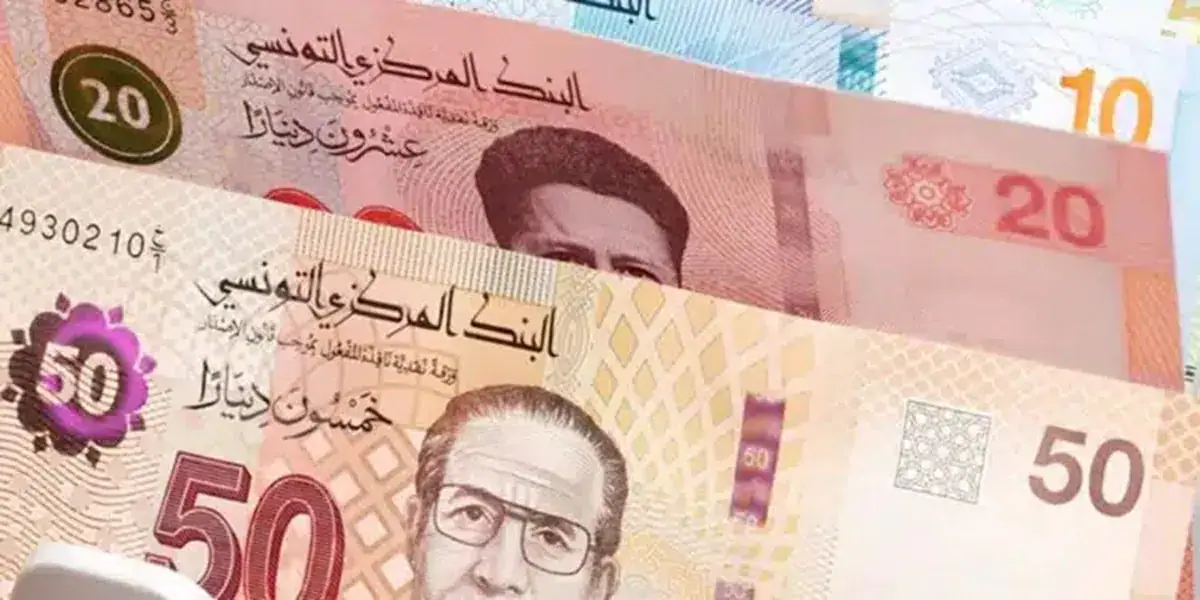
The Tunisian government has announced that salary increases will come into effect on January 1, 2027, in both the public and private sectors. This move is part of a three-year plan, with the second phase of increases outlined in the 2026 finance law. The increases will benefit state employees, local authorities, public establishments, private sector employees, and various categories of retirees. The amounts and application modalities vary depending on professional status and regimes.
In the public sector, salary increases will range from 90 to 120 dinars per month, depending on professional categories. Agents in the A1 subcategory will receive a 120-dinar monthly increase, while those in A2 and A3 and category B will receive 105 dinars. Agents in categories C and D will receive a 90-dinar increase. A similar distribution applies to employees in public enterprises and establishments.
The increases in the public sector are part of a broader plan to improve working conditions and compensation for state employees. The 2026 finance law and subsequent presidential decrees have established the principle and schedule of these increases. The measures aim to support the purchasing power of public sector employees, who have been affected by economic challenges in recent years.
In the private sector, salary increases will be based on a 5% raise in base salaries, transport allowances, and presence allowances in non-agricultural sectors covered by collective agreements. For companies not covered by collective agreements, the increase will also be 5%, with varying amounts depending on professional categories. According to expert Bader Smaoui, the increases in the private sector are expected to range between 38 and 73 dinars.
The minimum interprofessional guaranteed salary (SMIG) will also be increased by 5% from January 1, 2027. This move aims to support low-income workers and ensure a minimum standard of living. The SMIG increase is part of the government's efforts to improve the social and economic situation of Tunisian citizens.
The salary increases will be implemented in the second phase of a three-year plan, which aims to improve compensation and working conditions in both the public and private sectors. The plan is designed to support the purchasing power of employees and promote economic growth. The government has established a framework for the increases, which will be applied differently depending on professional status and regimes.
The actual amounts received by employees will be lower than the gross increases, as they will be subject to social security contributions and, in some cases, income tax. The salary increases are expected to have a positive impact on the social and economic situation of Tunisian citizens, particularly those in low-income households.
Key points
- The Tunisian government has announced salary increases for 2027, ranging from 90 to 120 dinars per month in the public sector and 5% in the private sector.
- The increases are part of a three-year plan to improve compensation and working conditions in both the public and private sectors.
- The minimum interprofessional guaranteed salary (SMIG) will also be increased by 5% from January 1, 2027.