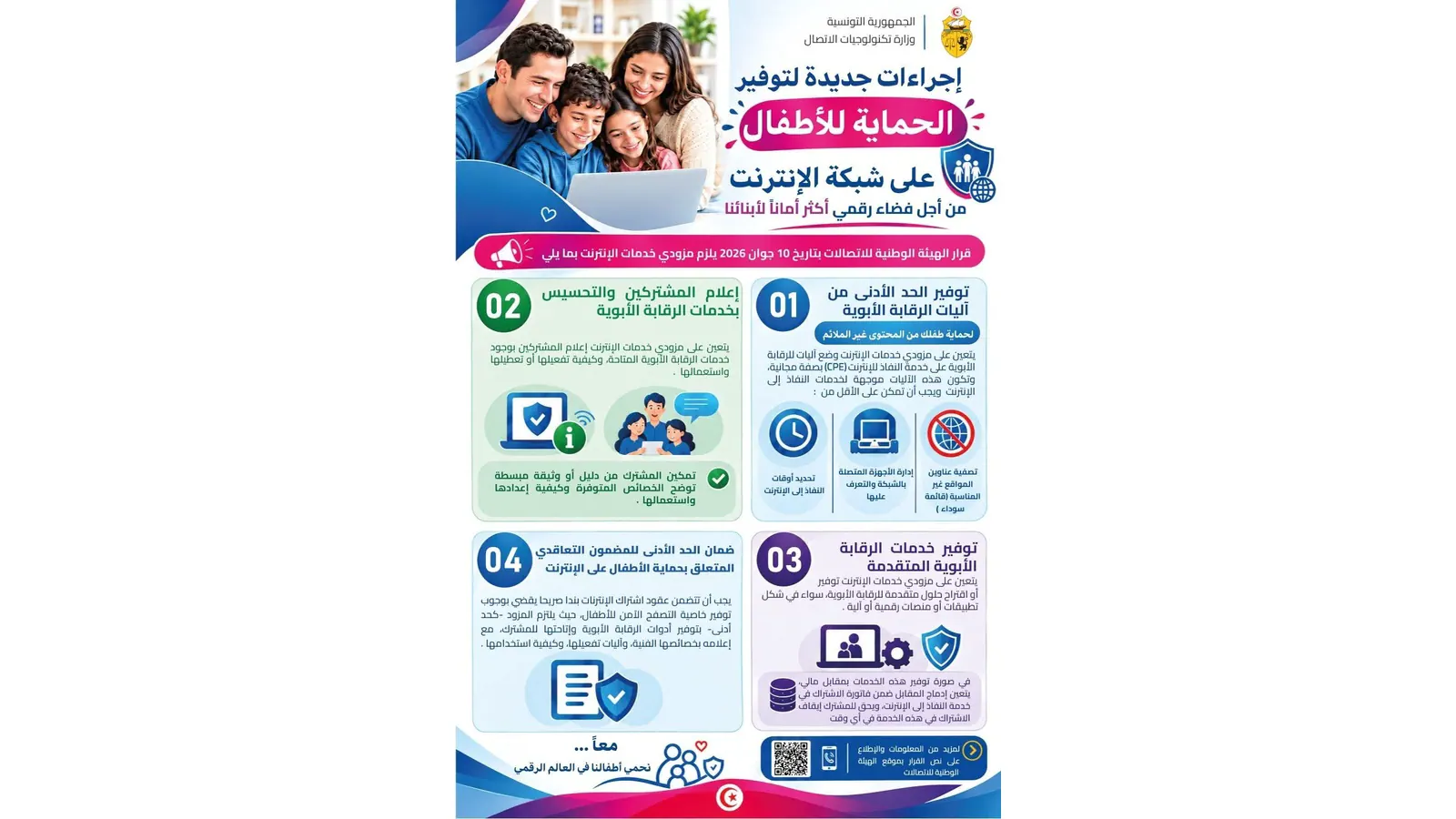
The Ministry of Communication Technology in Tunisia has unveiled new measures aimed at enhancing online safety for children and providing families with a more secure digital environment. These measures are based on a decision made by the National Telecommunications Instance (INT) on June 10, 2026. The decision requires internet service providers to offer their subscribers a minimum set of parental control mechanisms. This move is designed to help parents better monitor and control their children's online activities.
One of the key features of the new measures is the ability for parents to filter access to certain websites deemed inappropriate through a blacklist system. Parents will also be able to identify and manage different devices connected to their network and set specific times for internet access. Internet service providers are required to inform their subscribers about the availability of these tools, as well as how to activate, deactivate, and use them. Additionally, providers must supply a guide or document explaining the features and configuration steps for these tools.
The new regulations also foresee the provision of advanced parental control solutions, which can take the form of applications, digital platforms, or other services. When these services are offered for a fee, their cost will be included in the subscription bill. Subscribers will have the flexibility to cancel these services at any time. This approach aims to give parents a range of options to choose from, depending on their specific needs and preferences.
Another significant aspect of the decision is the requirement for internet service providers to include an explicit clause in their subscription contracts related to child protection. This clause will ensure that providers make parental control tools available and clearly inform their customers about the features and usage of these tools. By doing so, the authorities aim to empower parents with the necessary means to protect their children from inappropriate content and certain risks associated with internet use.
The new measures are designed to promote safer internet use within families while protecting children from the potential risks of online activities. By providing parents with effective tools to monitor and control internet access, the authorities hope to reduce the exposure of children to harmful content. This initiative is part of a broader effort to create a more secure digital environment for all users, particularly vulnerable groups such as children.
The implementation of these measures will require internet service providers to work closely with the National Telecommunications Instance (INT) to ensure compliance with the new regulations. Providers will need to adapt their services and contracts to meet the new requirements, which may involve technical adjustments and changes to their customer service procedures. The authorities will likely monitor the effectiveness of these measures and make adjustments as necessary.
The announcement of these new measures has been welcomed by many parents and child protection advocates, who see it as a positive step towards creating a safer online environment for children. The success of these measures will depend on their effective implementation and the level of awareness and engagement among parents and children. Key points include:
Key points
- The new measures require internet service providers to offer parental control tools and inform subscribers about their availability and use.
- The measures include a blacklist system to filter access to inappropriate websites and the ability to manage devices connected to the network.
- Internet service providers must include an explicit child protection clause in their subscription contracts.