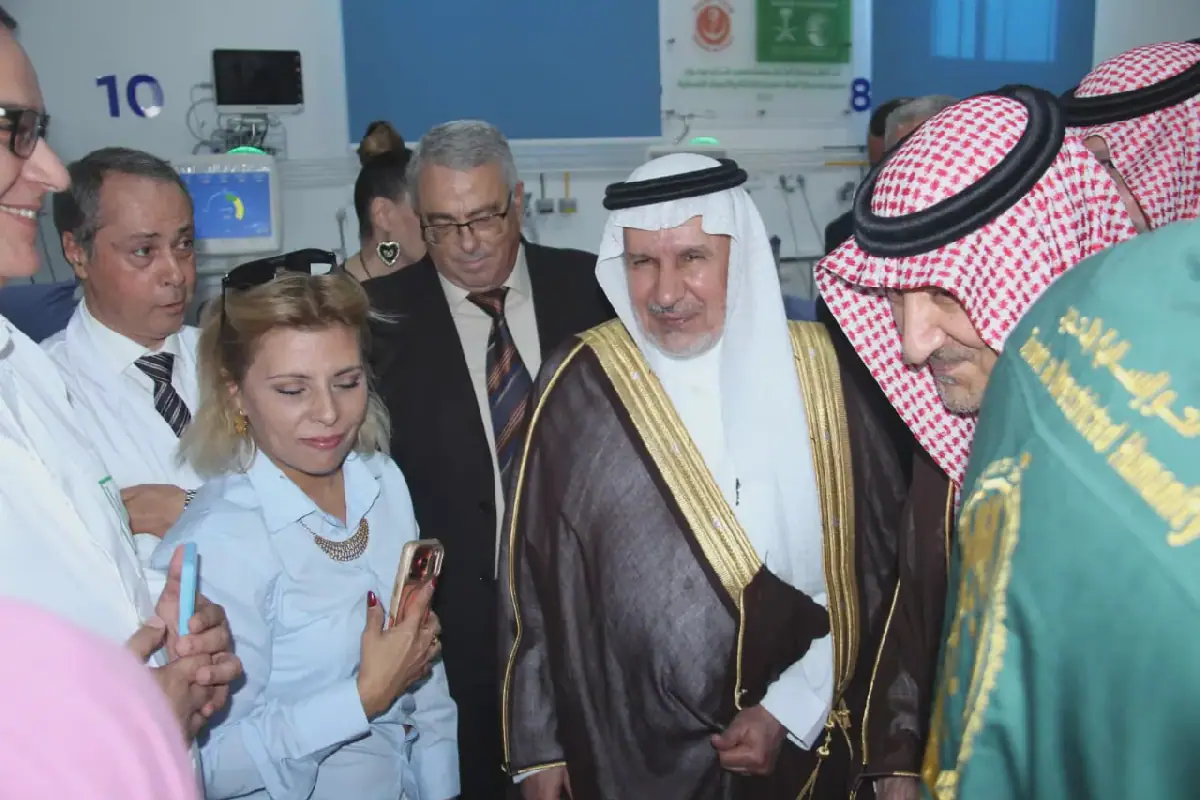
The King Salman Center for Relief and Humanitarian Aid has launched a series of voluntary healthcare projects in Tunisia, as announced by Abdullah ben Abdelaziz Al-Rabiaa, advisor to the Saudi Royal Court and president of the center. The projects were unveiled at the Saudi Embassy in Tunis. This initiative marks a significant development in Saudi-Tunisian cooperation in the healthcare sector.
One of the key projects is a corneal transplant program, a first for the King Salman Center for Relief and Humanitarian Aid, which will be extended to other countries. The program also includes a cardiac catheterization and surgery project for over 50 children and a corneal transplant project for 20 children. These initiatives aim to improve healthcare services for Tunisian children.
The healthcare program also includes the continuation of the "Saudi Hearing" project, dedicated to cochlear implantation, which will benefit 50 more children, following the same number who benefited from it the previous year. Additionally, the projects comprise vascular surgery interventions and an economic empowerment program for Tunisian women, providing direct job opportunities for 20 women and indirect jobs for 120 others.
The economic empowerment program for Tunisian women is part of a broader effort to support women's economic development in Tunisia. The program will provide training and job opportunities, enabling women to become economically independent. This initiative is expected to have a positive impact on the lives of many Tunisian women and their families.
The healthcare projects also include the inauguration of a modern dialysis unit with a capacity of 10 beds, equipped with 10 state-of-the-art devices, for patients suffering from kidney failure. This unit will provide essential healthcare services to patients in need. The launch of these projects demonstrates the strong bilateral cooperation between Saudi Arabia and Tunisia in the healthcare sector.
Abdullah ben Abdelaziz Al-Rabiaa emphasized that these projects reflect the deep and solid relations of bilateral cooperation between Saudi Arabia and Tunisia, which began during the Covid-19 pandemic and continued in 2025 with the installation of oxygen production stations in public hospitals and several surgical interventions. The Saudi side is studying additional healthcare projects to further strengthen this cooperation.
Tunisian officials have welcomed the new healthcare projects, with Walid Naija, Director General of Health at the Ministry of Health, praising Saudi Arabia's efforts in providing continuous support in the healthcare sector. The Tunisian government is keen to promote cooperation prospects, particularly through the exchange of expertise and transfer of skills, to improve healthcare services for its citizens.
Key points
- The King Salman Center for Relief and Humanitarian Aid has launched several new healthcare projects in Tunisia, including a corneal transplant program and cardiac catheterization and surgery for children.
- The projects also include an economic empowerment program for Tunisian women, providing job opportunities and training to support their economic development.
- The launch of these projects demonstrates the strong bilateral cooperation between Saudi Arabia and Tunisia in the healthcare sector, which began during the Covid-19 pandemic and continues to grow.