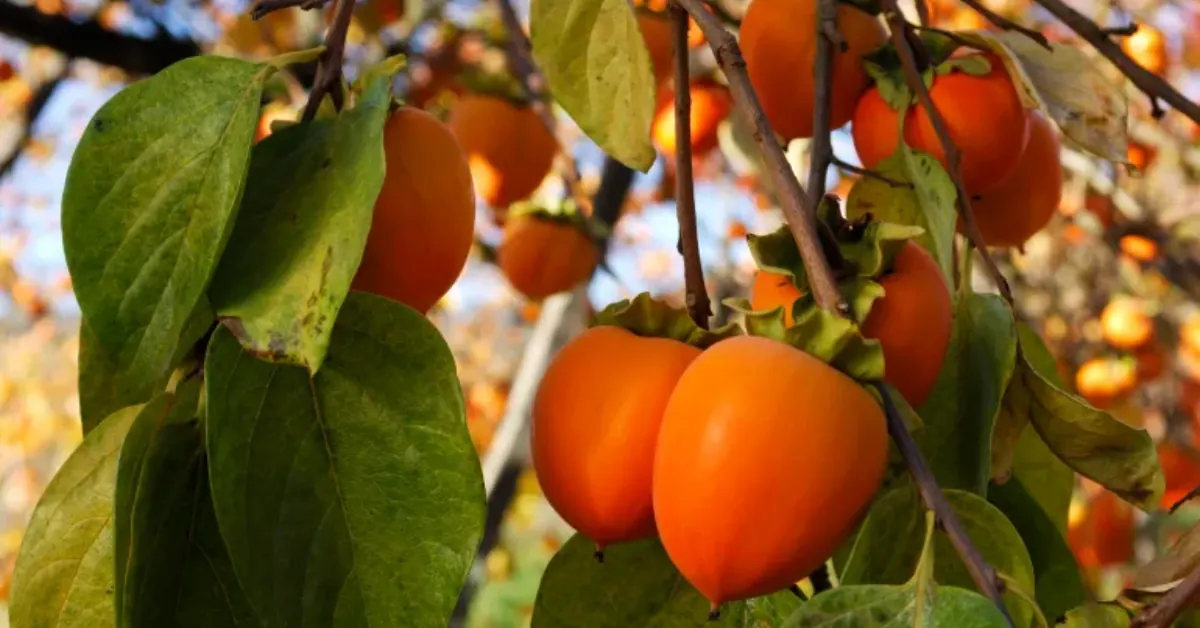
Efforts to enhance the value of the 'kaki' fruit, locally known as 'cream', in the Bouchatata region of Tunisia's Bajah governorate, are moving forward with the help of Japanese expertise in processing and drying the fruit. This collaboration aims to reduce product waste and boost farmers' income. A representative of the Japanese International Cooperation Agency in Tunisia, Miyatama Mayumi, recently visited Bouchatata to explore cooperation activities between Atlas Foundation, Takasaki University of Economics, and Kanehatchi company.
The cooperation focuses on testing Japanese techniques to remove the astringent taste of kaki and develop drying methods, as well as enhancing local farmers' marketing capabilities. The kaki fruit is sensitive during transportation and poses challenges for promotion. The Japanese International Cooperation Agency is considering supporting this initiative to improve local product valuation and provide additional opportunities for kaki farmers to diversify their income sources.
Bouchatata is a prominent region for kaki production in Tunisia, with the fruit having been cultivated there for decades. It has become a source of livelihood for many farming families and a component of the region's agricultural and economic identity. In the 2025 season, the production of kaki in the Nefza delegation reached approximately 310 tons, a 15% increase compared to the previous season.
Despite this growth, production remains limited compared to other crops, due to a lack of up-to-date national data on the total production and areas dedicated to kaki cultivation. Developing drying, processing, and canning techniques, as well as improving fruit preservation methods, could help utilize the production that is difficult to market fresh and extend the product's shelf life.
The Japanese International Cooperation Agency's representative, Miyatama Mayumi, and volunteer Shihero Okuma, visited Bouchatata to learn about cooperation activities between the Atlas Foundation, Takasaki University of Economics, and Kanehatchi company. This collaboration aims to support local farmers and enhance their marketing capabilities.
The initiative also seeks to address the challenges faced by local farmers in marketing their produce, including the sensitivity of the fruit during transportation. By improving marketing techniques and providing additional income opportunities, the project aims to support the local farming community and promote sustainable agricultural practices.
The cooperation between Tunisia and Japan on the kaki fruit project demonstrates the potential for international collaboration to support sustainable agriculture and improve the livelihoods of local farming communities. With the right techniques and support, local farmers can increase their income and contribute to the country's agricultural development.
Key points
- The project aims to improve the marketing and processing of the kaki fruit in Bouchatata, Tunisia, with the help of Japanese expertise.
- The initiative seeks to increase farmers' income and reduce product waste by developing techniques for drying and processing the fruit.
- The project has the potential to support sustainable agriculture and promote economic development in the region.