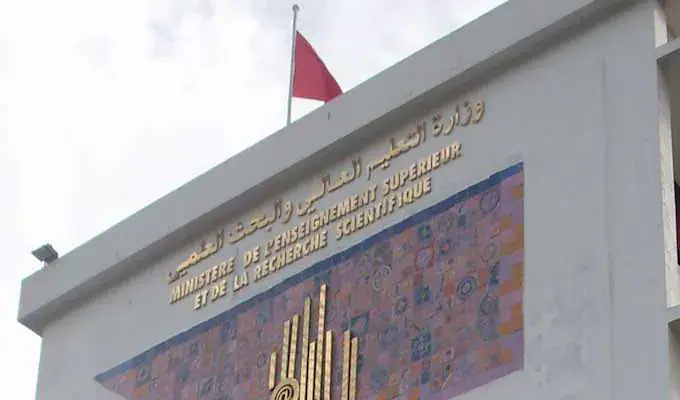
The Tunisian Ministry of Higher Education and Scientific Research is working to improve university life, including accommodation, food, and psychological support for students. Minister Mondher Belaïd stated that over half of the ministry's budget, excluding salaries, is dedicated to university services. The ministry aims to enhance student life, with a focus on providing balanced meals and cultural, sports, and scientific activities.
The ministry has allocated over 241 million dinars for student scholarships and loans. Additionally, university dormitories accommodate over 64,000 students, with an 80% response rate. The ministry plans to expand the number of beneficiaries, improve accommodation, and provide balanced meals. Minister Belaïd emphasized the state's commitment to its social role and the development of health and psychological support.
The ministry is working with the Ministries of Health and Interior, the Civil Protection, and the Tunisian Red Crescent to provide health and psychological support. This includes training in first aid and the conclusion of 87 agreements with doctors for curative and preventive interventions in university dormitories. Minister Belaïd acknowledged difficulties in transportation to university complexes and coordination with regional transport authorities.
In terms of university education, Minister Belaïd announced a revision of programs and pedagogical approaches based on skills and innovation. A new training framework will be implemented, and student entrepreneur centers will be generalized and updated. The ministry aims to improve the quality of university education and promote innovation.
The ministry's research efforts have yielded positive results, with nearly 100 patents registered annually. A participatory strategy has been developed to focus on food and water security, energy transition, health, and agriculture. The ministry also finances artificial intelligence applications, including those at the Sfax Digital Pilot Center.
As of 2026, Tunisia's research system comprises 543 research structures, 10,624 doctoral students, 2,048 theses, and 11,600 scientific publications. The ministry plans to address the brain drain and under-exploitation of equipment. A national plan to balance specialties is being prepared, and 740 doctoral researcher positions will be available in 2027.
The recruitment of doctors and regularization of situations will be addressed, with a commission from the University Council set to revise the status of researcher-teachers using a participatory approach. The ministry will also address the situation of contracted agents providing services, working with all concerned parties.
Key points
- The Tunisian Ministry of Higher Education and Scientific Research has allocated 740 positions for doctoral researchers in 2027.
- Over 241 million dinars have been allocated for student scholarships and loans.
- The ministry aims to improve university life, including accommodation, food, and psychological support for students.