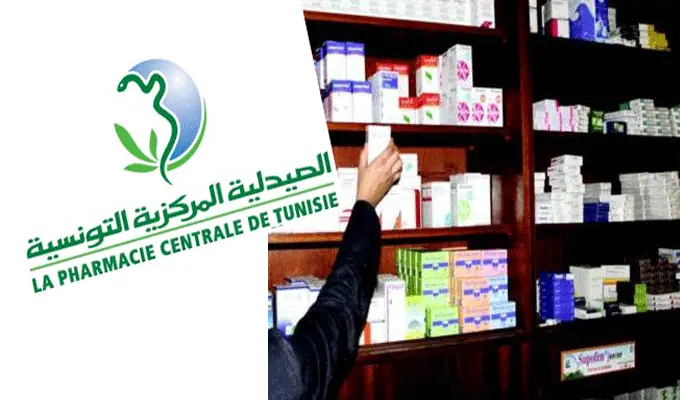
The Tunisian government has announced plans to allocate 288 million dinars to the Central Pharmacy in 2027. This financial support, declared by Health Minister Mustapha Ferjani, is intended to improve the pharmacy's ability to supply medications. However, the effectiveness of this allocation depends on its actual utilization, settlement of debts, and the ability to prevent stock shortages.
The allocated amount does not guarantee the purchase of medications, as it is essential to distinguish between budgeted funds and actual expenditures. In 2026, the state mobilized 290 million dinars for the Central Pharmacy to settle financial commitments related to public establishments. Although the amounts for 2026 and 2027 are similar, their comparison does not necessarily indicate stability in the means dedicated to pharmaceutical purchases.
The key issue remains the availability of cash to honor suppliers and renew stocks. Financial support can improve this capacity but may not necessarily resolve all arrears. The ministry also announced an acceleration of digitalization in supply circuits, enhanced stock monitoring, and a revision of their distribution between Central Pharmacy structures and healthcare facilities. These measures aim to better anticipate needs and limit shortages.
The effectiveness of these measures will be evaluated based on concrete indicators such as treatment availability, supply times, evolution of unpaid amounts, and frequency of shortages. The 2027 challenge will not only be the budgeted amount but also the transformation of this financing into medications actually available to patients.
According to the parliamentary report cited by TAP, the total resources planned for the Health mission in 2027 are 6,035 million dinars, representing an 8.78% increase compared to 2026. The announced allocation for the Central Pharmacy constitutes a significant financial support, but its impact on medication shortages remains to be seen.
The evaluation of this allocation's effectiveness will depend on various factors, including the proportion of the 288 million dinars that will directly finance medication purchases and the part that will be used to cover previous financial commitments. The actual availability of treatments, delivery times, and the evolution of arrears will be crucial indicators to assess the success of this initiative.
The Health Ministry's efforts to digitalize and improve stock management are steps in the right direction. However, it is essential to monitor the implementation and results of these measures to ensure that they effectively address the issue of medication shortages in Tunisia.
Key points
- The Tunisian government has allocated 288 million dinars to the Central Pharmacy for 2027.
- The effectiveness of this allocation depends on its actual utilization and the settlement of debts.
- The ministry also plans to enhance stock monitoring and digitalize supply circuits to better anticipate needs and limit shortages.