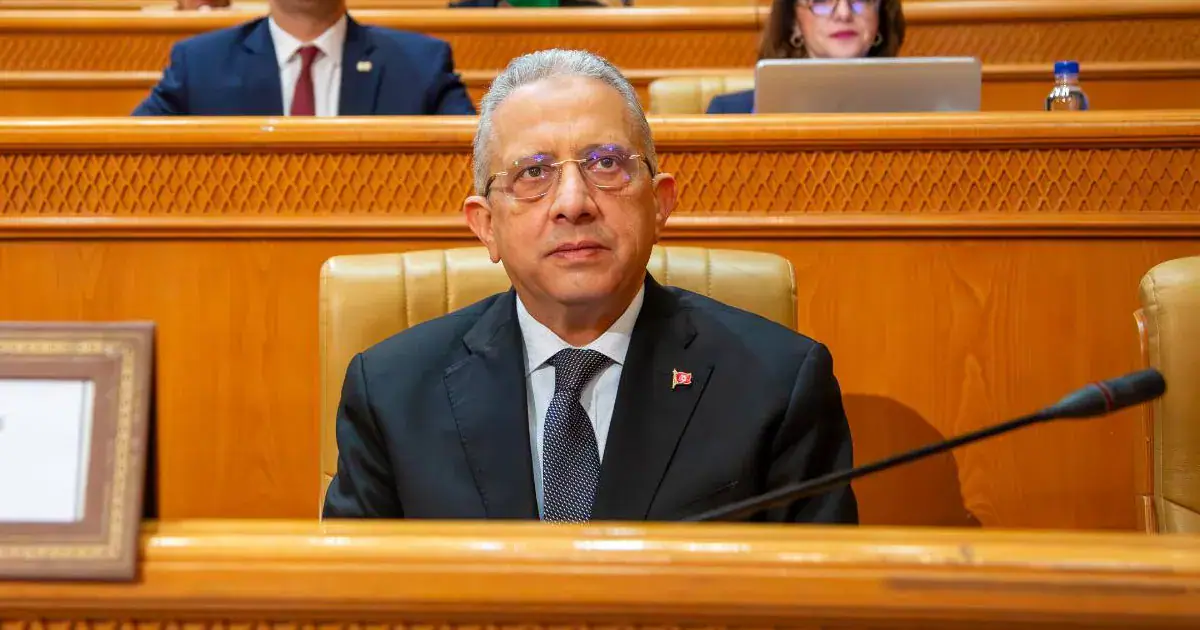
Tunisia's Ministry of Health has allocated nearly $239 million for the modernization of medical equipment in 2026. Minister of Health, Mustapha Ferjani, made the announcement during a plenary session at the Assembly of People's Representatives and the National Council of Regions and Districts. The program aims to improve healthcare services across the country. This investment is part of the ministry's efforts to upgrade its medical infrastructure.
The modernization program includes the acquisition of 13 cardiac catheterization devices, 13 scanners, two magnetic resonance imaging (MRI) machines, and five angiography devices. Additionally, other medical and biomedical equipment will be procured. These new cardiac catheterization devices will enable the opening of new rooms in Béja, Jendouba, Mahdia, and Gafsa, with operations expected to start in 2027.
Six scanners will be used to equip new units in Regueb, Redeyef, El Mahres, Jebiniana, Nefta, and Razi hospital, with installation scheduled for early next year. The remaining seven scanners will replace outdated equipment. Furthermore, two MRI machines have been acquired for the Kassab Institute and Tozeur hospital. A total of 144 dialysis machines will be introduced, allowing for the launch of new centers in Gafsa, Souk Jedid, Ouedhref, Mazouna, and Dahmani.
The ministry has also acquired 180 dental chairs, some of which are being installed, particularly at Jendouba hospital. To ensure optimal use and maintenance of these new equipment, the ministry has allocated $62 million for a maintenance program covering 2026 and 2027. This initiative aims to guarantee the proper functioning of the equipment and provide quality healthcare services.
The 2026-2030 development plan includes the provision of one cardiac catheterization room and one MRI machine in each governorate. This aims to promote health equity and equal opportunities between regions. Seven cardiac catheterization rooms will be established in Zaghouan, Siliana, Tozeur, Kébili, Tataouine, Sidi Bouzid, and Ben Arous. Additionally, eight MRI machines will be introduced in various governorates as part of a health system reinforcement project funded by a loan.
The ministry is also strengthening emergency medical services and mobility. Five mobile emergency and resuscitation units will be created in Sidi Ali Ben Aoun, Belkhir, Redeyef, Medjez el-Bab, and Sidi El Heni. Four more units will be operational in Kerkennah, El Hamma, Zarzis, and Douz once ambulance driver recruitment is completed. The National Integrated Medical Emergency Program (SAMU) will continue until 2030, with 22 new mobile rescue and resuscitation units planned for 2027.
These new units will be distributed across 12 governorates based on objective criteria, including geographic mapping and population density. The selected sites include Menzel Bouzelfa, El Haouaria, and Korba in Nabeul governorate, among others. The program aims to improve emergency medical services and response times across the country. The Ministry of Health's investment in medical equipment and emergency services is expected to significantly enhance Tunisia's healthcare system.
Key points
- The program aims to provide one cardiac catheterization room and one MRI machine in each governorate by 2030.
- A total of $62 million has been allocated for the maintenance of new medical equipment.
- The new medical equipment will enable the opening of new healthcare centers and services across Tunisia.