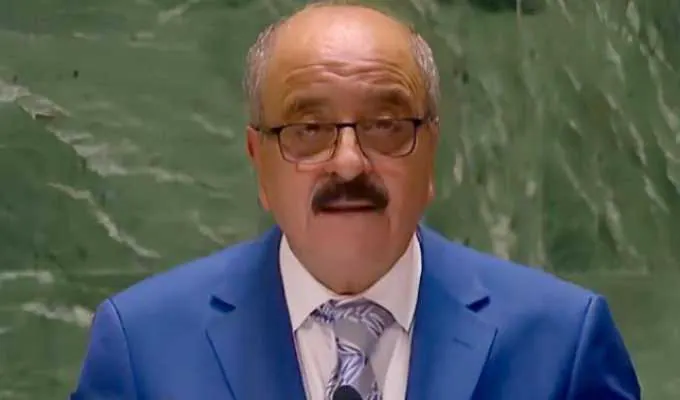
Tunisia's Foreign Minister, Mohamed Ali Nafti, participated in a high-level UN meeting in New York on September 25, 2026, to address the threats posed by rising sea levels. He described this phenomenon as an "existential challenge that cannot be postponed," emphasizing its severe consequences on sustainable development and human security, particularly in developing countries and low-lying coastal areas. According to the Foreign Ministry, rising sea levels pose significant risks to Tunisia's economy, which is heavily concentrated along its densely populated coastline.
The impacts of rising sea levels on Tunisia's resources, infrastructure, and cultural heritage are expected to be severe. The minister highlighted the risks to the country's water resources, agriculture, fishing industry, infrastructure, biodiversity, and cultural heritage. With its economy largely dependent on coastal activities, Tunisia is highly vulnerable to the effects of climate change. Nafti stressed the need for a comprehensive and coordinated response to address this challenge, integrating climate action, risk reduction, sustainable development, and scientific cooperation.
Nafti called for the international community to support the principle of "maritime zone continuity" to preserve the sovereign rights of coastal states. He also urged that resources be directed towards the Loss and Damage Fund to help countries adapt to the impacts of climate change. Furthermore, the minister emphasized the importance of classifying the Mediterranean Sea as a priority area for adaptation and coastal restoration, given its vulnerability to climate change and high evaporation rates.
The Mediterranean Sea's unique characteristics, including its high salinity levels, make it particularly susceptible to the effects of climate change. Nafti highlighted the need to strengthen early warning systems for vulnerable communities and artisanal fishermen. By doing so, Tunisia and other coastal countries can better prepare for and respond to the impacts of rising sea levels. The minister's statements underscored the urgent need for global cooperation to address this pressing issue.
As part of Tunisia's participation in the 81st session of the UN General Assembly, Nafti led the country's delegation to New York. The Assembly session, which ran until September 29, 2026, brought together world leaders to address pressing global issues, including climate change. Tunisia's engagement in these discussions reflects its commitment to raising awareness about the risks associated with rising sea levels and advocating for collective action.
Rising sea levels pose significant economic and environmental risks to Tunisia, a country with a long coastline and a strong dependence on coastal activities. The country's economic growth and development are closely tied to its ability to adapt to the impacts of climate change. By participating in international forums and advocating for global cooperation, Tunisia aims to ensure that its concerns are heard and addressed.
The international community has a critical role to play in supporting countries like Tunisia in their efforts to adapt to the impacts of climate change. By working together to address this global challenge, countries can share knowledge, expertise, and resources to build more resilient and sustainable communities. As the effects of climate change continue to intensify, the need for collective action has never been more pressing.
Key points
- Tunisia's Foreign Minister Mohamed Ali Nafti warned of rising sea levels as an existential threat at a high-level UN meeting in New York.
- The minister emphasized the need for a comprehensive and coordinated response to address the impacts of climate change.
- Tunisia advocates for the Mediterranean Sea to be classified as a priority area for adaptation and coastal restoration.