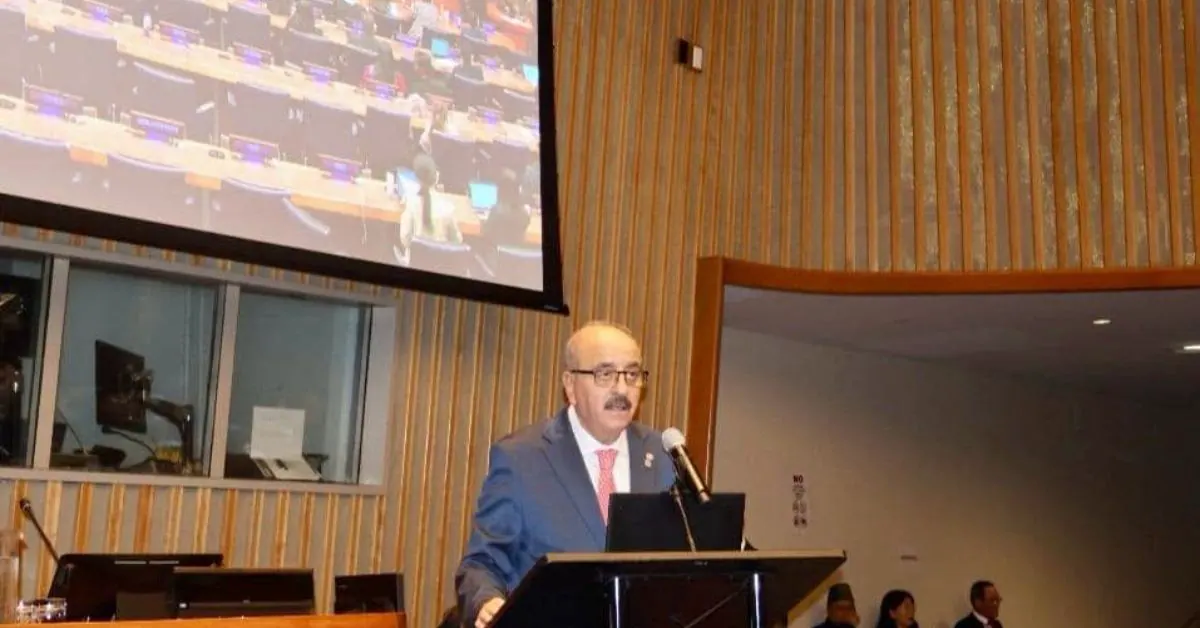
Tunisian Foreign Minister Mohamed Ali Nafti addressed the UN General Assembly, emphasizing Tunisia's commitment to the right to development as a fundamental human right. He highlighted the importance of this right, which is inalienable, comprehensive, and interconnected with other human rights. Nafti's statement was made on the 40th anniversary of the UN General Assembly's adoption of the Declaration on the Right to Development.
During his address, Nafti called for enhanced multilateral cooperation to address structural imbalances hindering fair and sustainable development. He specifically mentioned the debt crisis, high financing costs, digital divide, unequal access to technology, weak investment flows, and the need for reforming the international economic and financial governance system. These reforms aim to make the system more equitable and responsive to the needs of developing countries.
The Tunisian Foreign Minister emphasized that human beings remain at the center of Tunisia's development choices. He presented the country's third voluntary national report on implementing sustainable development goals and introduced the 2026-2030 development plan. This plan adopts a participatory approach aimed at promoting social and economic integration and achieving balanced and equitable development.
Nafti reiterated that the right of peoples to self-determination is a fundamental condition for exercising the right to development. He expressed Tunisia's solidarity with the Palestinian people's right to development and a decent life. The minister recalled Tunisia's consistent support for the Palestinian people's right to self-determination and the establishment of an independent state with full sovereignty, with Jerusalem as its capital.
The address by the Tunisian Foreign Minister was part of the celebrations marking the 40th anniversary of the Declaration on the Right to Development. This declaration was adopted by the UN General Assembly to recognize the right to development as a fundamental human right. Tunisia's commitment to this right reflects its stance on human rights and development.
Mohamed Ali Nafti's participation in the UN General Assembly highlights Tunisia's active role in international diplomacy, particularly on issues related to development and human rights. His statements underscore the country's dedication to promoting equitable development and supporting the rights of nations and peoples globally.
The international community continues to face challenges in achieving sustainable and equitable development. Tunisia's affirmation of its commitment to the right to development adds to the global dialogue on how to address these challenges. The country's approach to development, focusing on human-centered and participatory strategies, offers insights into potential pathways for achieving development goals.
Key points
- Tunisia reaffirms its commitment to the right to development as a fundamental human right at the UN General Assembly.
- The country calls for enhanced multilateral cooperation to address structural imbalances hindering fair and sustainable development.
- Tunisia emphasizes the importance of the right of peoples to self-determination as a condition for exercising the right to development.