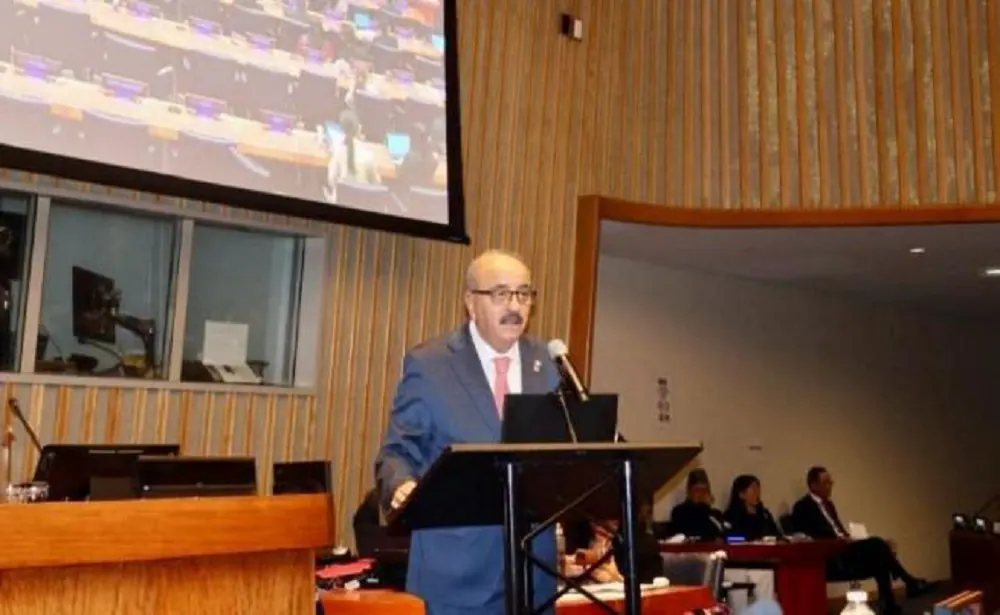
Tunisia's Foreign Minister, Mohamed Ali Nafti, addressed the UN General Assembly, emphasizing the country's dedication to the right to development as a fundamental human right. He made these remarks on the 40th anniversary of the UN Declaration on the Right to Development. Nafti highlighted Tunisia's stance on strengthening multilateral cooperation to overcome structural imbalances hindering equitable development.
During his address, Nafti identified several key challenges, including the debt crisis, high financing costs, the digital divide, and weak investments in developing countries. He advocated for reforming the international economic governance system to make it more just and responsive to the needs of developing nations. This, he believes, will help achieve a more equitable development process.
Nafti emphasized that human beings are at the core of Tunisia's development choices. He mentioned the country's third voluntary national report on sustainable development goals and the adoption of the 2026-2030 development plan. This plan was developed through a participatory approach aimed at social and economic inclusion, reflecting Tunisia's commitment to inclusive development.
The Foreign Minister also underscored the importance of people's self-determination as a prerequisite for the right to development. He expressed Tunisia's solidarity with the Palestinian people, advocating for their right to an independent and sovereign state with Al Qods as its capital. This statement reflects Tunisia's stance on the Palestinian issue and its support for their rights.
Nafti's address at the UN General Assembly highlighted Tunisia's active role in international diplomacy, particularly in advocating for development rights. His speech was well-received, given the significance of the 40th anniversary of the UN Declaration on the Right to Development. This anniversary provided a platform for countries to reaffirm their commitment to this fundamental right.
The right to development is considered a crucial aspect of human rights, integral to the overall well-being of individuals and communities. Tunisia's advocacy for this right aligns with its broader commitment to human rights and sustainable development. By championing this cause, Tunisia aims to contribute to a more equitable global development landscape.
Tunisia's efforts at the UN reflect its proactive approach to international relations and development issues. By emphasizing the need for equitable development and reforming international economic governance, Nafti's address called for collective action to address global disparities. This proactive stance underscores Tunisia's role as a vocal advocate for development rights on the international stage.
Key points
- Tunisia's Foreign Minister Mohamed Ali Nafti advocates for the right to development as a fundamental human right at the UN General Assembly.