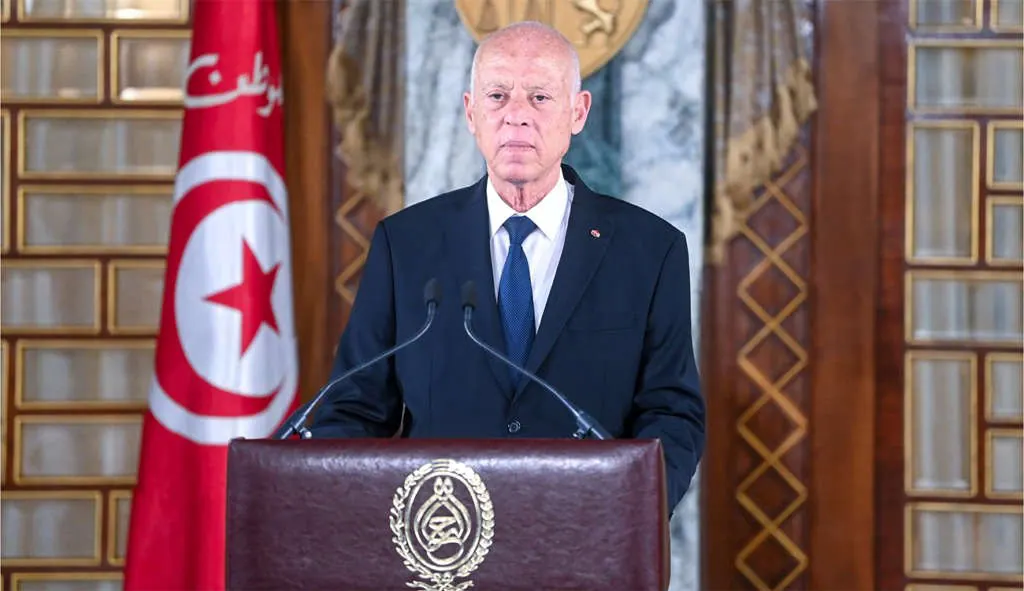
Tunisia's President Kaïs Saïed has made addressing unemployment a top priority, holding multiple meetings and issuing directives to create mechanisms to respond to the needs of job seekers. On December 22, 2025, a new law was passed, allowing for the exceptional recruitment of long-term unemployed graduates in the public sector. The law, which will be implemented over three years, aims to provide employment opportunities for thousands of graduates who have been waiting for years.
The new law was discussed during a meeting between President Saïed, Prime Minister Sarra Zaâfrani Zenzri, and Employment Minister Riadh Chaouad at the Carthage Palace earlier this week. The meeting focused on the implementation of the law and the progress made so far. President Saïed emphasized that the situation of unemployed graduates is insurmountable and requires urgent action from the state. He noted that many graduates have been waiting for years, sending applications without receiving a response.
According to President Saïed, the current situation is a result of accumulated causes, including recruitment based on falsified diplomas or non-existent qualifications. He also pointed out that the previous system prioritized party affiliation over merit, leading to the waste of public funds. The 2022 Constitution, which enshrines work as a right for every citizen, aims to address these issues by making competence and equity the criteria for accessing employment.
In recent months, public sector recruitment competitions have resumed in several ministries, including Health, Education, Transport, and Security. While this is a positive step, President Saïed emphasized the need to maintain momentum and strengthen public-private partnerships to recruit more job seekers. He also highlighted the importance of community enterprises as an alternative path for young people without jobs.
The job market has become increasingly uncertain, with many graduates struggling to find employment despite having high-level diplomas. President Saïed noted that the traditional assumption that having a degree is enough to secure a stable job is no longer true. To address this, the government aims to adapt training programs to meet the actual needs of the market, focusing on more professionalizing fields and the reconversion of graduates farthest from employment.
Strengthening public-private partnerships and promoting community enterprises are also key strategies to address unemployment. President Saïed emphasized the need for transparency in recruitment competitions and respect for merit to restore trust in access to employment. By addressing the root causes of unemployment and implementing new measures, the government hopes to provide more job opportunities for Tunisia's young people.
The exceptional recruitment of unemployed graduates is part of a broader effort to address the country's unemployment crisis. With thousands of graduates waiting for employment, the government faces a significant challenge in providing sufficient job opportunities. However, by implementing the new law and strengthening partnerships with the private sector, the government aims to make progress in addressing this pressing issue.
Key points
- The Tunisian government has passed a new law allowing for the exceptional recruitment of long-term unemployed graduates in the public sector.
- President Kaïs Saïed has emphasized the need for transparency in recruitment competitions and respect for merit to restore trust in access to employment.
- The government aims to adapt training programs to meet the actual needs of the market, focusing on more professionalizing fields and the reconversion of graduates farthest from employment.