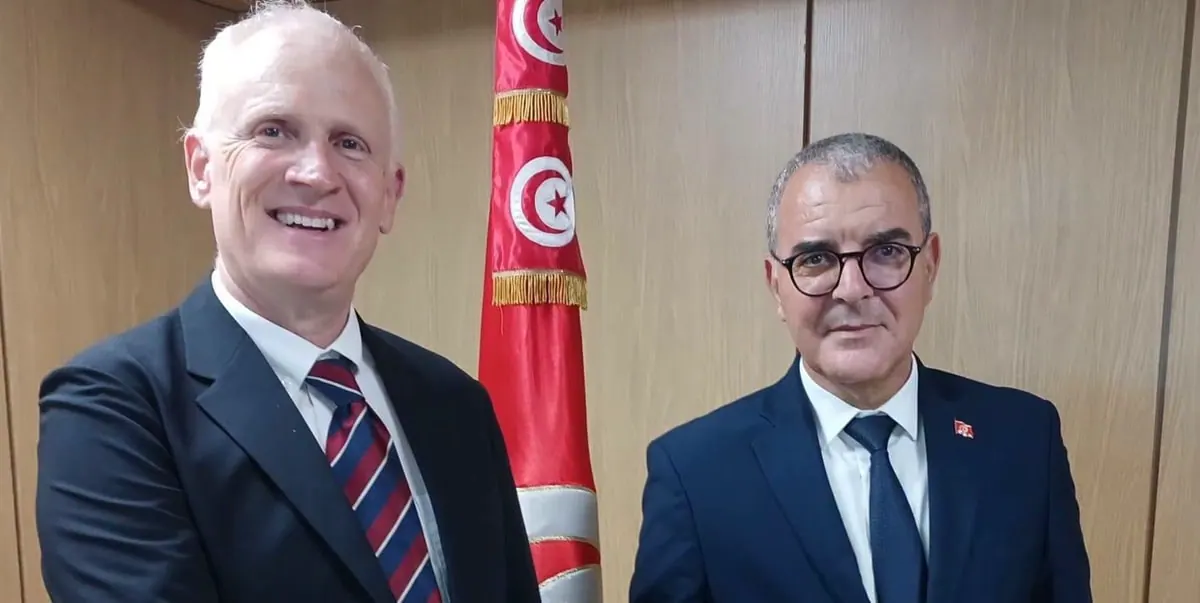
The relationship between Tunisia and the World Bank is entering a new phase, with an immediate focus on accelerating the implementation of already-financed projects. The World Bank's portfolio in Tunisia represents nearly $13.9 billion in cumulative commitments. Minister of Economy and Planning Samir Abdelhafidh discussed this issue with Alex Kremer, the new director of the World Bank Group's office in Tunisia, on October 7.
The meeting comes as Kremer takes over the supervision of the International Bank for Reconstruction and Development (IBRD), the International Finance Corporation (IFC), and the Multilateral Investment Guarantee Agency (MIGA) in Tunisia. The Tunisian message is clear: it is no longer just about diversifying cooperation areas but also about improving coordination with the World Bank to advance projects more quickly.
According to World Bank data, its Tunisian portfolio included 169 projects with a total commitment of $13.919 billion as of August 31, 2026. This amount corresponds to cumulative commitments and not new financing announced during the meeting. The dynamic continues in several strategic sectors, including water security and irrigated agriculture.
In March, the World Bank approved two projects dedicated to water security and irrigated agriculture, with a total commitment of $332.5 million. The largest project, worth $208.5 million, aims to strengthen potable water services, develop smart meters, and rehabilitate distribution networks. A second project of $124 million focuses on irrigation and modernizing agricultural infrastructure.
This acceleration occurs as the current Country Partnership Framework (CPF) 2023-2027 is coming to an end. The current framework prioritizes creating quality jobs, strengthening human capital, climate resilience, and ecological transition. The next step will be to define the priorities of the future partnership.
For Alex Kremer, the World Bank wants to intensify coordination with Tunisian authorities and continue supporting reforms and economic and social development objectives. This new sequence occurs in a context where the World Bank emphasizes the need for structuring investments, particularly in water, amid concerns about the potential impact of water scarcity on Tunisia's economy.
The World Bank estimates that the water deficit could reduce Tunisia's GDP by 6.4% by 2050 without sufficient adaptation, according to its latest bulletin on Tunisia published in September. The new partnership will likely focus on addressing these challenges and supporting Tunisia's development goals.
Key points
- The World Bank has committed $13.9 billion to Tunisia, with 169 projects in its portfolio.
- Two new projects worth $332.5 million focus on water security and irrigated agriculture.
- The water deficit could reduce Tunisia's GDP by 6.4% by 2050 without sufficient adaptation.