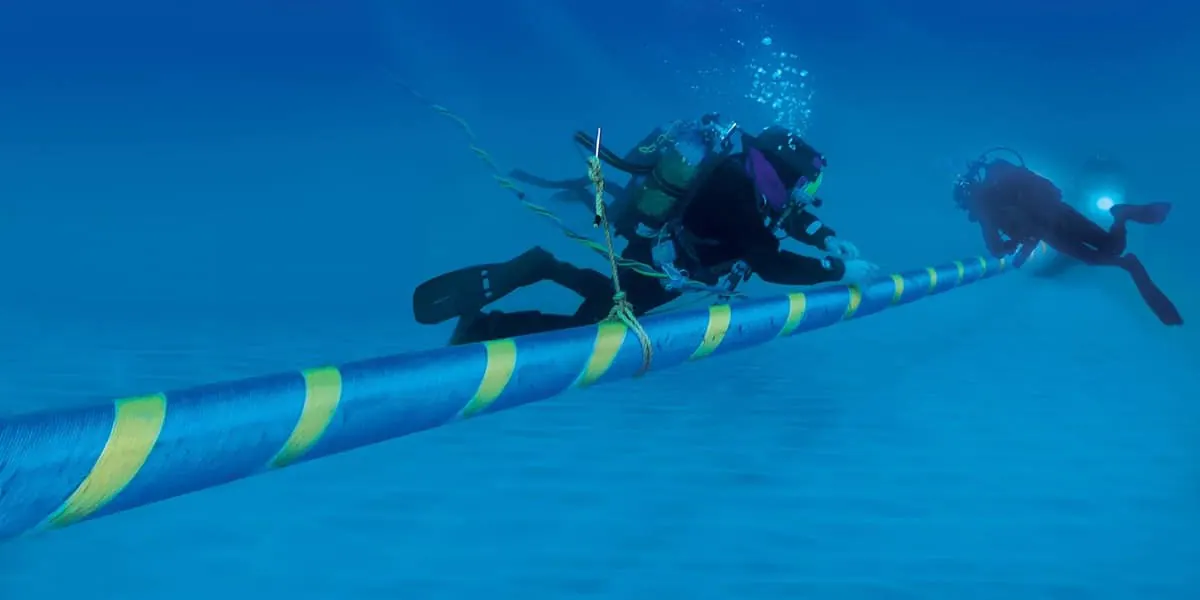
Tunisia's Minister of Equipment and Housing, Salah Zouari, chaired the first steering committee meeting for the ELMED project, a 600 MW electrical interconnection with Italy. The meeting, held in Tunis, aimed to enhance coordination among stakeholders to meet the project's scheduled timeline. The ELMED project involves a submarine electrical cable spanning 223 kilometers, enabling bidirectional electricity transport between Tunisia and Italy. This initiative is expected to strengthen electrical exchanges between the two Mediterranean countries.
The ELMED project marks a significant milestone in Tunisia's energy sector, with a planned capacity of 600 MW and high-voltage direct current (HVDC) technology. The HVDC system will operate at a voltage of up to 500 kV, facilitating efficient electricity transmission. The project's steering committee comprises representatives from various Tunisian government agencies, including the Ministry of Defense, Economy, Agriculture, and Environment, as well as the Direction générale des douanes and the STEG.
Minister Zouari emphasized the importance of coordination among stakeholders to overcome potential challenges and ensure the project's smooth implementation. The ELMED project is a major infrastructure development, connecting the Tunisian and Italian electrical networks. Its successful execution will not only enhance energy cooperation between the two countries but also contribute to the growth of the regional energy market.
The 223-kilometer-long submarine cable will be a critical component of the ELMED project, enabling the secure and efficient transmission of electricity between Tunisia and Italy. The project's bidirectional functionality will allow for the exchange of electricity in both directions, promoting flexibility and reliability in the regional energy system.
The ELMED project has garnered significant attention from various stakeholders, including government agencies, private sector companies, and civil society organizations. The project's steering committee will play a crucial role in ensuring that all stakeholders are aligned and working towards the project's objectives. Regular meetings and updates will facilitate effective communication and coordination.
The successful implementation of the ELMED project will have a positive impact on Tunisia's energy sector, contributing to the country's economic growth and development. The project will also enhance Tunisia's energy security, reducing its reliance on a single energy source and promoting diversification. Furthermore, the ELMED project will create new opportunities for cooperation and collaboration between Tunisia and Italy.
As the ELMED project advances, stakeholders are optimistic about its potential to transform the regional energy landscape. With a strong focus on coordination, cooperation, and innovation, the project is poised to deliver significant benefits for both Tunisia and Italy. The ELMED project is a testament to the two countries' commitment to sustainable energy development and cooperation.
Key points
- The ELMED project involves a 600 MW electrical interconnection between Tunisia and Italy, with a 223-kilometer-long submarine cable and high-voltage direct current (HVDC) technology.