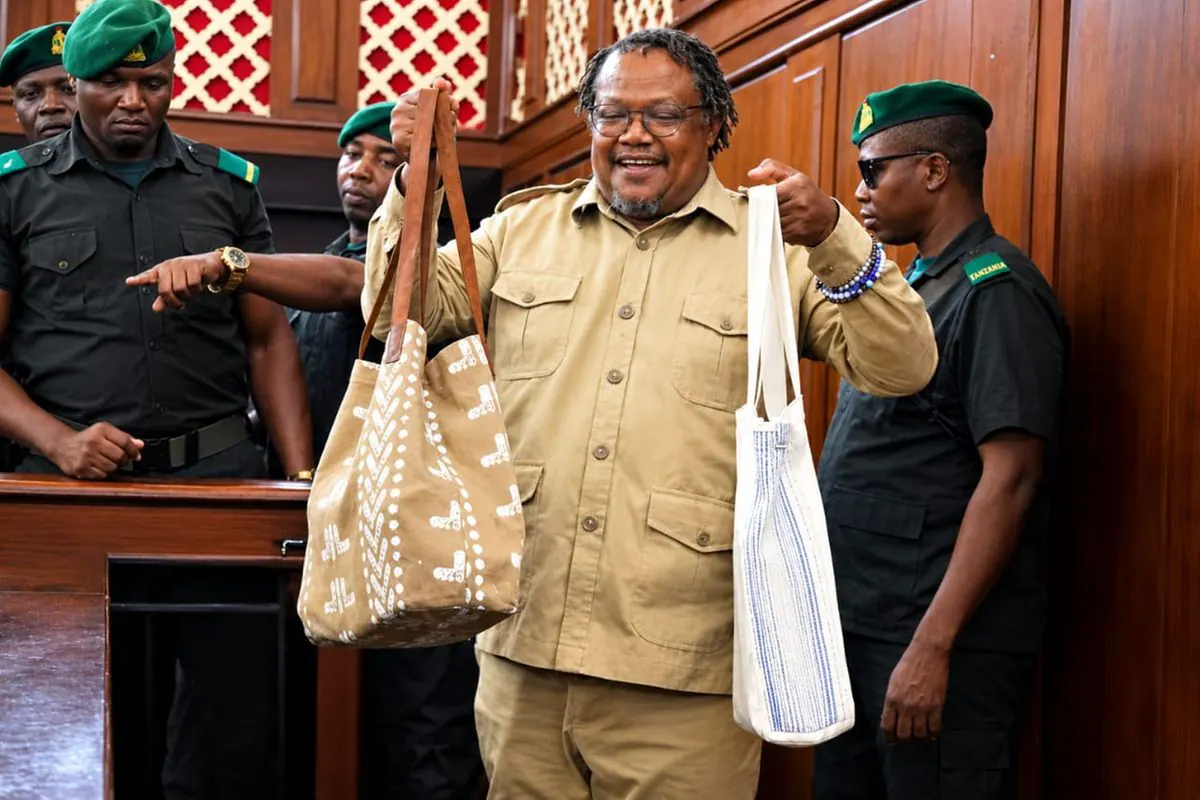
Tanzanian opposition leader Tundu Lissu, also a lawyer, has argued before the High Court in Dar es Salaam that the government was not threatened by statements he allegedly made in April 2025. Lissu is facing a treason charge under Section 39(2)(d) of the Penal Code for allegedly inciting the public to prevent the 2025 General Election. He made the argument on Friday, September 25, 2026, as he presented his final submissions in the case.
Lissu claimed that senior government officials, including President Samia Suluhu Hassan, former Vice President Philip Mpango, and former Prime Minister Kassim Majaliwa, were important witnesses who could have testified on whether his alleged statements had threatened the government. He said he had asked for these officials to appear in court, but the prosecution objected, and the court upheld the objections. Lissu also sought to call other officials, including the Inspector General of Police, Director of Criminal Investigations, and Chief of Defence Forces, but they did not ultimately give evidence.
The prosecution alleges that on April 3, 2025, Lissu acted with seditious intent by inciting the public to prevent the 2025 General Election through statements made and published online. The prosecution closed its case on August 17 after calling 17 witnesses, and Lissu subsequently called his defence witnesses. Lissu had submitted a list of 11 witnesses he wanted to call, including President Hassan, Dr Mpango, Mr Majaliwa, and other senior security officials.
Lissu focused on his seventh issue among nine questions he has asked the court to determine, concerning whether the government was actually threatened by the words attributed to him. He argued that for the alleged offence to be established, there had to be an actual result that was proved in accordance with Section 10(2) of the Penal Code. He said the prosecution therefore had to demonstrate that the government was threatened, but had presented no evidence establishing that.
Lissu referred to the Constitution, arguing that the President, as head of government and Commander-in-Chief, was the appropriate person to explain whether the government had been threatened. He said he similarly wanted Dr Mpango, who was Vice President at the time, and Mr Majaliwa, who was Prime Minister, to testify on whether the government had been threatened. Lissu also said he sought evidence from senior security officials, but the prosecution opposed the request.
Lissu challenged the evidence of the Republic's 17th witness, a confidential witness who works for Jambo TV, arguing that the witness's evidence undermined rather than supported the prosecution case. According to Lissu, the witness told the court that he and four colleagues were instructed by their boss to cover a Chadema meeting, and the decision to livestream the meeting came from Jambo TV journalists rather than Lissu.
Lissu also spoke about his personal circumstances, saying he continues to carry bullet fragments in his body and experiences pain and distress. The three-judge panel, chaired by Justice Dunstan Ndunguru, will consider Lissu's submissions in determining the case.
Key points
- Lissu argues that the prosecution failed to demonstrate that the government was threatened by his alleged statements.
- Lissu challenges the evidence of the Republic's 17th witness, a confidential witness who works for Jambo TV.
- The case will set a historic legal precedent, according to Lissu.