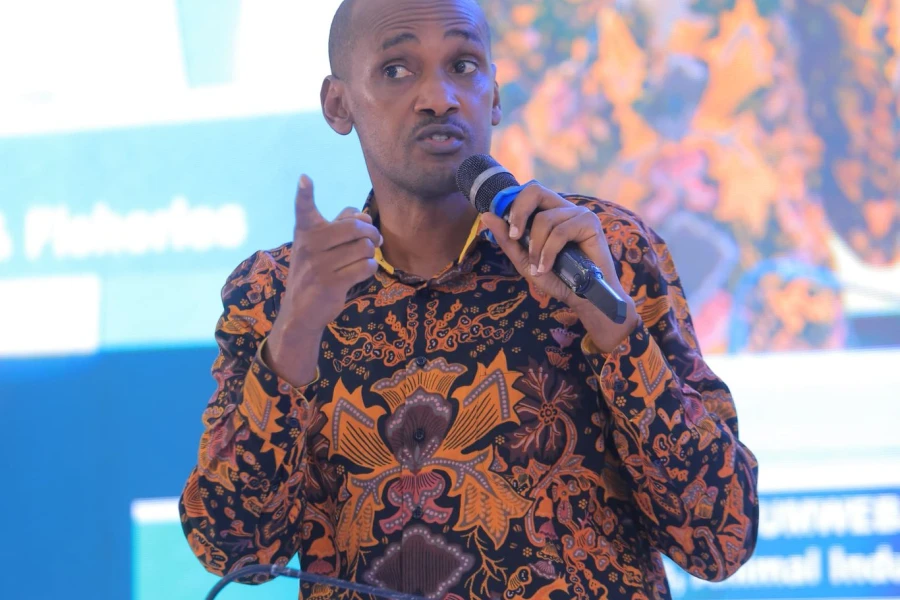
On October 7, 2026, Tumwebaze opened a two-day engagement with district leaders at Imperial Royale Hotel in Kampala, focusing on key interventions to improve agricultural production, livestock disease control, fisheries management, and extension service delivery. The engagement centered on four major areas: irrigation development, compulsory Foot and Mouth Disease (FMD) vaccination, the regulatory framework for wild-capture fisheries and fisheries resources management, and agricultural extension services.
Tumwebaze emphasized that Uganda's agricultural sector remains heavily dependent on rainfall, which is increasingly unreliable due to changing weather patterns. He noted that less than two percent of Uganda's agricultural land is currently under irrigation, compared to approximately 3.5 to 4 percent in Sub-Saharan Africa and about 28 percent in Northern Africa. This gap highlights the need for Uganda to accelerate investment in irrigation to stabilize agricultural production and protect farmers from unpredictable weather.
The proposed National Irrigation Development Project aims to expand access to water for agricultural production, including on-farm water conveyance and the development of irrigation systems around seasonal rivers and streams. The project will also profile and rehabilitate non-functional irrigation schemes and consider bulk water systems for water-stressed communities. Tumwebaze urged district leaders to submit verified information on existing irrigation facilities, available water sources, and the status of last-mile water connectivity in their respective areas.
Reliable district-level information will enable the government to identify existing gaps, avoid duplication of interventions, and ensure that investments are directed to communities with the greatest need. Tumwebaze said the Ministry of Agriculture, Animal Industry and Fisheries (MAAIF) is currently finalizing a project concept that will be submitted to the Ministry of Finance for consideration. The project will also incorporate aquaculture and agricultural mechanization as part of the wider strategy to increase productivity.
The proposed irrigation program will support increased access to agricultural machinery and fish ponds, particularly in the regions of Bukedi, Busoga, Luwero, and Kigezi. This inclusion of fish farming aims to expand livelihood opportunities for communities while contributing to food and nutrition security. Tumwebaze also challenged district leaders to account for gaps in agricultural extension service delivery, citing staffing, mobility, and facilitation as key factors affecting the ability of extension workers to reach farmers.
Tumwebaze called on district leaders to strengthen supervision of extension workers and ensure that agricultural officers regularly visit farmers. He encouraged districts to use radio platforms and other communication channels to disseminate information on good agronomic practices to a wider number of farmers. The Minister emphasized that farmers need practical guidance on production, management, and productivity if government investments in agriculture are to yield desired results.
Key points
- The proposed National Irrigation Development Project aims to reduce Uganda's dependence on rainfall by expanding irrigation coverage.
- District leaders are urged to provide accurate and up-to-date information to guide the design and implementation of the project.
- The project will incorporate aquaculture and agricultural mechanization to increase productivity and expand livelihood opportunities.