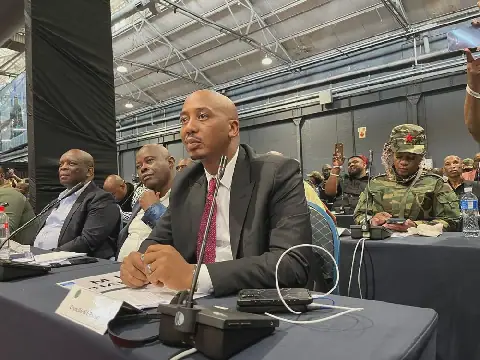
The Trades Union Congress (TUC) of Ghana has reviewed the 2027 National Budget and the New Economy Programme, calling for stronger links between the budget and job creation. The Congress emphasized that the effectiveness of the budget and the programme depends on their impact on employment opportunities, working conditions, and productivity. Dr. Edmund Adinkra-Darko, Acting Director of Research and Policy at the TUC, made the assessment at a forum organized by the Congress.
Dr. Adinkra-Darko noted that Ghana has made progress in restoring macroeconomic stability, including improvements in inflation and exchange rate performance. However, he stressed that the next priority should be translating these gains into economic transformation. This can be achieved by strengthening local manufacturing and processing, particularly in the minerals sector, to maximize the benefits of Ghana's natural resources.
The TUC highlighted the need for greater investment in domestic processing and value addition to create employment, increase export competitiveness, and improve foreign exchange earnings. According to Ghana Statistical Service data for the third quarter of 2025, the unemployment rate stands at about 13 per cent, with the rate among persons aged 15 to 24 at approximately 34 per cent. About 72 per cent of employed persons are engaged in vulnerable employment.
Dr. Adinkra-Darko emphasized that the figures highlight the need for the New Economy Programme to address structural employment challenges and promote decent work. He urged the government to ensure that allocations under the programme result in actual disbursements and that implementation is properly monitored. Employment contracts awarded under the programme should incorporate decent work standards, including written employment agreements and fair conditions of service.
The TUC also suggested that the government address staffing gaps in critical areas by recruiting qualified but unemployed professionals, particularly teachers, nurses, and other graduates from tertiary institutions. For the private sector, businesses require affordable credit, reliable infrastructure, and lower utility costs to expand operations and create jobs. Dr. Adinkra-Darko expressed concern about the pace of private sector participation in the electricity distribution sector.
Dr. Kwabena Nyarko Otoo, Deputy Secretary-General of the TUC, stated that the Congress is committed to providing an independent labour perspective on national economic policies. He noted that workers directly experience the effects of budget decisions and that Ghana's improving macroeconomic conditions present an opportunity to pursue broader economic transformation. The TUC has the research capacity and economic expertise to contribute to discussions on the country's economic direction.
The TUC plans to make the budget review forum an annual exercise to assess government budgets and their implications for workers' welfare. The ultimate test of the budget is its impact on workers' livelihoods, stressing that they experience both the benefits and shortcomings of government economic policies. The Congress aims to ensure that the 2027 budget and the New Economy Programme prioritize job creation and decent work.
Key points
- The TUC emphasizes the need for the 2027 budget and the New Economy Programme to prioritize job creation and decent work.
- Ghana's unemployment rate stands at about 13 per cent, with a higher rate among young people.
- The TUC plans to make the budget review forum an annual exercise to assess government budgets and their implications for workers' welfare.