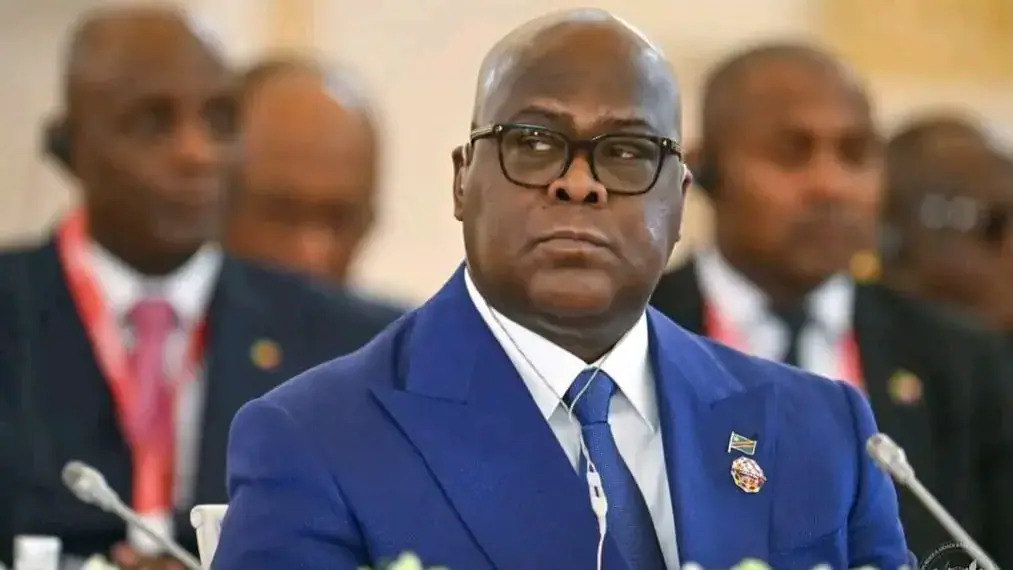
On October 29, 2026, during the third Russia-Africa summit in Moscow, Democratic Republic of the Congo (DRC) President Félix Tshisekedi urged Russia to play a more significant role in enforcing UN Security Council resolutions regarding the security crisis in eastern DRC. Tshisekedi emphasized that Russia, as a permanent member of the Security Council, has a responsibility to support the implementation of these resolutions. The resolutions, including 2773 and 2808, demand the withdrawal of Rwandan troops and M23 rebels from Congolese territory.
The DRC government has long insisted that Rwandan troops and M23 rebels, now grouped under the name FRN, must leave Congolese soil. Tshisekedi's call on Russia to support these efforts aims to mobilize a major international player to increase diplomatic pressure on Rwanda to comply with the UN resolutions. The Congolese government believes that Russia's involvement can help achieve concrete progress on the ground. Tshisekedi stressed that the resolutions adopted by the Security Council also bind Russia, which has a duty to ensure their implementation.
The crisis in eastern DRC has resulted in significant humanitarian suffering, with civilians bearing the brunt of the conflict. Tshisekedi highlighted the need for a durable peace that guarantees the security of citizens, restores state authority over the entire national territory, and protects civilians. He also emphasized the importance of humanitarian access and the voluntary, safe, and dignified return of displaced persons. The DRC government believes that the persistence of insecurity in the east is incompatible with the principles of territorial integrity and peaceful dispute resolution enshrined in the UN Charter.
Tshisekedi also discussed economic cooperation between the DRC and Russia, advocating for a partnership based on mutual respect and the valorization of economic potentialities. He identified the energy sector, including hydroelectric and nuclear power, as a priority area for cooperation. The DRC also seeks to develop its transportation infrastructure, transform local minerals, and improve access to fertilizers. Tshisekedi recommended focusing on economically viable projects that promote technology transfer, vocational training, and the participation of Congolese companies.
The DRC president proposed that ministers identify a limited number of priority projects with clearly defined financing, realistic timelines, and a regular monitoring mechanism. He suggested that a first review of progress could be presented during the next ministerial conference of the Russia-Africa Partnership Forum. Tshisekedi emphasized that the success of this cooperation should be measured by tangible results on the economic and social ground.
Tshisekedi defended a foreign policy based on diversifying partnerships and independence of judgment, stressing that rapprochement with Moscow does not imply automatic alignment with Russian positions. He advocated for a multipolar international order in which each country can exercise its sovereignty fully, regardless of its power. The DRC president reaffirmed the importance of respecting the UN Charter, state territorial integrity, and peaceful dispute resolution.
The DRC-Russia cooperation aims to promote economic development and peace in the region. Tshisekedi's visit to Moscow and his participation in the Russia-Africa summit reflect the DRC's efforts to strengthen its international partnerships and address the security and economic challenges facing the country. The outcome of these efforts will depend on the implementation of concrete projects and the progress made on the ground.
Key points
- DRC President Félix Tshisekedi urges Russia to support UN resolutions demanding Rwandan troops and M23 rebels leave Congolese territory.