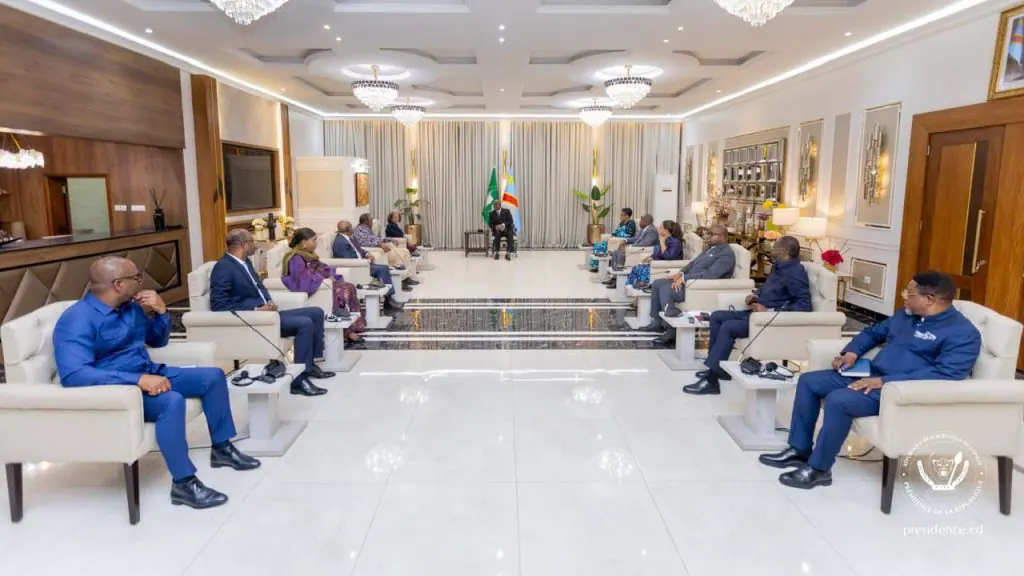
On October 9, 2026, in Kinshasa, Democratic Republic of the Congo (DRC) President Félix-Antoine Tshisekedi met with a delegation of facilitators from the African Union (AU) to discuss the country's ongoing security crisis. Tshisekedi stressed the importance of translating diplomatic agreements into concrete actions on the ground. This meeting comes as the situation in eastern DRC remains a major concern for the Congolese authorities.
The AU delegation, comprising four former heads of state, including Sahle-Work Zewde, Uhuru Kenyatta, Catherine Samba-Panza, and Mokgweetsi Masisi, is on a 72-hour mission to consult on solutions to the security crisis in eastern DRC. Their visit follows a meeting with Rwandan President Paul Kagame and discussions with the M23 rebel group. The facilitators are focusing on implementing the Washington and Doha peace processes.
Tshisekedi's meeting with the AU facilitators was also attended by Prime Minister Judith Suminwa and several sectoral ministers. This government participation allowed for discussion of the implementation of commitments made under diplomatic initiatives aimed at restoring peace in conflict-affected regions. The DRC government is keen to see an end to hostilities and the restoration of durable security in the east.
Despite progress in discussions, several key commitments remain to be implemented. The gap between diplomatic declarations and their effective application on the ground is a significant challenge. The DRC emphasizes its commitment to ongoing peace processes while insisting on the need for verifiable actions on the ground. The credibility of diplomatic initiatives now depends on their implementation and results in insecure areas.
The eastern DRC has been plagued by conflict for decades, with various armed groups operating in the region. The M23 rebellion is one of the most prominent groups, and its activities have caused significant humanitarian and economic disruption. The DRC government, with international support, is working to address the root causes of the conflict and restore stability to the region.
The AU facilitators' mission is seen as a crucial step towards finding a lasting solution to the security crisis in eastern DRC. Their engagement with key stakeholders, including the Congolese government, rebel groups, and regional leaders, aims to build consensus and momentum towards peace. The DRC government is hopeful that this process will lead to tangible results and an improvement in the security situation.
The meeting between Tshisekedi and the AU facilitators reflects the ongoing efforts to address the complex security challenges in the DRC. The country's leaders are under pressure to deliver concrete results and improve the lives of citizens affected by conflict. The success of these initiatives will depend on the effective implementation of commitments and the collaboration of all stakeholders.
Key points
- DRC President Félix Tshisekedi emphasizes need for tangible results on the ground to address ongoing security crisis.