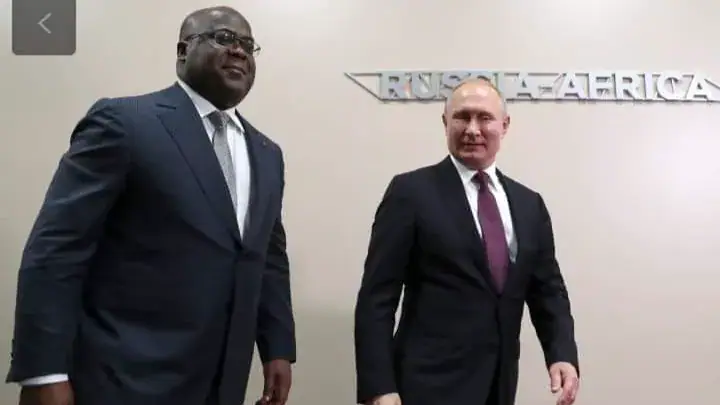
On October 30, 2026, Democratic Republic of the Congo President Felix Tshisekedi met with Russian President Vladimir Putin at the Kremlin in Moscow. Tshisekedi sought Russia's support in ending the Rwandan aggression in the east of his country. The meeting comes after Tshisekedi expressed disappointment with the results of peace processes in Washington and Doha.
The conflict in eastern DR Congo has been ongoing for nearly 30 years, causing widespread humanitarian suffering. Tshisekedi presented Putin with a three-point plan for bilateral cooperation, including economic cooperation, Russian support for the peace process, and diplomatic coordination. He emphasized that no ambitious economic partnership can succeed in an environment marked by insecurity and occupation of Congolese territory.
Tshisekedi's visit to Moscow is part of a broader effort by Kinshasa to diversify its diplomatic partnerships and seek support from other countries, including Russia, to address the security crisis in eastern DR Congo. The DR Congo is currently a non-permanent member of the UN Security Council and is seeking to leverage its diplomatic influence to address the crisis.
Tshisekedi also discussed the renewal of the mandate of the UN Mission in DR Congo (MONUSCO), which is set to expire on December 20, 2026. He sought Russian support for the extension of the mission, which is critical to maintaining international presence in the country.
The rapprochement between DR Congo and Russia has raised questions about a potential geopolitical repositioning of the DR Congo. However, authorities in Kinshasa insist that diversifying partnerships does not mean choosing sides. They emphasize that their diplomatic approach is open and aimed at soliciting support from all countries that can contribute to peace, without compromising their strategic independence.
The conflict in eastern DR Congo has involved various armed groups, including the M23, which is supported by Rwanda. The UN Security Council has adopted Resolution 2773, which calls for the withdrawal of Rwandan troops, cessation of hostilities, and restoration of state authority. However, the resolution has had limited impact, and the situation remains volatile.
Tshisekedi's engagement with Russia reflects the complexities of DR Congo's diplomatic relationships and its efforts to address the security crisis in eastern parts of the country. The outcome of his discussions with Putin and the implications of DR Congo's growing ties with Russia remain to be seen.
Key points
- DR Congo President Felix Tshisekedi seeks Russian support to end Rwandan aggression in eastern DR Congo.
- Tshisekedi presents Putin with a three-point plan for bilateral cooperation, including economic cooperation and Russian support for the peace process.
- The DR Congo-Russia rapprochement raises questions about a potential geopolitical repositioning of the DR Congo.