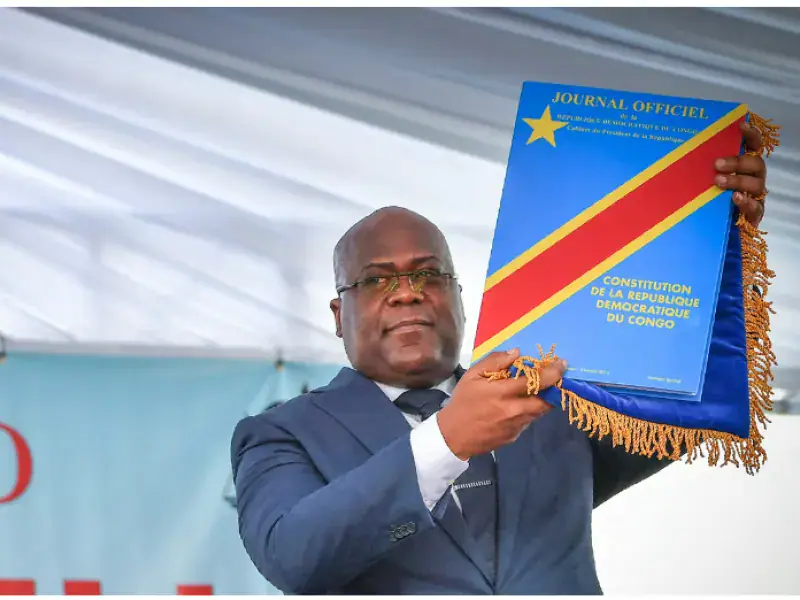
On November 9, President Felix Tshisekedi promulgated Law No. 26/045, which sets the conditions for organizing a referendum in the Democratic Republic of Congo. This law, proposed by Deputy Paul-Gaspard Ngondankoy, was adopted by the National Assembly and the Senate. It came into effect immediately upon promulgation and repeals all previous contrary provisions. The law is based on Article 5 of the Constitution, which states that national sovereignty belongs to the people.
The new law defines a referendum as a mode of expression of the people's sovereignty, where Congolese citizens vote 'yes' or 'no' on a specific text or question. Participation in the referendum is considered a civic duty for all citizens on the electoral list, aged 18 and above, and enjoying their civil and political rights. The initiative for a referendum can be taken by the President, the government after a Council of Ministers meeting, or by half of the members of each of the two chambers of Parliament.
The law also allows 100,000 Congolese citizens to initiate a referendum through a petition addressed to the National Assembly or the Senate. The law comprises about 50 articles divided into eight chapters, regulating the referendum campaign, the role of witnesses, observers, and journalists, voting operations, and contentious issues. The law's repressive aspect has been strengthened, with the counterfeiting of voting ballots punishable by the same penalties as forgery under the Penal Code.
This promulgation occurs in a tense political climate, with the opposition demonstrating against any constitutional change for several months. They accuse the government of preparing for President Felix Tshisekedi to stay in power beyond 2028. The presidential camp argues for a return to the sovereign people. The new law was made possible by two rulings of the Constitutional Court, dated January 15, 2021, and July 28, 2026.
The law's enactment has sparked concerns about potential changes to the Constitution, particularly regarding presidential term limits. Article 220 of the current Constitution prohibits any revision that would alter the number and duration of presidential mandates. However, the new law's provisions seem to allow for a possible revision of this article, raising concerns among the opposition.
The opposition has been vocal in its criticism of the government's intentions, accusing it of attempting to manipulate the Constitution to maintain President Tshisekedi in power. The government has denied these allegations, arguing that the new law is aimed at allowing the people to decide on key issues through a referendum.
The international community is closely watching the developments in the Democratic Republic of Congo, with concerns about the country's stability and democratic progress. The country's progress in this area will likely be closely monitored in the coming months.
Key points
- President Felix Tshisekedi has enacted a law outlining the conditions for organizing a referendum in the Democratic Republic of Congo.
- The law allows for a possible revision of the Constitution, raising concerns among the opposition about potential changes to presidential term limits.
- The opposition has accused the government of attempting to manipulate the Constitution to maintain President Tshisekedi in power.
Reporting sources
- RDC : Tshisekedi a promulgué la loi sur le référendum · actualite.cd