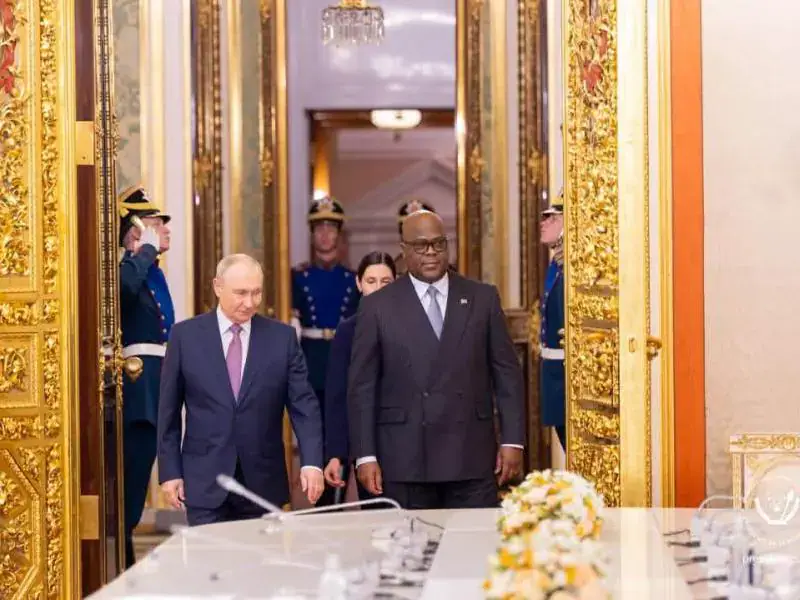
On October 30, 2026, in Moscow, President Félix Tshisekedi addressed the Congolese diaspora, revealing a conversation with Joseph Kabila during their coalition days. Tshisekedi claimed Kabila expressed disdain for Rwandans, blaming them for his father's death. Tshisekedi finds it puzzling that Kabila now collaborates with the same Rwandans. This statement was made during the Russia-Africa summit. Tshisekedi's comments reflect his concerns about Kabila's recent actions.
Tshisekedi believes the Front pour la Refondation de la Nation (FRN), led by Joseph Kabila, shares the same objectives as the Alliance des Forces Démocratiques pour la Libération (AFDL) of his late father, Laurent-Désiré Kabila. Both movements have received Rwandan support. Tshisekedi thinks their goal is to maintain control over the Congolese population. He views their actions as an attempt to re-establish the order imposed in 1997. Tshisekedi's analysis highlights the historical context of the conflict.
According to Tshisekedi, Laurent-Désiré Kabila was initially supported by Rwanda but later sought to distance himself. However, it was too late, as Rwandans had infiltrated his inner circle. Tshisekedi alleges that after Laurent-Désiré Kabila's assassination, Rwandans installed Joseph Kabila as a more compliant leader. Tshisekedi described Joseph Kabila as a "dog" or someone who would obey Rwandans. This criticism underscores Tshisekedi's concerns about Kabila's loyalty.
Tshisekedi expressed disappointment that Joseph Kabila, who previously blamed Rwandans for his father's death, now collaborates with them. Tshisekedi finds it contradictory that Kabila would ally with those responsible for his father's assassination. This development has sparked debate among Congolese citizens and international observers. Tshisekedi's comments have added fuel to the ongoing tensions.
The current situation in the Democratic Republic of Congo is marked by heightened tensions and controversy. Joseph Kabila's decision to take up arms against the government has been met with opposition from international partners. They emphasize the importance of respecting the constitutional order and engaging in an inclusive national dialogue. The issue of dialogue remains contentious, with debates surrounding its format and mediation.
The Congolese government faces multiple challenges, including security concerns and economic development. The upcoming budget for 2027 will allocate resources to various sectors, including infrastructure and elections. The government's priorities have been questioned, particularly regarding the threat posed by the Allied Democratic Forces (ADF). The situation demands careful consideration and strategic planning.
The international community continues to monitor developments in the Democratic Republic of Congo. The incident has sparked reactions from various stakeholders, including politicians, civil society, and international organizations. As the situation unfolds, the Congolese people and international observers await further developments. The government's response and potential dialogue will be crucial in shaping the country's future.
Key points
- Tshisekedi criticizes Kabila's alliance with Rwanda, citing historical grievances and concerns about loyalty.