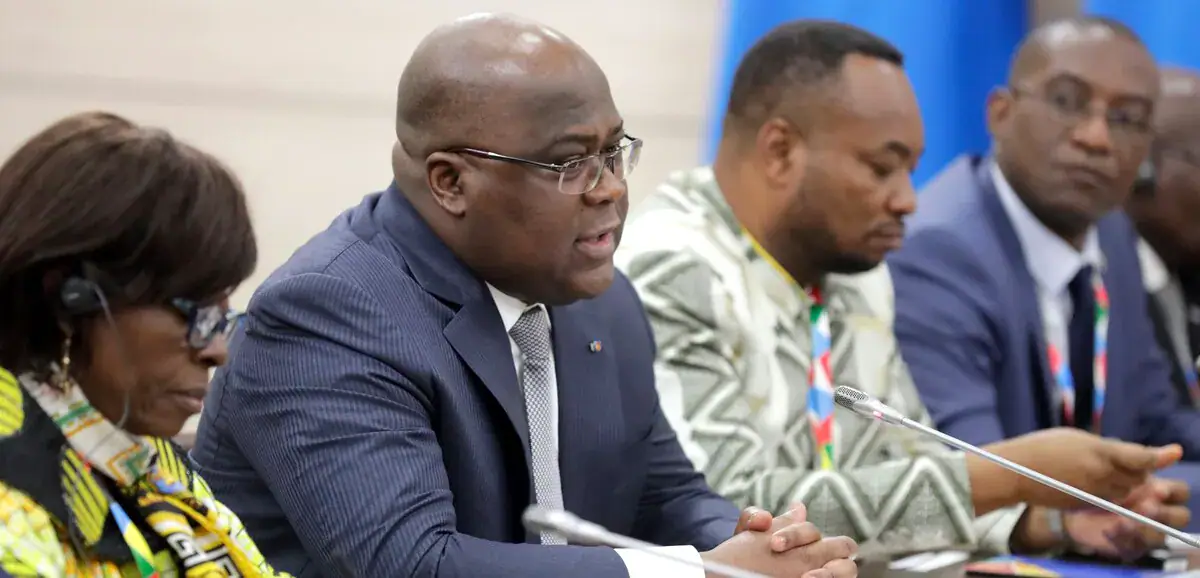
On October 27, 2026, President Felix Tshisekedi of the Democratic Republic of Congo (DRC) publicly accused his predecessor, Joseph Kabila, of acting as a "suppletif" (a French term for a proxy or surrogate) for Rwandan President Paul Kagame. This accusation comes as conflicts persist in the eastern part of the DRC, particularly with the resurgence of the M23 rebel group, which Kinshasa and international partners claim is supported by Rwanda.
Joseph Kabila, who ruled the DRC from 2001 to 2019, was recently appointed to lead a new politico-military movement called the "Front pour la refondation de la Nation" (FRN). This movement is an alliance between the M23 and its political branch, the Alliance Fleuve Congo (AFC). Tshisekedi believes that Kabila took this position because his members were "in need of a solution," implying that Kabila is now directly involved in the conflict.
The conflict in eastern DRC has been ongoing for over thirty years, with the M23, backed by Rwanda according to Kinshasa and several international partners, capturing major cities like Goma and Bukavu in early 2025. Although the front has stabilized since then, clashes continue, particularly in the Sud-Kivu region. The FRN has stated its goal to "end tyranny by all means, including force," and has also announced its intention to revive commitments made during peace talks between the M23 and Kinshasa, which began in April 2025 under the auspices of Qatar.
Tshisekedi's accusations against Kabila are part of a broader narrative that Kinshasa is using to frame the conflict. The DRC government has long claimed that Rwanda's support for rebel groups like the M23 is a major factor in the instability in the region. By accusing Kabila of acting on behalf of Kagame, Tshisekedi is attempting to highlight the international dimensions of the conflict and potentially garner more support from the international community.
The current situation in eastern DRC remains volatile, with continued fighting and humanitarian concerns. The FRN's formation and Kabila's leadership of the movement have raised concerns among regional and international actors. Tshisekedi's government is under pressure to stabilize the region and protect the country's territorial integrity. The international community, including the African Union and the United Nations, has been closely monitoring the situation and has called for a peaceful resolution to the conflict.
Kabila's appointment as head of the FRN has significant implications for the region. His return to the political-military scene has sparked concerns about the potential for further escalation. The DRC government has accused Kabila of preparing a "generalized attack" against the country, and Tshisekedi's accusations against him are part of a broader effort to counter Kabila's influence and legitimacy.
The conflict in DRC has significant regional and international implications. The African Union and the United Nations have been involved in efforts to mediate the conflict and promote peace. The situation remains complex, with multiple actors and interests involved. A lasting resolution to the conflict will require a comprehensive approach that addresses the root causes of the instability and involves all relevant stakeholders.
Key points
- Tshisekedi accuses Kabila of acting as a proxy for Rwandan President Paul Kagame.
- The conflict in eastern DRC has been ongoing for over thirty years, with multiple rebel groups and international actors involved.
- Kabila's appointment as head of the FRN has raised concerns about the potential for further escalation and regional instability.