The National Peace Council (NPC) and the Kofi Annan International Peacekeeping Training Centre (KAIPTC) are calling for stronger trust and collaboration between communities and security agencies in Ghana to prevent violent extremism. This effort is particularly focused on northern Ghana, where extremist threats are a growing concern. The two organizations stress that building resilient communities, improving communication, and strengthening civilian-security relations are critical to preventing extremist threats from gaining a foothold.
According to Frank Wilson Bodza, Director of Conflict Management and Resolution at the National Peace Council, conventional security measures alone are not enough to effectively prevent violent extremism. He emphasizes that prevention must begin within communities by strengthening relationships between citizens and institutions responsible for their protection. Bodza notes that trust, communication, accountability, and institutional coordination are areas requiring sustained attention to prevent violent extremism.
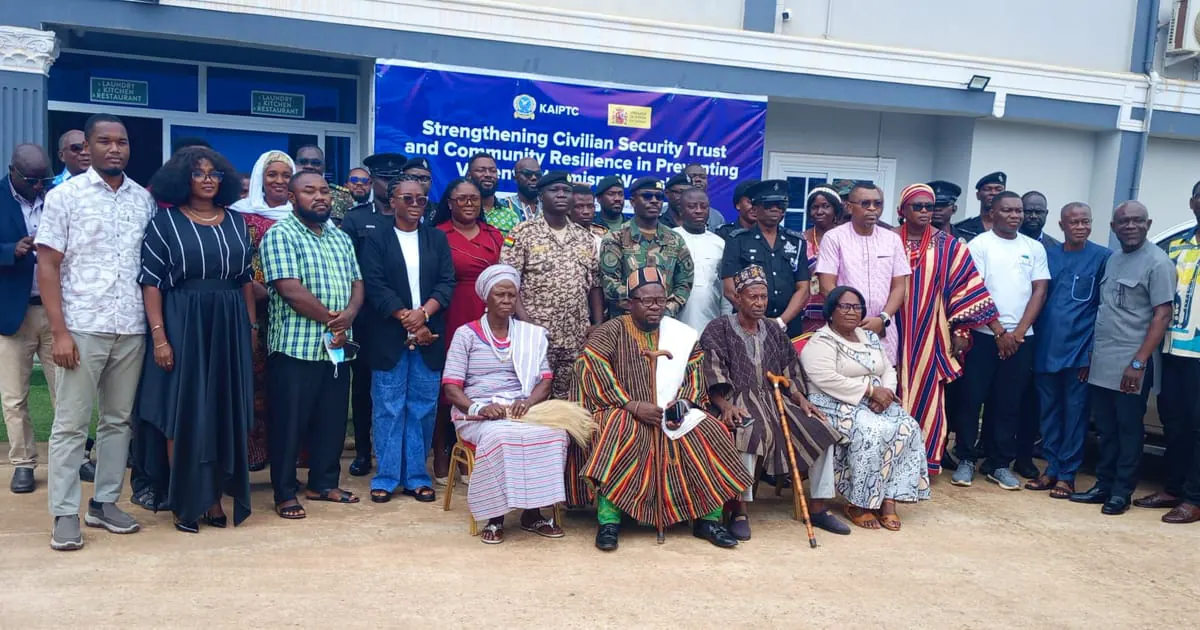
The National Peace Council and KAIPTC are implementing a programme across four northern regions: Upper West, Savannah, North East, and Upper East. The programme aims to equip participants with the knowledge and skills to strengthen community engagement and civilian-security cooperation. A regional community engagement workshop was held in Wa on September 30, 2026, bringing together 45 representatives from civil society organizations, local government institutions, and traditional and religious authorities.
Lt. Col. James Bampoe Palmer, Commanding Officer of the 10 Mechanised Battalion, represented the Commandant of the KAIPTC at the workshop. He stressed the importance of civilian participation in maintaining peace and preventing violent extremism. Palmer noted that security is no longer the sole responsibility of uniformed personnel, and civilians play a critical role in providing information from communities.
The programme seeks to establish a trained cohort of regional participants capable of facilitating similar community engagements after the conclusion of the workshop. The ultimate goal is to strengthen trust, promote dialogue, and encourage collaborative problem-solving between communities and security agencies. Participants are expected to develop practical regional plans that can be implemented in their respective communities.
According to the National Peace Council, consultations conducted ahead of the programme identified areas requiring sustained attention, including trust, communication, accountability, and institutional coordination. Although Ghana continues to enjoy relative peace and stability, developments in the Sahel and neighbouring countries demonstrate that the country's peace cannot be taken for granted.
The National Peace Council and KAIPTC emphasize that resilient communities must be able to withstand extremist narratives, while young people, women, traditional and religious leaders, and marginalized groups should have meaningful opportunities to participate in community security efforts. By working together, communities and security agencies can prevent violent extremism and promote peace and stability in Ghana.
Key points
- Building trust and community resilience is critical to preventing violent extremism in Ghana.
- The National Peace Council and KAIPTC are implementing a programme to strengthen community engagement and civilian-security cooperation in northern Ghana.
- The programme aims to establish a trained cohort of regional participants capable of facilitating similar community engagements after the conclusion of the workshop.