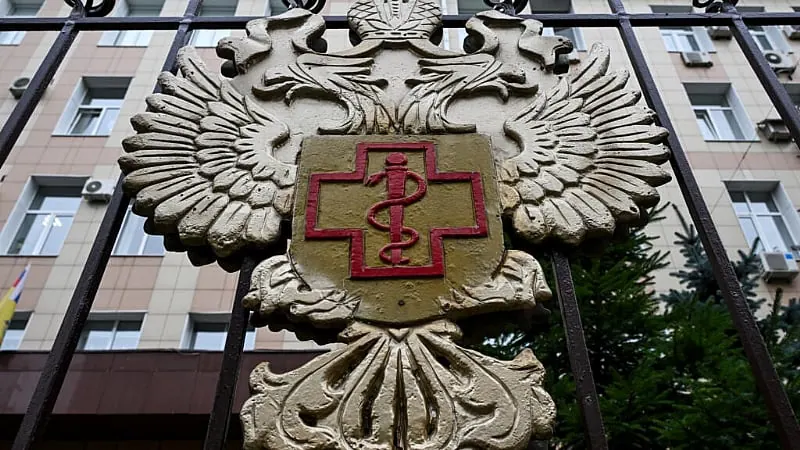
US President Donald Trump announced on Tuesday that he would be speaking with Russian President Vladimir Putin in the near future regarding the reported plague death of a laboratory technician in Siberia. The conversation comes as Washington presses Moscow for transparency over the incident. Russian authorities have denied imposing anti-plague measures and downplayed reports of an incident at an anti-plague institute in Siberia's Irkutsk region.
The reported plague death has raised concerns in Washington, with Secretary of State Marco Rubio calling on Russia to be open about the situation. Rubio made the comments during a trip to Iceland, emphasizing the importance of transparency to enable a suitable response. According to Russian news outlet People of Baikal, the deceased woman, 28-year-old Darya Shipilova, may have contracted pneumonic plague from a broken test tube, and up to 200 people who had contact with her were under quarantine.
However, Russian authorities have stated that the cause of death is not confirmed, and health watchdog Rospotrebnadzor has denied claims circulating online that special measures had been put in place. The organization clarified that the document and information in question do not originate from official sources and are untrue. Russian officials said postmortem tests had not detected the disease, and Irkutsk Regional Governor Igor Kobzev stated that the woman died of pneumonia with an undetermined cause.
The World Health Organization (WHO) received an update from Russia on Tuesday, stressing that no case of the disease has been recorded in the city of Irkutsk. WHO chief Tedros Adhanom Ghebreyesus emphasized the importance of timely, complete, and transparent information sharing under the International Health Regulations to assess potential public health risks accurately. The update also stated that Russia had launched an epidemiological investigation into a case of community-acquired pneumonia in an employee at the Irkutsk institute.
According to the WHO, test results showed no presence of dangerous infectious disease pathogens in any of the contacts. The United Nations health agency has assessed the risk for Irkutsk as "moderate to low" based on the available information and is monitoring the situation closely. Plague is a bacterial disease that can occur in several forms, including pneumonic plague, which is the most contagious type and can be transmitted by respiratory means.
Trump had offered assistance to Russia if needed, and in response, the Russian watchdog highlighted a "significantly worsened" measles situation in three US states and a "fatal case of plague" recorded in New Mexico in June. The Russian watchdog also noted that measles cases have increased under the Trump administration. An international conference on plague and other infectious diseases will be held in Irkutsk on October 21-22, which organizers stated was unrelated to the recent death of an employee of the anti-plague institute.
The US State Department had sent Russia a confidential diplomatic communication warning Moscow that failure to disclose details runs counter to its international health obligations. Trump and Putin's conversation is expected to take place soon, with Trump stating that it would happen "very soon." The incident has sparked concerns over public health risks, and the international community is awaiting more information from Russia on the situation.
Key points
- US President Donald Trump to speak with Russian President Vladimir Putin over reported plague death in Siberia.
- Russian authorities deny imposing anti-plague measures and downplay reports of incident at anti-plague institute.
- World Health Organization assesses risk for Irkutsk as "moderate to low" based on available information.