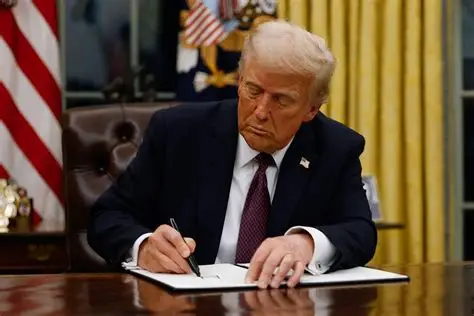
On the sidelines of the UN General Assembly, US President Donald Trump signed a wide-ranging security deal with the leaders of Greenland and Denmark. The 10-page pact aims to strengthen cooperation and ensure the security of the Arctic region. According to Trump, the deal will be a long-term, fantastic relationship that benefits Europe, the United States, and everybody involved. The agreement includes the establishment of two new military bases in southern and eastern Greenland.
The new military bases will be built in Narsarsuaq in the south and Mestersvig in the east, in addition to the Pituffik base already operated by the US in the north. This development is a significant expansion of the US military presence in Greenland. The deal also reaffirms the sovereignty and territorial integrity of the Kingdom of Denmark and recognizes Greenland's right to self-determination. This aspect of the agreement is seen as a crucial element in maintaining regional stability.
The security deal is a result of Trump's repeated insistence on the strategic importance of Greenland for the United States. His previous calls for control over the autonomous Danish territory had sparked fierce pushback from NATO ally Denmark and the alliance. Danish Prime Minister Mette Frederiksen welcomed the deal, stating that it ensures that adversaries will not be allowed to gain control or significant influence in the territory. Her Greenland counterpart, Jens-Frederik Nielsen, emphasized that the agreement reflects the responsibility of the parties involved.
A key aspect of the agreement is the blocking of non-NATO, non-EU countries from strategic sectors in Greenland. This move is aimed at preventing US adversaries, such as China and Russia, from gaining a foothold in the Arctic. The deal stipulates that such parties will not be allowed control, significant influence, or access to non-public information that may constitute a threat to national security or public order within sensitive sectors. This provision is seen as a crucial element in maintaining regional security.
The agreement has been welcomed by EU chief Antonio Costa as a positive step for transatlantic cooperation and Arctic security. The EU stands ready to continue working closely with Greenland, Denmark, and transatlantic partners for a peaceful, secure, and prosperous Arctic. The deal also stipulates that Greenland must continue to abide by the agreement even if it obtains independence from Denmark. Furthermore, Greenland is encouraged to remain in or join NATO if necessary.
The security deal builds on a 1951 defense pact updated in 2004, which allows Washington to ramp up its military presence on the island provided it informs Denmark and Greenland in advance. The agreement reflects the commitment of the parties involved to work together to ensure regional security. With a population of 57,000 inhabitants, Greenland is a significant player in the Arctic region. The deal aims to ensure that the region remains stable and secure.
The signing of the security deal marks a significant development in the region, with implications for global security and geopolitics. The agreement demonstrates the commitment of the US, Denmark, and Greenland to work together to address common security challenges. As the Arctic region continues to gain strategic importance, the deal is seen as a crucial step in maintaining regional stability and preventing the influence of non-NATO, non-EU countries.
Key points
- The US will build two new military bases in southern and eastern Greenland.
- The deal blocks non-NATO, non-EU countries from strategic sectors in Greenland.
- The agreement reaffirms Denmark's sovereignty and Greenland's right to self-determination.