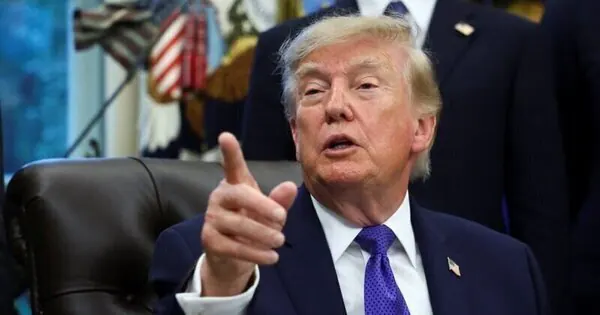
US President Donald Trump stated that the United States is engaged in productive discussions with Iran and has no plans to attack the country before the midterm congressional elections in November. In a post on the Truth Social platform on October 8, Trump also claimed that Iran is currently facing significant economic and military challenges. He mentioned that the US naval blockade of Iranian ports remains in full force, despite reports of several attacks on vessels in the Strait of Hormuz.
According to Trump, oil shipments through the Strait of Hormuz have recovered substantially from the disruptions caused by the war, with 22 million barrels of oil transiting the strait in a single night. The UKMTO maritime security agency has reported several attacks on vessels in the strait in recent days. Meanwhile, Tehran and Washington have been exchanging proposals aimed at ending the war and restoring security in the strait, but the two sides remain divided over the scope of negotiations and Iran's nuclear program.
In a separate incident, Saudi Arabia reported that debris from an intercepted missile had damaged a kindergarten and a medical complex in the capital city of Riyadh. The missile was launched by Yemen's Iran-aligned Houthis, who claimed to have targeted King Khalid Airport in Riyadh. The Houthis warned that all oil facilities in Saudi Arabia were potential targets for similar attacks. The incident led to the temporary suspension of flights to Riyadh by Lufthansa Group and Air India.
The attack on Riyadh is part of a series of strikes that have occurred as fighting has intensified in Yemen. Government forces backed by Saudi-led coalition air strikes have launched a counteroffensive against the Houthis, aiming to recapture territory seized by the rebels along Yemen's Red Sea coast. The UN International Organization for Migration reported that over 200,000 people have been displaced within Yemen since fighting intensified, with nearly all of those displaced since September 1.
Meanwhile, Chinese refiners have increased their purchases of crude oil from Iraq and Qatar as supplies of Iranian oil have declined. According to traders, Chinese refiners have purchased at least 12 million barrels of Iraqi and Qatari crude for delivery in October and November. The bulk of the cargoes are Iraqi Basra Medium and Basra Heavy crude, which are among the cheapest grades available in the Middle East.
China's imports of Iranian oil nearly halved year-on-year in September to about 590,000 barrels per day, the lowest level since January 2023. The volume of Iranian crude stored on tankers outside the US blockade zone had fallen to about 45 million barrels from 100 million barrels in late July. Iran loaded no crude for export in September, the first time this had occurred since 2013.
In other news, France summoned Iran's ambassador to Paris on October 7 over what it called a "disinformation campaign" by Iranian authorities concerning student protests that have swept the country. The French Foreign Ministry stated that the ambassador was told that "false content" disseminated online by official Iranian Foreign Ministry accounts was "absolutely unacceptable."
Key points
- US President Donald Trump stated that the United States is engaged in productive discussions with Iran and has no plans to attack the country before the midterm congressional elections in November.
- China has increased its purchases of crude oil from Iraq and Qatar as supplies of Iranian oil have declined.
- France summoned Iran's ambassador to Paris over a "disinformation campaign" concerning student protests in the country.