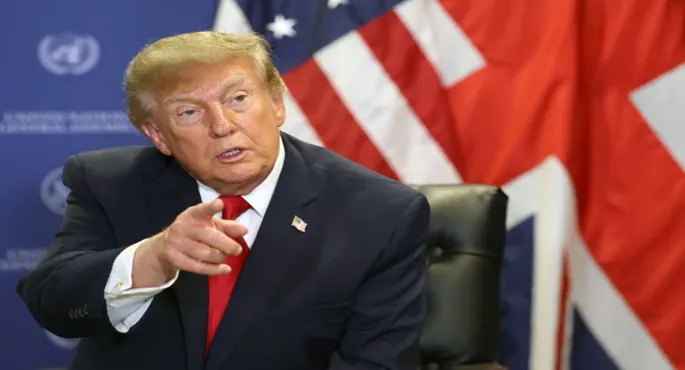
US President Donald Trump has said that the war with Iran could potentially end before or shortly after the US midterm elections. This comes as Washington and Tehran engage in ongoing talks, despite a significant escalation in tensions between the two nations. According to Trump, the US has taken significant actions against Iran, including airstrikes that have prevented the country from acquiring nuclear capabilities and caused substantial damage to its economy.
During a meeting with Arab and Islamic leaders, Trump emphasized that the US is working to completely isolate the Iranian economy as part of its pressure campaign on Tehran to change its stance and reach an agreement. He also noted that Iran's economy is facing extremely high inflation rates. The US President made these comments as he considered taking a "big decision" on whether to pursue an agreement with Iran or escalate tensions.
Trump revealed that US and Iranian officials had conducted what he described as "very productive" and "very good" talks on the sidelines of the UN General Assembly. This development indicates that diplomatic efforts are ongoing in parallel with the military and economic escalation. In his address to the UN General Assembly, Trump suggested that a deal with Iran could be possible after the midterm elections.
Trump used a stern tone, stating that the choice would be between reaching an agreement with Iran or "wiping it out." This combines a show of force with an openness to negotiations. US envoy Steve Witekoff disclosed that the US and Iranian delegations engaged in extensive talks through intermediaries who shuttled between the two sides throughout the day.
According to Witekoff, the intermediaries successfully completed a round of discussions, and he expressed hope that the talks would prove "constructive and promising." He also emphasized that mediation efforts would continue. Reports indicate that the talks took place indirectly through intermediaries, despite some media speculation about a direct meeting between Witekoff and Iranian Foreign Minister Abbas Araghchi.
Iranian media reported that Tehran conveyed its conditions to the US for ending the war and reopening the Strait of Hormuz. These conditions allegedly included the immediate lifting of the naval blockade, the release of frozen Iranian assets, and an end to the war on all fronts. An Israeli newspaper cited US sources stating that the talks did not result in an agreement on most disputed points.
The current situation highlights the ongoing gap between Washington and Tehran, despite renewed communication. The US relies on sanctions and economic isolation, while Iran ties progress to an end to military operations, lifting the blockade, and releasing its frozen funds. The New York talks mark the beginning of a new negotiating path but have not yet led to an agreement to end the war.
Key points
- The US and Iran are engaged in ongoing talks despite escalating tensions.
- Trump suggests that the war with Iran may end before or after the US midterm elections.
- The US aims to isolate the Iranian economy as part of its pressure campaign on Tehran.