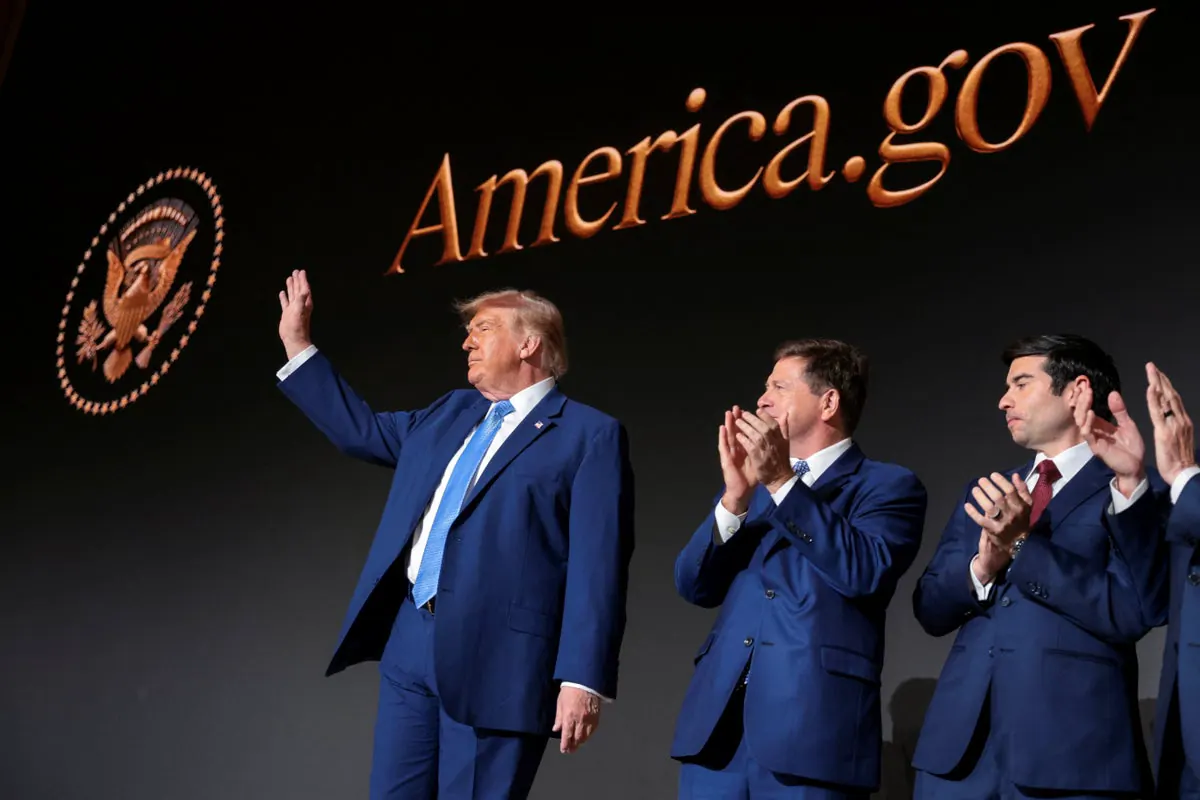
The United States government launched America.gov this week, a new artificial intelligence-powered chatbot aimed at making government information more accessible to citizens. President Donald Trump introduced the platform, stating it would revolutionize the relationship between citizens and their government by providing easy and quick answers to their queries. Trump emphasized that the chatbot would be the first point of contact for citizens seeking information about their government and services, eliminating the need for tedious searches through complex government websites.
The AI chatbot quickly faced scrutiny after being tested by The Independent. When asked if Trump won the 2020 election, the chatbot responded that official records show Joseph R. Biden Jr won the election, citing Electoral College results. The chatbot provided additional resources from the National Archives and the Federal Election Commission, both supporting Biden's victory. This response contradicted Trump's long-held belief that he was the rightful winner of the 2020 presidential election.
The chatbot also addressed another query regarding the use of taxpayer funds for campaign ads. In response, it clarified that such funds cannot be allocated for political purposes. However, by Wednesday morning, the chatbot was down, displaying an error message and a humorous image of a child falling while ice skating. This sudden unavailability raised questions about the chatbot's ability to provide accurate information.
According to CNN fact-checker Daniel Dale, the chatbot was operational again later but provided different responses. Dale noted that the Trump administration appeared to have altered the AI chatbot so that it no longer debunks Trump's inaccuracies. Specifically, it shifted from confirming Biden's victory to being unable to answer similar questions. This change suggests that the administration may have attempted to revise the chatbot's responses to align with Trump's views.
Despite concerns about the potential risks of AI, Trump remains an advocate for its development. He downplayed fears and instead warned that failure to innovate could allow rivals like China to gain an edge. Trump suggested renaming AI to "super intelligence" and joked about dubbing media outlets as "artificial news." His enthusiasm for AI is part of a broader effort to promote technological advancements in the United States.
During the launch event, Secretary of State Marco Rubio highlighted plans for America.gov to allow online passport applications. As part of this initiative, a new eagle design was showcased. The integration of AI-powered chatbots and online services aims to improve the accessibility and efficiency of government services. Rubio's announcement suggests that America.gov will continue to expand its offerings in the coming months.
The revision of the AI chatbot raises questions about the role of technology in disseminating information and promoting transparency. As the US government continues to develop and implement AI-powered tools, it will be essential to balance the need for innovation with the importance of accuracy and accountability. The incident with the chatbot serves as a reminder of the challenges and complexities involved in harnessing AI for public services.
Key points
- The Trump administration revised the AI chatbot after it provided responses contradicting Trump's conspiracy theories.
- The chatbot initially confirmed Biden's victory in the 2020 presidential election, citing official records.
- The US government aims to promote technological advancements, including AI, to improve public services and stay competitive with global rivals.