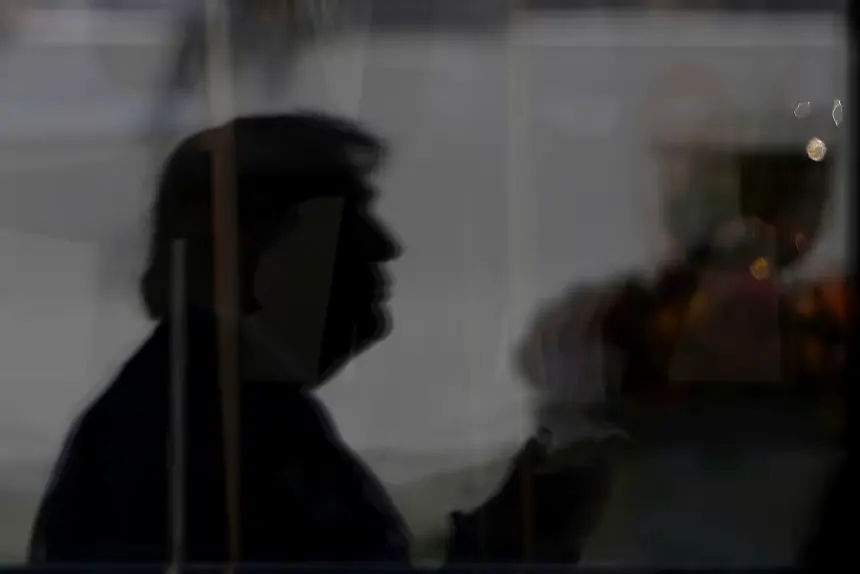
A recent 30-second video featuring US President Donald Trump has stirred controversy over its use of taxpayer funds for a hyper-political message. The video, which aired during NFL broadcasts, depicts Trump as a strongman, vowing a "final battle" against communists, the deep state, and "fake news" media. The tagline "Paid for by the U.S. Government" has raised questions about the legitimacy of using public money for the video.
The White House has defended the video, stating that it is a public service announcement aimed at reminding Americans to love their country and understand what makes it worth defending. However, Democrats and consumer advocacy groups have raised alarm, with some arguing that the video is a private ad for Trump's benefit. Republican Senator John Kennedy of Louisiana also expressed concerns, stating that no public official should spend public money on "private ads for themselves."
The controversy surrounding the video is not isolated, as Trump's administration has repeatedly challenged norms and taboos regarding politics and nonpartisan governance. The use of taxpayer funds for the video has been questioned, especially given Trump's substantial war chest. The timing of the video, just five weeks ahead of congressional elections, has also been seen as an attempt to drive out quintessential Trump voters.
The video's narrative of Trump as an omnipotent figure contrasts sharply with his current political fortunes, as polls show Americans rejecting his policies on the economy, the war in Iran, and his refusal to regulate artificial intelligence. The White House has argued that the video is not political, as Trump is not on the ballot in the midterms. However, the president has implored supporters to "pretend that I'm on the ballot."
The administration has listed previous public service advertisements promoted by presidents, including George W. Bush, Barack Obama, and Franklin Roosevelt. However, the comparison to FDR's Office of War Information has been questioned, as the body was formed in 1942 to promote the US government's policies during World War II. The controversy has also drawn comparisons to North Korean-style propaganda.
Opponents have warned that the video is part of a larger narrative that America is in peril, with Trump and Republicans warning of socialists and communists plotting a takeover. The video has also deepened disquiet among critics of Trump's authoritarian imagery. The White House statement telling citizens what they "should" be proud about has also raised concerns.
The controversy surrounding Trump's video has sparked a broader debate about the use of taxpayer funds for political messaging and the limits of presidential power. As the administration challenges constitutional rights and freedoms enjoyed by the press and every American under the First Amendment, the video has become a focal point for concerns about Trump's authoritarian style and the erosion of democratic norms.
Key points
- The video's use of taxpayer funds for a hyper-political message has raised concerns about the legitimacy of such spending.
- The controversy has sparked a broader debate about the limits of presidential power and the use of taxpayer funds for political messaging.
- The video has been defended by the White House as a public service announcement, but critics argue that it is a private ad for Trump's benefit.