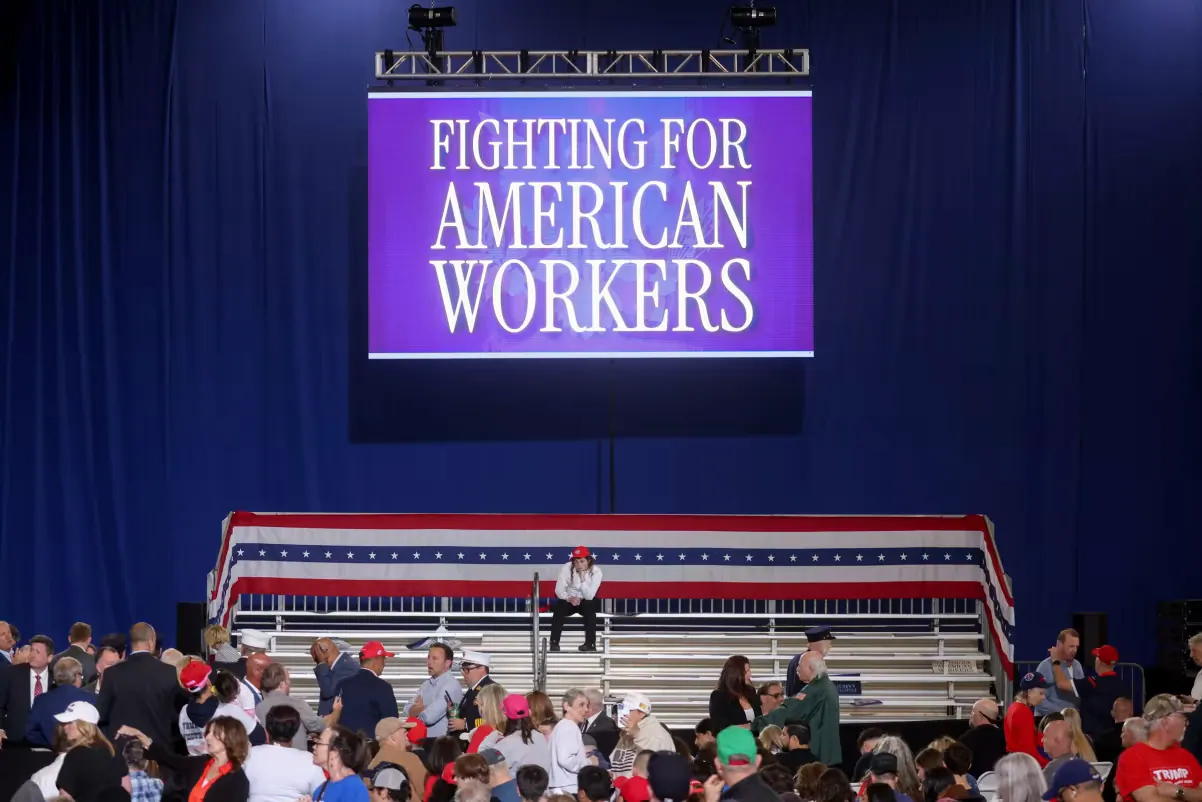
President Donald Trump's protectionist trade agenda, which includes imposing tariffs on various countries, has failed to gain traction with working-class voters, contrary to expectations. In fact, Democrats have been running against the Trump tariffs, while Republicans have struggled to defend them, even in blue-collar districts. This shift in the politics of trade could potentially loosen Trump's hold on working-class voters who were crucial to his 2016 victory.
Trump's trade policies have been the most confrontational since at least William McKinley in the late 19th century, and possibly even Thomas Jefferson's embargo on trade with England and France in 1807. Trump's tariffs have exceeded the wish lists of other protectionist presidential candidates since the 1970s, and have been imposed on a wide range of countries, including allies like Canada and the European Union.
Despite Trump's efforts to present himself as a champion of "forgotten" working-class voters, polls consistently show that most Americans believe the tariffs have hurt their financial situation. This sentiment extends even to working-class white voters without a four-year college degree, who were previously thought to be receptive to protectionist messages.
The traditional divide on trade issues, with college-educated voters favoring free trade and working-class voters supporting protectionism, has persisted even under Trump's presidency. However, Trump's aggressive approach to trade has led to a decline in support among working-class voters, with some Democrats, like Ohio Senate candidate Sherrod Brown, condemning the tariffs.
Economists and historians note that Trump's willingness to impose tariffs on a wide range of countries is unmatched in modern history. Douglas Irwin, an economics professor at Dartmouth College, believes Trump's trade policy is the most confrontational since Jefferson's embargo, while Alan Tonelson, a trade policy analyst, says Trump's tariffs are unmatched since McKinley's presidency.
Trump's skepticism about free trade agreements, including NAFTA, helped power his gains in blue-collar communities during his initial 2016 campaign and first presidential term. However, his sweeping second-term tariffs appear to be bleeding Republican support, even in working-class places. Douglas Holtz-Eakin, president of the American Action Forum, notes that voters are reacting negatively to Trump's tariffs, saying "everyone else talked about it, but Trump did it, and voters are like: 'no thanks'".
The negative reaction to Trump's tariffs has significant implications for the upcoming elections, as Democrats seek to recover ground lost in blue-collar and rural areas. With most Americans believing the tariffs have hurt their financial situation, Trump's protectionist agenda may ultimately harm his chances of retaining working-class support.
Key points
- Trump's tariffs have failed to win over working-class voters, with most Americans believing the tariffs have hurt their financial situation.
- Trump's protectionist agenda is the most confrontational since at least William McKinley in the late 19th century.
- The negative reaction to Trump's tariffs could loosen his hold on working-class voters and allow Democrats to recover ground in blue-collar and rural areas.