The Middle East has been a focal point of global attention, with various conflicts and tensions escalating in the region. A recent article by Egyptian journalist Khairy Ramadan in Al-Ahram titled "Trump, the Devil Apologizes" highlights the complexities of the situation. The article notes that Saudi Arabia has taken a clear stance, with Crown Prince Mohammed bin Salman affirming that the kingdom will not allow its territory or airspace to be used for military actions against Iran.
The conflict has led to a significant escalation of attacks on Saudi Arabia by the Houthi group, which has resulted in a substantial increase in military tensions. The Houthis have launched missile and drone attacks on vital cities and facilities in Saudi Arabia, prompting the Saudi defense system to intercept several of these attacks. This has put Riyadh in a difficult position, with the kingdom seeking to avoid being drawn into a war it did not initiate.
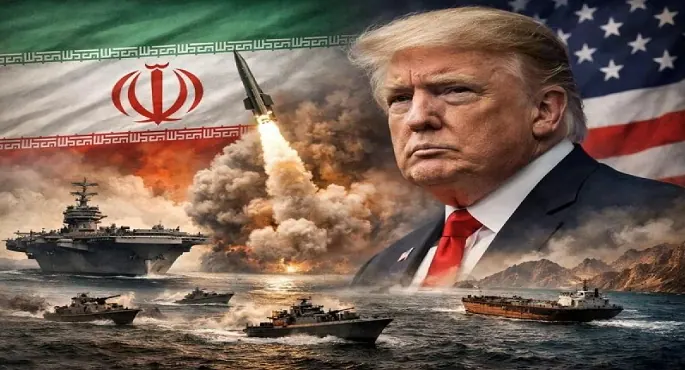
The article raises questions about the goals of US President Trump in pursuing a war with Iran and the potential consequences for the region. It notes that the US has asked its allies to bear the brunt of the conflict while reserving the right to choose the timing and scope of its intervention. This has led to concerns about the potential for a wider conflict and the role of the US in the region.
The Bab al-Mandab Strait has become a critical point of contention, with the US and Iran vying for influence in the region. According to data from the US Energy Information Administration, over 8.1 million barrels of oil and petroleum products pass through the strait daily. The article suggests that control of the strait could provide significant economic and political leverage.
The conflict has also drawn in other regional players, including Israel, which has been accused of seeking to escalate tensions in the region. The article notes that Israel stands to gain from the conflict, while the US and its allies seek to contain Iran's influence. This has led to concerns about the potential for a wider conflict and the role of external powers in the region.
The situation has also been discussed in the context of the upcoming UN General Assembly, with some commentators suggesting that the organization's relevance is being questioned. An article by Ghassan Sharbil in Al-Sharq Al-Awsat notes that the assembly has lost some of its luster and is now primarily seen as a platform for leaders to address global issues.
The article also touches on the potential for a new conflict between the US and China, with the two nations set to engage in high-level talks. The meeting is expected to focus on a range of issues, including trade, security, and influence in the region. The outcome of the talks could have significant implications for the global balance of power and the future of the Middle East conflict.
Key points
- The conflict in the Middle East has led to a significant escalation of tensions, with various external powers vying for influence in the region.
- The US has been criticized for its handling of the conflict, with some suggesting that it is seeking to draw its allies into a war with Iran.
- The Bab al-Mandab Strait has become a critical point of contention, with control of the strait potentially providing significant economic and political leverage.