US President Trump's proposal to give $5,000 to every adult in the US if Republicans win the House and Senate in November has sparked skepticism, even among his allies. The proposal, first made at the Republican midterm convention, has been questioned by some as a form of "helicopter money". Conservative commentators have suggested that a tax cut would be a more effective policy. The proposal has been seen as contradictory to Trump's anti-communist message, with some labeling it as a form of wealth redistribution.
Trump's administration has taken equity stakes in over 30 private companies, imposed dozens of tariffs, and attempted to lower interest rates via the Treasury Department. These policy moves have been described as "transactional interventionism" by Scott Lincicome, vice president of general economics at the libertarian Cato Institute. Lincicome argues that Trump's policies are not aligned with traditional free-market capitalism or socialism. The White House has stated that Trump is implementing traditional free-market policies, such as deregulation and tax cuts.
The US government's equity stakes in private companies have drawn attention, particularly given the number of deals involved. Jonathan Hillman, senior fellow for geoeconomics at the Council on Foreign Relations, notes that the number of deals is striking, with 39 deals tallied so far. Hillman suggests that some supply chains, such as critical minerals, may need shoring up, but the level of deal activity is notable.
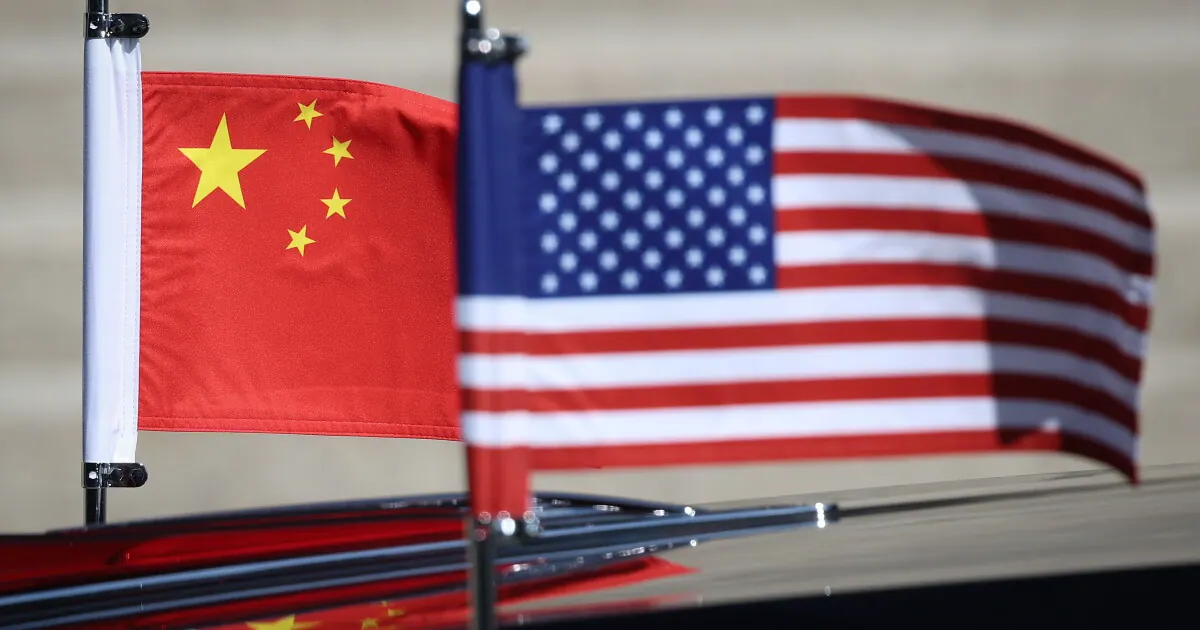
Trump's labeling of Democrats as "communists" has been seen as a political tactic, but his actions have undercut this rhetoric. He has praised democratic socialist Zohran Mamdani and welcomed China's communist President Xi Jinping to the White House. Trump has described Xi as "strong, vibrant, and fit", despite continually speaking of China as a rival.
The terms "communism" and "socialism" have varying meanings for Americans, according to Sheri Berman, professor of political science at Barnard College, Columbia University. Berman notes that people tend to have different understandings of these terms, with some associating socialism with interventionist government policies. Trump's use of the term "communism" may resonate with Americans who remember the Cold War.
An ethics group has filed a lawsuit against the use of taxpayer money for a TV ad that aired last week, featuring Trump stating that he will defeat communism, socialism, and Marxism in America. The ad was funded by the federal government. The lawsuit highlights the controversy surrounding Trump's use of taxpayer money for political advertisements.
With just over two years left in office, Trump's economic policies have opened new doors for the next president. Lincicome suggests that the next administration can build on Trump's policies or take a different approach. The legacy of Trump's economic policies and their impact on his anti-communist message remains to be seen.
Key points
- Trump's economic policies have been described as "transactional interventionism", contradicting his anti-communist message.
- The US government has taken equity stakes in over 30 private companies, sparking controversy.
- Trump's labeling of Democrats as "communists" has been undercut by his actions, including praising democratic socialists and communist leaders.