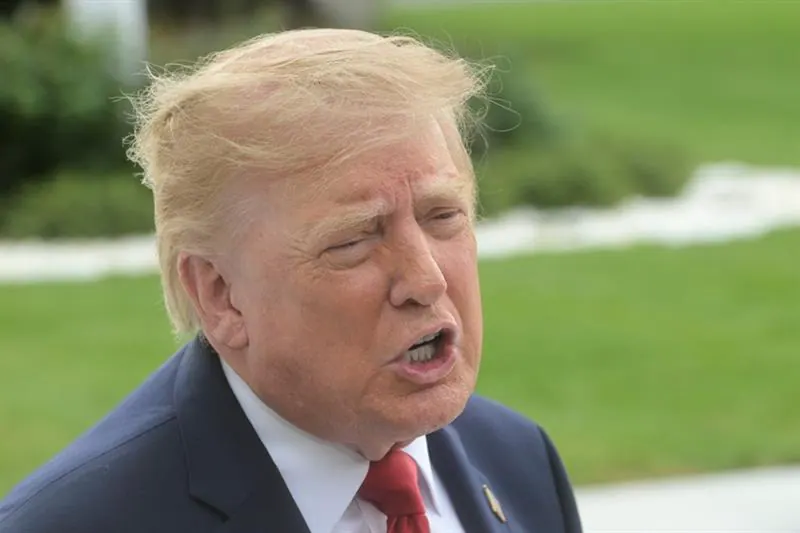
On Saturday, US President Donald Trump rejected an Iranian proposal to reopen the Strait of Hormuz. The proposal, made by Iranian President Masoud Pezeshkian, suggested that Iran would reopen the strait and resume talks on its nuclear program within seven days if the US lifts its naval blockade of Iranian ports, waives sanctions on Iranian oil sales, and observes a ceasefire that would include Lebanon.
According to Trump, the Iranian proposal was made because "they're losing so badly" and that they want to make a deal. He expressed his willingness to make a deal, stating, "I like making a deal too." The rejection came after Trump posted an image on his Truth Social platform showing the Strait of Hormuz labeled "Trump Strait," his first public indication of his response to the Iranian proposal.
Iranian Foreign Minister Abbas Araghchi stated that Iran had conveyed a concrete seven-day plan to the US through Qatar. The plan involves reopening the strait and restoring normal maritime passage within seven days if the necessary conditions are met. Araghchi emphasized that Iran does not accept coercion, threats, or intimidation and will not surrender its sovereign rights under pressure.
Iranian President Masoud Pezeshkian revealed that the proposal was developed "in coordination" with Supreme Leader Mojtaba Khamenei. In a CBS News interview, Pezeshkian stated that the choice now rests with the US. He also mentioned that Iran is ready to resolve the dispute between Saudi Arabia and the Houthis.
The White House reported that US officials were having positive and constructive conversations with mediators on the war in Iran. Earlier in the week, Iran held hours of indirect talks with the US. Pezeshkian, in a Fox News interview, said that it's up to the US to choose whether to end the conflict or not, adding that the timing of a potential agreement does not make a difference to Iran.
The Strait of Hormuz is a critical waterway for global oil exports, and tensions between Iran and the US have been escalating in recent months. The US has imposed significant sanctions on Iran, which has led to a substantial decline in Iranian oil exports. Iran's economy has been severely impacted, and the country is seeking relief from the sanctions.
The rejection of the Iranian proposal by Trump may further complicate efforts to revive the 2015 nuclear deal, which was abandoned by the US in 2018. The deal, also known as the Joint Comprehensive Plan of Action (JCPOA), was negotiated between Iran and six major world powers, including the US, China, France, Germany, Russia, and the UK.
Key points
- US President Donald Trump rejects Iranian proposal to reopen Strait of Hormuz within a week.
- Iran's proposal involves lifting of US measures against Iran, including naval blockade and sanctions on oil sales.
- Rejection may complicate efforts to revive 2015 nuclear deal.