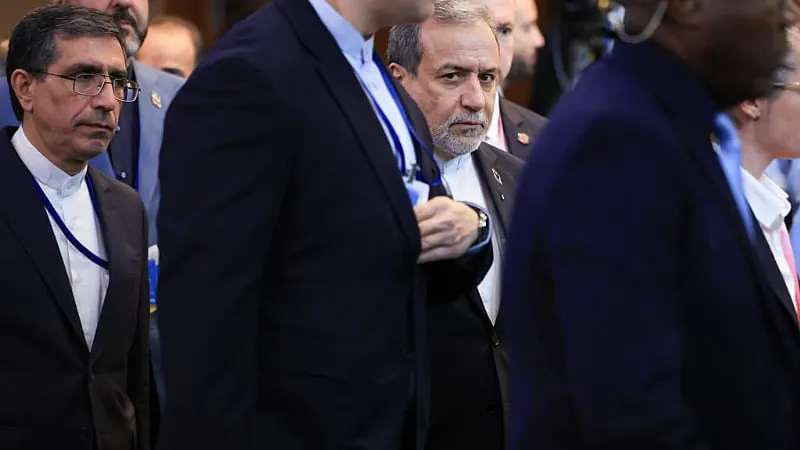
Iran's Foreign Minister Abbas Araghchi had proposed a seven-day plan to reopen the Strait of Hormuz, a vital shipping channel, during talks with US President Donald Trump's envoy Steve Witkoff at the UN gathering of world leaders in New York. Araghchi stated that if the necessary conditions are met, the strait can be reopened, and normal maritime passage restored within seven days. The plan was conveyed to the United States through Qatar.
The plan calls for a cessation of all hostilities in the Middle East for seven days, including in Lebanon, and the release of frozen Iranian assets estimated to be worth at least $12 billion. It also reportedly demands the lifting of sanctions on Iranian oil and an end to the US naval blockade of Iran. On the seventh day of the truce, Iran would reopen Hormuz. Iranian President Masoud Pezeshkian expressed optimism that the ceasefire process will begin once the US accepts it.
However, reports indicate that Trump rejected the proposal, citing skepticism that Tehran would meet his demands. The US president reportedly sees a renewed bombing campaign as likely. Trump also posted an image to his Truth Social platform of a map showing the Strait of Hormuz circled and labelled "Trump Strait." This development has cast doubt on the possibility of a peaceful resolution to the conflict.
The conflict between the United States and Iran has been ongoing for nearly seven months, with the Strait of Hormuz at its center. The waterway is crucial to the world's oil supply, and tensions have been escalating. Iran requires ships to obtain authorisation before passage, citing security and sovereignty reasons. Ships that refuse to comply are regularly targeted, while the United States sporadically bombs Iranian coastal areas in retaliation.
The US and Iran signed a memorandum of understanding in June that aimed to end the war, reopen the strait, and launch talks on Iran's nuclear program. However, the deal broke down shortly afterward when Iran fired on commercial ships in Hormuz that it accused of deviating from its approved route through the waterway. Hossein Mohebi, a spokesman for the Revolutionary Guards, told AFP that ending hostilities in Yemen was also among Tehran's demands.
Iranian President Masoud Pezeshkian stated that the ceasefire process will begin from the day the US accepts it. He added that Iran had previously reached an agreement based on the MOU signed in Pakistan, and if the US agrees to proceed, everything will return to the way it was before. The rejection of the plan has raised concerns about the prospects for a peaceful resolution to the conflict.
The situation remains tense, with the Strait of Hormuz continuing to be a critical point of contention. The international community is watching closely, hoping for a resolution to the conflict. The rejection of Iran's plan has significant implications for the region, and it remains to be seen how the situation will unfold.
Key points
- US President Donald Trump has rejected Iran's 7-day plan to reopen the Strait of Hormuz.
- The plan called for a cessation of hostilities, release of frozen assets, and lifting of sanctions on Iranian oil.
- The conflict between the US and Iran has been ongoing for nearly seven months, with the Strait of Hormuz at its center.