US President Donald Trump has stated that it is "very unlikely" he will order new attacks on Iran in the near future, a move that could help ease tensions in the region. This development comes after his Republican Party suffered a significant defeat in the midterm elections, losing control of both houses of Congress. Trump's comments may be an attempt to shift focus away from domestic issues and towards foreign policy, where he still has some leverage.
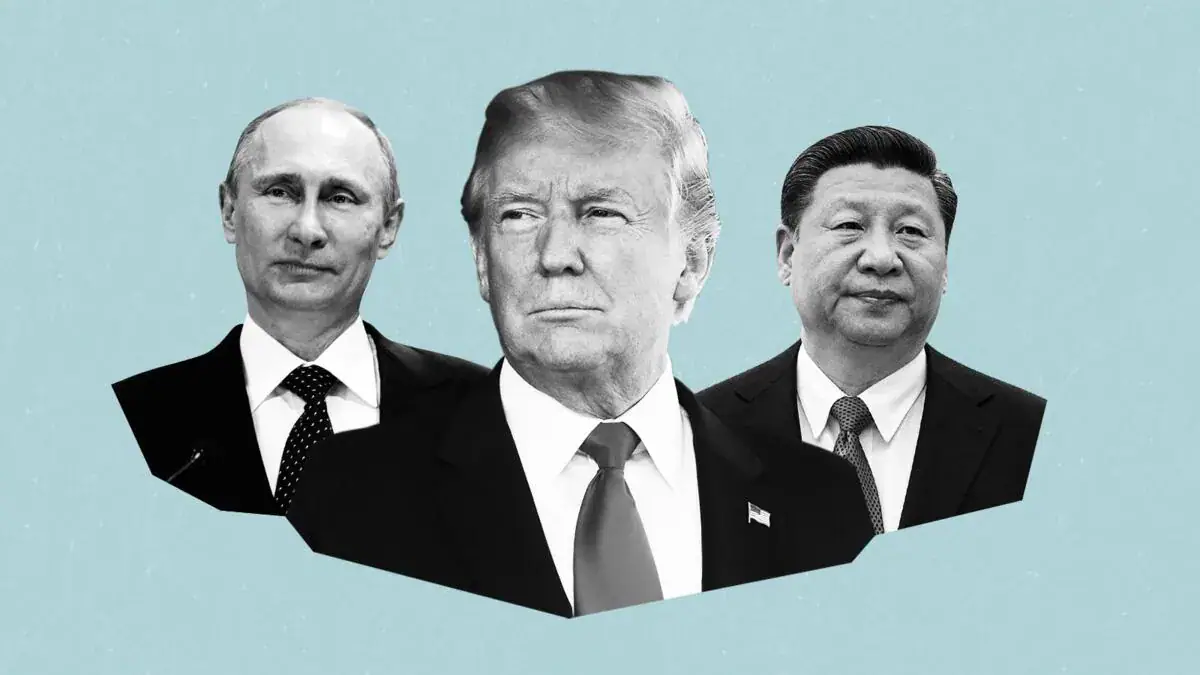
Trump is investing in diplomatic efforts to resolve ongoing conflicts, including the war in Ukraine. The US president has facilitated a meeting between Russian and Ukrainian officials in Abu Dhabi, UAE, this week, with US mediation. Additionally, Trump, Chinese President Xi Jinping, and Russian President Vladimir Putin are scheduled to meet on the sidelines of the Asia-Pacific Economic Cooperation (APEC) summit in Shenzhen, China, later this month. The talks will likely focus on the wars in Eastern Europe and the Persian Gulf, as well as global nuclear disarmament.
The changing landscape in the Middle East may also contribute to reduced tensions. With Benjamin Netanyahu potentially losing his position as Israeli Prime Minister due to corruption allegations, Trump may face less pressure from the Jewish lobby in Washington to take a hardline stance against Iran. Netanyahu's replacement, Gadi Eisenkot, may adopt a more conciliatory approach. Furthermore, the Chinese government has expressed support for a negotiated solution to the Iran-US conflict, with Chinese envoy Zhai Jun visiting Tehran for talks with Iranian leaders.
European countries are taking steps to strengthen their military presence in Eastern Europe, which could be seen as a challenge to Trump's diplomatic efforts. Germany, France, and the UK have begun a military exercise in Poland, involving thousands of soldiers, to prepare for a potential post-conflict scenario in Ukraine. The exercise is intended to demonstrate European commitment to NATO and provide a bulwark against potential Russian aggression.
The military exercise has elicited a strong response from Moscow, which has warned that if European soldiers enter Ukraine, it will be considered a provocation. In response, NATO has stated that it will defend its troops and respond militarily if necessary. Meanwhile, global markets seem to be responding positively to the reduced tensions, with crude oil prices stabilizing below $100 per barrel.
The complex geopolitics of the region involve multiple players with competing interests. The US, Russia, and China are vying for influence in the Middle East, with Iran playing a crucial role in their strategic calculations. A negotiated solution to the Iran-US conflict could have far-reaching implications for the global balance of power and the future of the region.
Analysts warn that the next two months will be critical in determining the course of US foreign policy, as Trump's ability to act unilaterally will be limited after January. Some experts, such as Larry Wilkerson, a former US Army colonel, believe that this period will be one of the most intense in recent decades, with significant implications for global security and stability.
Key points
- Trump says it's "very unlikely" he'll order new attacks on Iran.
- Russia and Ukraine to hold talks in the UAE with US mediation.
- European countries strengthen military presence in Eastern Europe amid rising tensions with Russia.
Reporting sources
- Médio Oriente: Guerras Irão-EUA e Rússia/Ucrânia unidas... · novojornal.co.ao