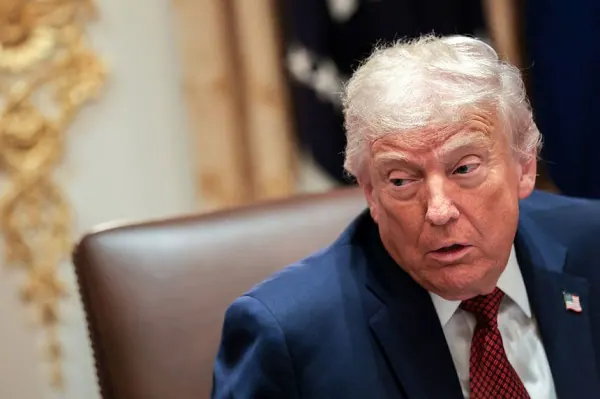
On September 22, 2026, US President Donald Trump addressed the 81st Session of the United Nations General Assembly, announcing a significant rebranding of artificial intelligence. Trump declared that the US government will henceforth refer to AI as "Super Intelligence" (SI). He instructed that all federal official documents adopt the new term and encouraged the international community to follow suit. This move aims to provide a more accurate description of the rapidly evolving technology.
Trump's announcement was met with mixed reactions, as the term "superintelligence" traditionally describes a theoretical future stage of AI that surpasses human intellectual capability. However, Trump seeks to apply the term to all existing and near-term AI developments. The US administration did not immediately release an executive order or formal implementation framework detailing how federal agencies will execute the terminology shift. It remains unclear how the global community will respond to Trump's call for adoption.
Alongside the rebranding, Trump firmly rejected international regulatory frameworks designed to monitor or constrain AI. He warned against global oversight mechanisms, downplaying existential warnings regarding AI safety or autonomous weapons. Trump emphasized that the US will not stifle the growth of a technology that could bring about significant changes, comparable to the Industrial Revolution or the internet.
Trump framed the advancement of Super Intelligence primarily as a geopolitical competition, asserting that the US currently holds a commanding lead over China. He stated that domestic oversight will rely on existing federal institutions, such as the Department of Justice, rather than international bodies or restrictive mandates. This approach aims to accelerate development rather than impose regulatory checks.
The US President's stance on AI regulation reflects his administration's priorities. By rejecting global oversight mechanisms, Trump aims to maintain the US's competitive edge in AI development. The international community remains cautious, however, regarding the potential risks and consequences of unregulated AI advancements.
The rebranding of AI as "Super Intelligence" has sparked debate among experts and technology enthusiasts. Some argue that the term accurately reflects the technology's potential, while others see it as a marketing ploy. As the US government begins to implement the new terminology, the global community will be watching closely to see how it affects AI development and regulation.
The implications of Trump's announcement extend beyond the US, as it may influence how other countries approach AI development and regulation. The international community will likely be monitoring the situation closely, as it could have significant consequences for the future of AI.
Key points
- Trump rebrands AI as 'Super Intelligence' and calls for global adoption.
- The US rejects international regulatory frameworks for AI.
- The rebranding sparks debate among experts and technology enthusiasts.